
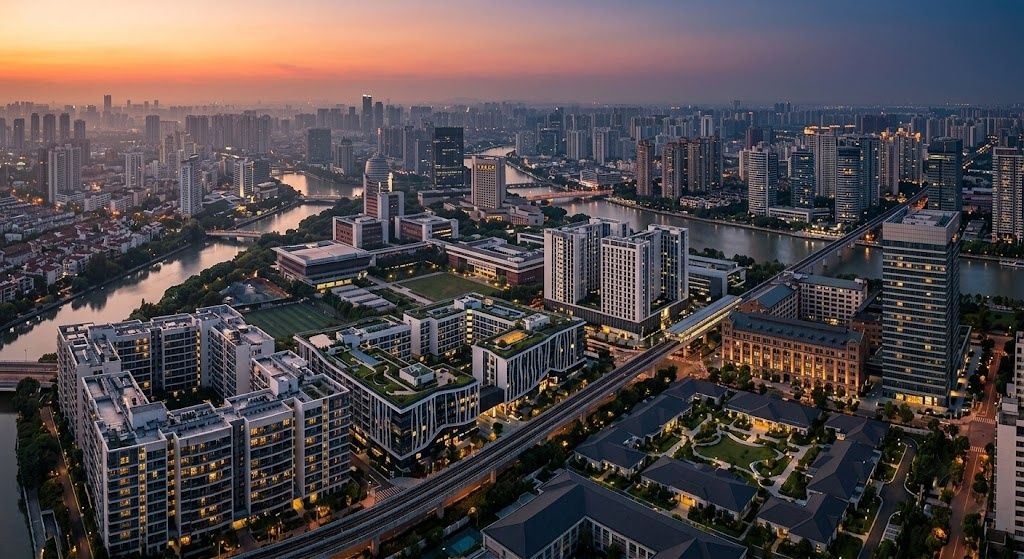

For years, Asia-Pacific's real estate market was driven by office buildings, shopping malls, and luxury developments. But that is beginning to change. Investors are now shifting their focus from commercial spaces to the places where people live.
According to Knight Frank’s latest APAC (Asia Pacific) Living Sector report, housing is moving from a niche real estate segment to a mainstream investment opportunity. As property prices rise and people's lifestyles continue to change, housing options such as build-to-rent apartments, co-living spaces, student accommodation, senior housing, and worker accomodation are becoming increasingly popular with investors.
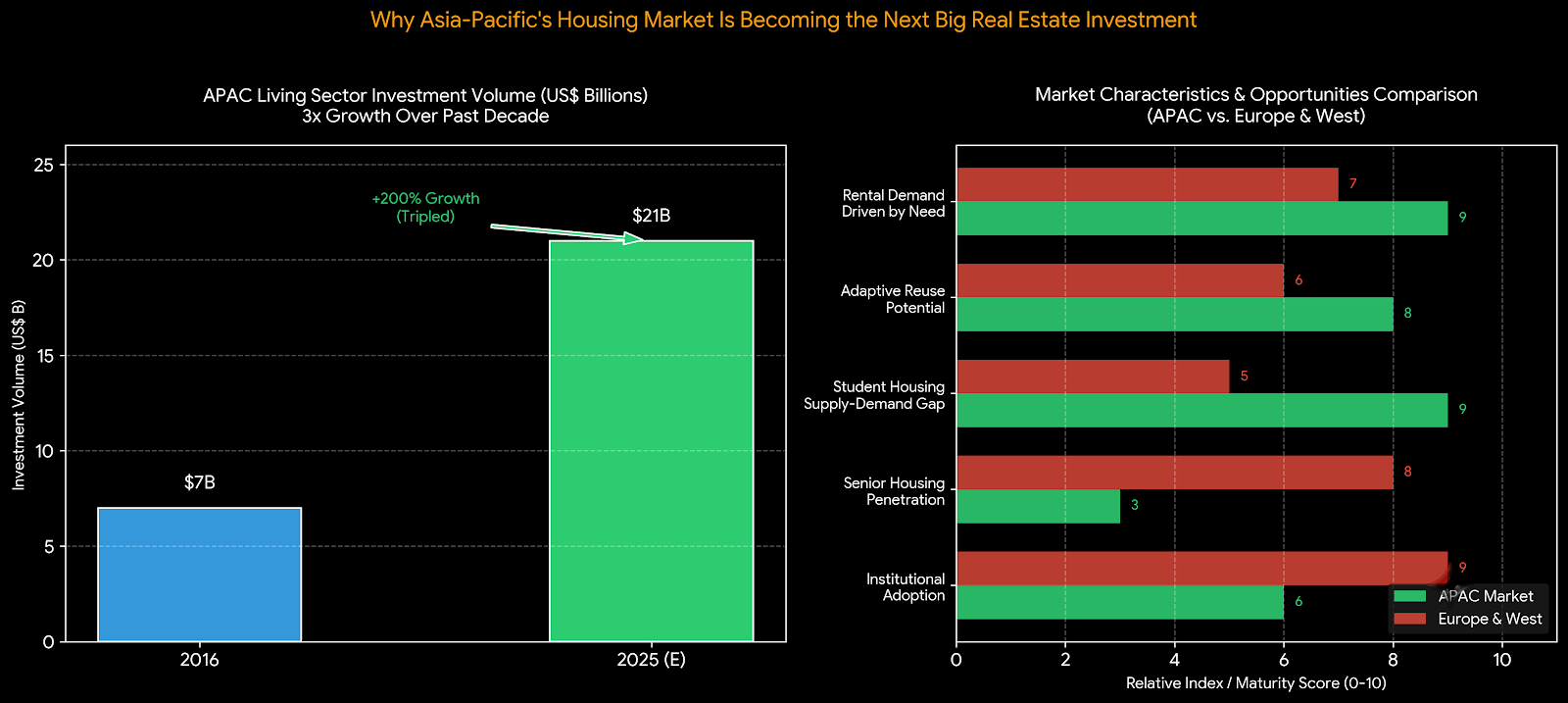
The numbers highlight this shift. Investment in APAC’s living sectors has nearly tripled over the past decade, rising from around US$7 billion in 2016 to US$21 billion in 2025. Despite wider economic uncertainty, living-sector investment recorded strong momentum, reflecting growing confidence among institutional investors.
Why Housing Is Becoming the New Investment Story
The rise of living sectors is closely linked to a simple reality, owning a home is becoming increasingly difficult across many Asian cities.
High property prices, limited land availability, tighter financing conditions, and rising construction costs have pushed home ownership further out of reach for many people. At the same time, rental demand is expanding as urban populations grow and lifestyles become more mobile.
The way people live is also changing. Young professionals are delaying marriage, households are becoming smaller, and more people are moving for education and employment opportunities. Instead of traditional long-term housing, many now prefer flexible, professionally managed spaces that offer convenience, community, and shorter lease options.
This has made rental housing an increasingly attractive asset class for investors because demand is driven by everyday needs rather than market speculation.
From Co-Living to Student Housing: New Opportunities Emerge
One of the biggest trends highlighted in the report is the rise of alternative housing.
Co-living, once viewed as a niche concept, is becoming a mainstream solution for students, young professionals. Cities like Singapore have seen the sector grow rapidly, with professionally managed co-living spaces offering furnished rooms, shared amenities, and flexible rental arrangements.
Student housing is another major growth area. In Hong Kong, rising international enrolments have created a significant gap between student demand and available accommodation. The shortage is encouraging developers to convert underused hotels and office buildings into purpose-built student housing.
India is also emerging as a major opportunity in this space. With 155 million people aged between 18 and 23, the largest population in this age group globally. India has enormous potential for purpose-built student accommodation. However, organised student housing remains at an early stage, leaving room for institutional investors to enter the market.
An Ageing Population Creates Another Market
While younger populations are driving demand for flexible housing, ageing societies are opening another investment opportunity.
Countries such as Japan, South Korea, and Hong Kong are witnessing rapid growth in their elderly populations, yet senior housing remains significantly underdeveloped compared with markets like the United States. As life expectancy rises, demand for specialised housing solutions for older adults is expected to increase.
The Rise of Adaptive Reuse
The future of living sectors is not only about building new homes, it is also about transforming existing spaces.
With construction costs rising, investors are increasingly turning towards adaptive reuse by converting old offices, hotels, and residential buildings into rental housing, co-living spaces, and student residences.
This approach allows developers to reduce costs, speed up project delivery, and make better use of underutilised urban properties. Cities such as Hong Kong and Singapore are already witnessing this shift.
The Future of Real Estate Is About People
The Knight Frank report suggests a broader change in how real estate value is being defined. The future of the sector may not be shaped only by offices and commercial complexes, but by spaces designed around how people actually live, work, study, and age.
As Asia-Pacific cities continue to evolve, housing is becoming more than just shelter. It is transforming into a long-term, service-driven investment opportunity, one where flexibility, community, and human needs take centre stage.