
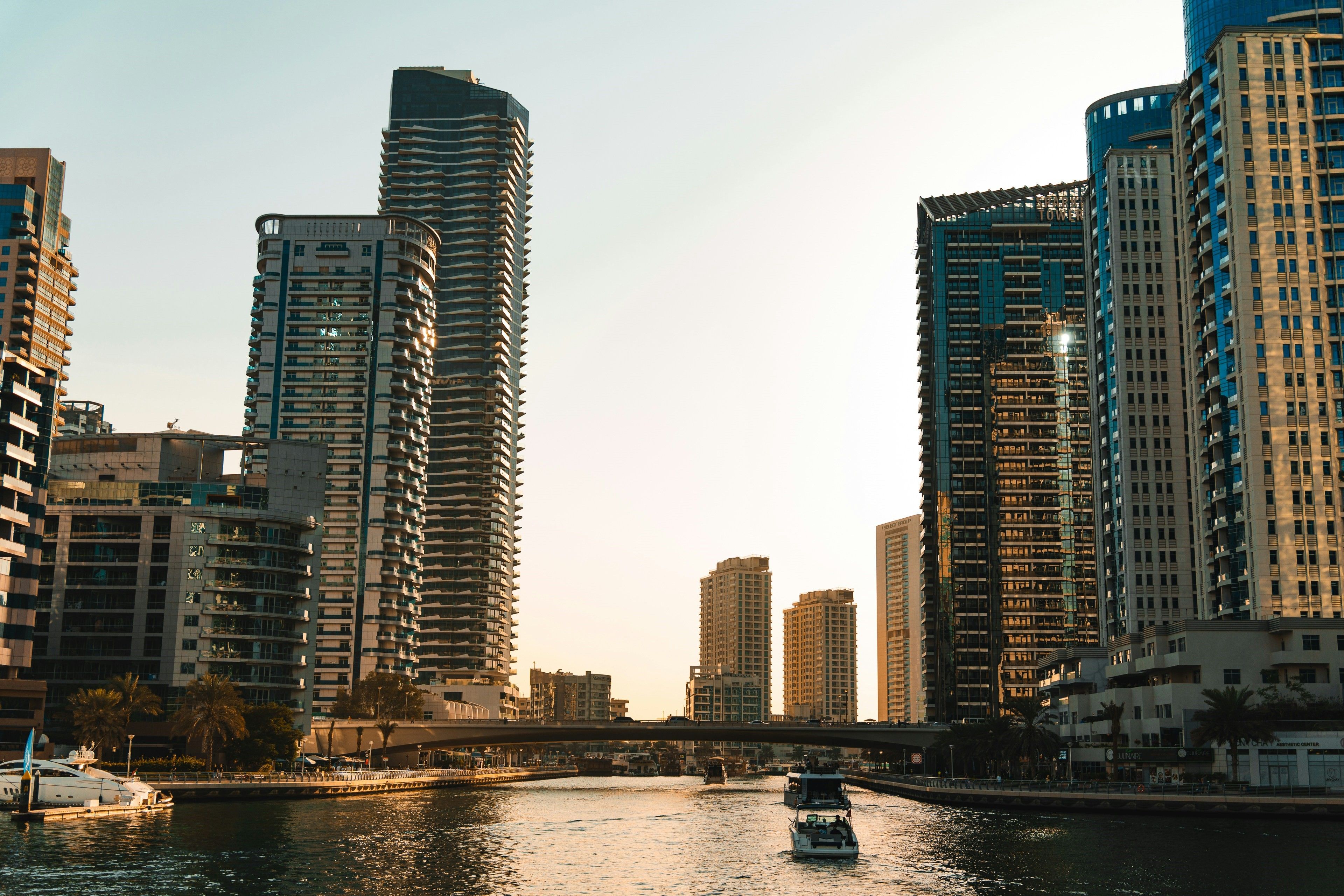

New Delhi: Dubai’s property market, long seen as a resilient global haven, has registered its first clear signs of stress since the pandemic-era trough, with regional geopolitical tensions now spilling into asset prices. The market has abruptly shifted from momentum to fragility.
The latest report published by consultancy firm ValuStrat records a 5.9% month-on-month decline in the ValuStrat Price Index (VPI), which slipped to 229.2 points, even as annual growth held at 8.9%. This marks the first monthly drop since 2020, underscoring the sharpness of the reversal.
“The March 2026 VPI was impacted by the regional conflict, alongside seasonal and behavioural factors including the month of Ramadan, Eid holidays, increased remote working and home schooling, as well as periods of adverse weather,” says the report.
The timing is critical. The downturn coincides with the escalation of the West Asia conflicts at the end of February, disrupting investor sentiment and transactional momentum in a market deeply tied to global capital flows. Ready home transactions, often a proxy for immediate investor confidence, plunged 37.8% month-on-month and 34.2% year-on-year.
“The decline in ready home transactions likely reflects deals agreed prior to the onset of the conflict on February 28,” says the report. “The sharp fall thereafter signals a pause in buyer activity amid heightened uncertainty.”
The data suggests that while Dubai remains structurally attractive, it is not immune to geopolitical shocks, particularly when liquidity-driven demand meets sudden risk aversion.
Price Correction Deepens
The correction has been broad-based, cutting across villas and apartments, though the intensity varies. Villa values fell 5.8% month-on-month, while apartment prices dropped even more sharply by 6.3%.
The divergence in annual growth trends is telling. Villas still posted a 12.1% annual increase, compared to just 3.9% for apartments, indicating that the premium segment had more cushion but is now also under pressure.
“The steepest monthly declines were recorded in Arabian Ranches Phase 2 (-11.5%) and Dubai Hills Estate (-10.8%) for villas, while apartments saw sharp corrections in Jumeirah Village Circle (-10.3%), Burj Khalifa (-10.2%), and Jumeirah Beach Residence (-9.9%),” says the report.
Even prime and ultra-prime segments, often insulated from volatility, are showing cracks. Although 21 transactions above AED 30 million (approximately $8.17 million) were recorded, including five deals exceeding AED 50 million (approximately $13.6 million), these are increasingly outliers rather than indicators of broad-based strength.
At a structural level, the numbers reveal a market that had run ahead of fundamentals. Older freehold villa communities remain valued 202% above post-pandemic levels and 84% higher than the 2014 peak. Apartments, while less overheated, are still 76% above post-pandemic benchmarks.
This overhang is now being tested.
“The weighted average capital value for residential property stood at AED 3,516,180 (approximately $957,000), with villas averaging AED 13,616,208 (approximately $3.71 million) and apartments AED 1,859,424 (approximately $506,000),” says the report. “These elevated valuations are increasingly sensitive to external shocks and shifts in buyer sentiment.”
The correction, therefore, is not merely cyclical. It reflects a recalibration of expectations in a market that had priced in near-perfect conditions.
Structural Shifts
Beyond the immediate correction, the report points to deeper structural shifts that could redefine Dubai’s property cycle in the coming quarters.
One of the most striking trends is the dominance of off-plan sales, which now account for 78% of all residential transactions. While off-plan registrations declined 9.3% month-on-month, they still rose 1.5% year-on-year, indicating sustained developer-led momentum.
This imbalance highlights a market increasingly driven by speculative and forward-looking investments rather than end-user demand.
“The majority of residential sales are concentrated in off-plan developments, reflecting investor preference for lower entry costs and flexible payment plans,” says the report. “However, this concentration raises questions about demand sustainability.”
Geographically, activity remains clustered. Off-plan hotspots include Damac Island City (8.6%), Dubailand Residence Complex (7.7%), and Jumeirah Village Circle (6.7%), while ready home sales are concentrated in Jumeirah Village Circle (9.3%), Majan (9.2%), and Business Bay (4.4%).
Developer concentration is equally notable. Emaar (12.8%) and Damac (12.7%) continue to dominate sales, followed by Binghatti (7.8%) and Sobha (4.4%), underscoring the role of large developers in shaping supply dynamics.
Yet, beneath this activity lies a growing mismatch. Transaction volumes and pricing trends suggest that while supply pipelines remain robust, absorption capacity may be weakening, particularly if geopolitical risks persist.
The broader macro picture reinforces this concern. From 2020 to 2025, ready home sales volumes surged from 14,013 to over 50,756 units, accompanied by a sharp rise in prices per square foot — from AED 1,360 (approximately $370) to over AED 2,087 (approximately $568). This rapid expansion phase now appears to be plateauing.
The implications are significant. A market driven by liquidity, expatriate inflows and global investor sentiment is inherently vulnerable to sudden shifts in external conditions.
Dubai’s real estate sector has weathered crises before — from the 2008 financial crash to the pandemic shock. However, the current phase is distinct. It combines geopolitical risk, elevated valuations, and structural imbalances in demand and supply.
The immediate question is whether this correction will remain a short-term adjustment or evolve into a more prolonged downturn.
For now, the signals are unmistakable: the era of uninterrupted price gains has ended, and Dubai’s property market is entering a more complex, risk-sensitive phase.
(Cover photo by Dawid Tkocz on Unsplash)