
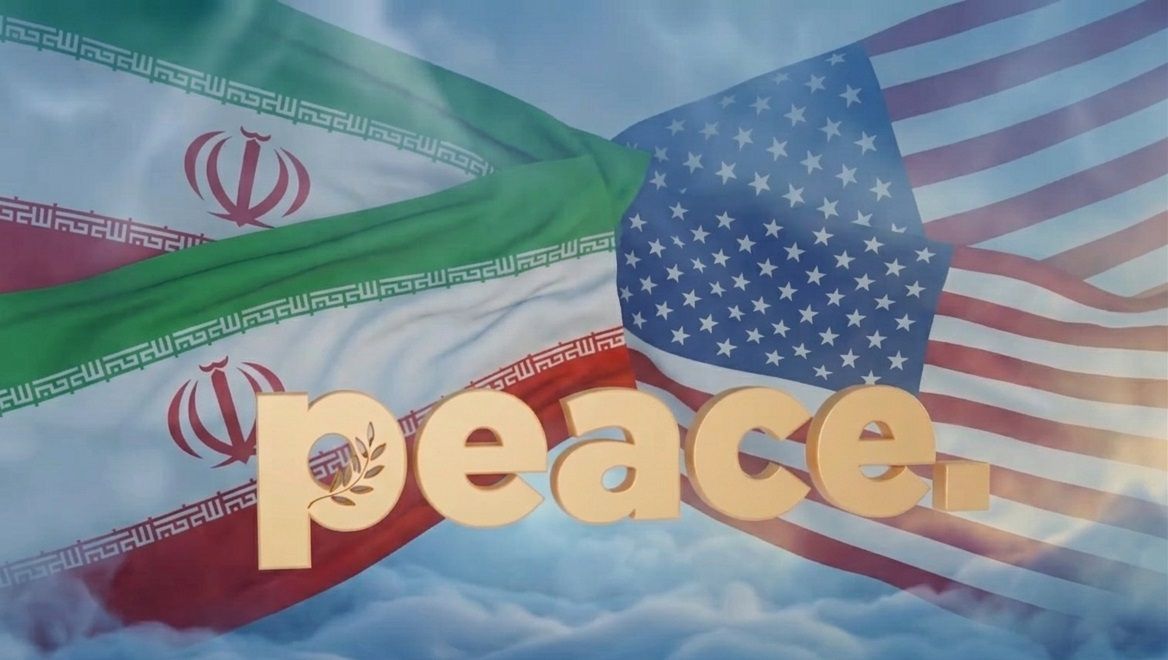

New Delhi: If the proposed US-Iran peace deal survives the political volatility of West Asia, India could be one of its biggest beneficiaries. For New Delhi, the significance of such a settlement extends well beyond diplomacy, as it would bring not only diplomatic advantages but also significant economic and strategic benefits.
The agreement has the potential to alter India’s inflation trajectory, reduce its external vulnerabilities, revive stalled connectivity projects and strengthen its geopolitical room for manoeuvre. The economic dividend could be immediate, while the strategic gains may unfold over the next decade.
The most direct impact lies in energy markets. India remains the world’s third-largest consumer of crude oil and imports nearly 88% of its petroleum requirements. In 2024-25, the country’s crude oil import bill exceeded $130 billion despite softer global prices. Every sustained movement of $10 per barrel in crude prices significantly alters India's macroeconomic outlook. Estimates by government agencies and market analysts suggest that a $10 decline in oil prices can reduce India’s import bill by $13-15 billion annually while lowering retail fuel costs and easing inflationary pressures.
The months of conflict between the United States and Iran had introduced a geopolitical risk premium into global energy markets. Although Iran contributes around three million barrels per day to global oil production, its greater strategic importance lies in geography. Nearly 20 million barrels of crude oil and petroleum products move daily through the Strait of Hormuz, accounting for roughly one-fifth of global petroleum consumption. More than 60% of India’s crude imports transit through this narrow maritime corridor. Even the possibility of disruptions had pushed up freight costs, insurance premiums and market uncertainty.
A peace agreement would reduce this risk premium. The consequences for India would cascade across the economy. Lower fuel costs would moderate transportation expenses, reduce logistics costs for industry and ease pressure on agricultural supply chains. Fertiliser production, aviation, shipping, chemicals and manufacturing would benefit directly from cheaper energy inputs. Food inflation, which is partly driven by transport costs, could also soften.
The macroeconomic implications are equally significant. India has consistently battled imported inflation arising from commodity price shocks. Lower oil prices reduce the current account deficit by cutting the country’s largest import expense. They also strengthen the rupee by reducing demand for dollars to finance energy imports. A stronger rupee, in turn, lowers the cost of imported machinery, electronics and industrial raw materials.
For monetary policymakers, this could be particularly important. The Reserve Bank of India’s inflation target of 4% often comes under pressure from imported energy costs. A prolonged period of stable oil prices would provide greater flexibility for accommodative monetary policy, supporting investment and growth without risking inflationary overheating.
Financial markets are likely to respond favourably as well. Foreign institutional investors typically view geopolitical stability in energy-producing regions as a positive signal for emerging markets. Lower oil prices improve corporate profitability across several sectors while reducing fiscal pressure on governments. Airlines, paints, cement, chemicals, automobiles and logistics companies could all benefit from declining input costs.
Strategic Routes Reopen
Yet the most transformative implications may not be economic but strategic.
The deterioration of US-Iran relations over the past decade had constrained India’s engagement with Tehran. New Delhi had once imported more than 10% of its crude oil requirements from Iran, attracted by favourable pricing, extended credit terms and logistical advantages. American sanctions effectively ended these imports after 2019.
A peace agreement could gradually reopen avenues for economic engagement. While a complete removal of sanctions would depend on the precise terms of the settlement, even partial normalisation could allow India to diversify its energy basket and reduce dependence on a smaller group of suppliers.
More importantly, it could revive the strategic importance of Iran as India’s gateway to Central Asia and Eurasia.
The Chabahar Port project exemplifies this opportunity. Developed with Indian investment, the port provides direct access to Afghanistan and Central Asia while bypassing Pakistan. Connected to the International North-South Transport Corridor, a 7,200-kilometre multimodal trade network linking India with Iran, the Caucasus, Central Asia and Russia, Chabahar has long been viewed as a cornerstone of India’s continental strategy.
Geopolitical tensions and sanctions repeatedly slowed progress. Greater stability in Iran could accelerate infrastructure development, improve commercial viability and strengthen India’s access to markets beyond South Asia. For Indian exporters, the corridor offers the possibility of significantly reducing freight costs and transit times compared with traditional maritime routes through the Suez Canal.
Diplomatic Space Expands
The geopolitical implications extend further. India’s foreign policy over the past decade has been built around strategic multi-alignment. It has maintained close relations simultaneously with the United States, Iran, Israel, Saudi Arabia and the United Arab Emirates, despite tensions among these actors. A reduction in US-Iran hostility would lessen the diplomatic balancing act that New Delhi has had to perform and provide greater policy flexibility in West Asia.
There are also human dimensions to the story. Nearly nine million Indians live and work across the Gulf region, and remittances from these countries form a substantial component of India’s foreign exchange earnings. Regional stability lowers security risks for this diaspora and reduces the possibility of costly evacuation operations or disruptions to labour markets.
Not every consequence would favour India. One potential downside is the changing dynamics of the global oil market. Since 2022, India has benefited substantially from discounted Russian crude, with Russia becoming its largest oil supplier. If geopolitical risks diminish and global supply chains normalise, the extraordinary discounts available on Russian exports could narrow. However, lower benchmark crude prices would probably compensate for much of this loss.
A second challenge could arise from increased competition in Iran itself. Should sanctions ease, European, East Asian and American firms could return to the Iranian market, competing with Indian companies for infrastructure, energy and transport projects. New Delhi’s advantage of early engagement may diminish.
There is also a broader geopolitical consideration. A stable Iran could alter power equations across West Asia, creating new alignments among regional actors. India would need to adapt to a changing strategic environment while preserving its partnerships with both Gulf Arab states and Israel.
Peace Dividend Awaits
Ultimately, the importance of a US-Iran peace agreement for India lies in the intersection of economics and strategy. The immediate benefits are measurable: lower oil prices, reduced inflation, stronger external accounts and improved market sentiment. The longer-term gains are structural: enhanced connectivity, revived continental trade routes and greater diplomatic flexibility.
For a country that imports nearly nine out of every ten barrels of oil it consumes and aspires to become a $10 trillion economy within the next decade, stability in West Asia is not a distant geopolitical concern. It is a critical domestic economic variable.
If the agreement proves durable, India may emerge not merely as an observer of a diplomatic breakthrough but as one of its principal beneficiaries. The peace dividend, in other words, may accrue as much in New Delhi’s balance sheets and trade corridors as in the negotiating rooms of Washington and Tehran.