
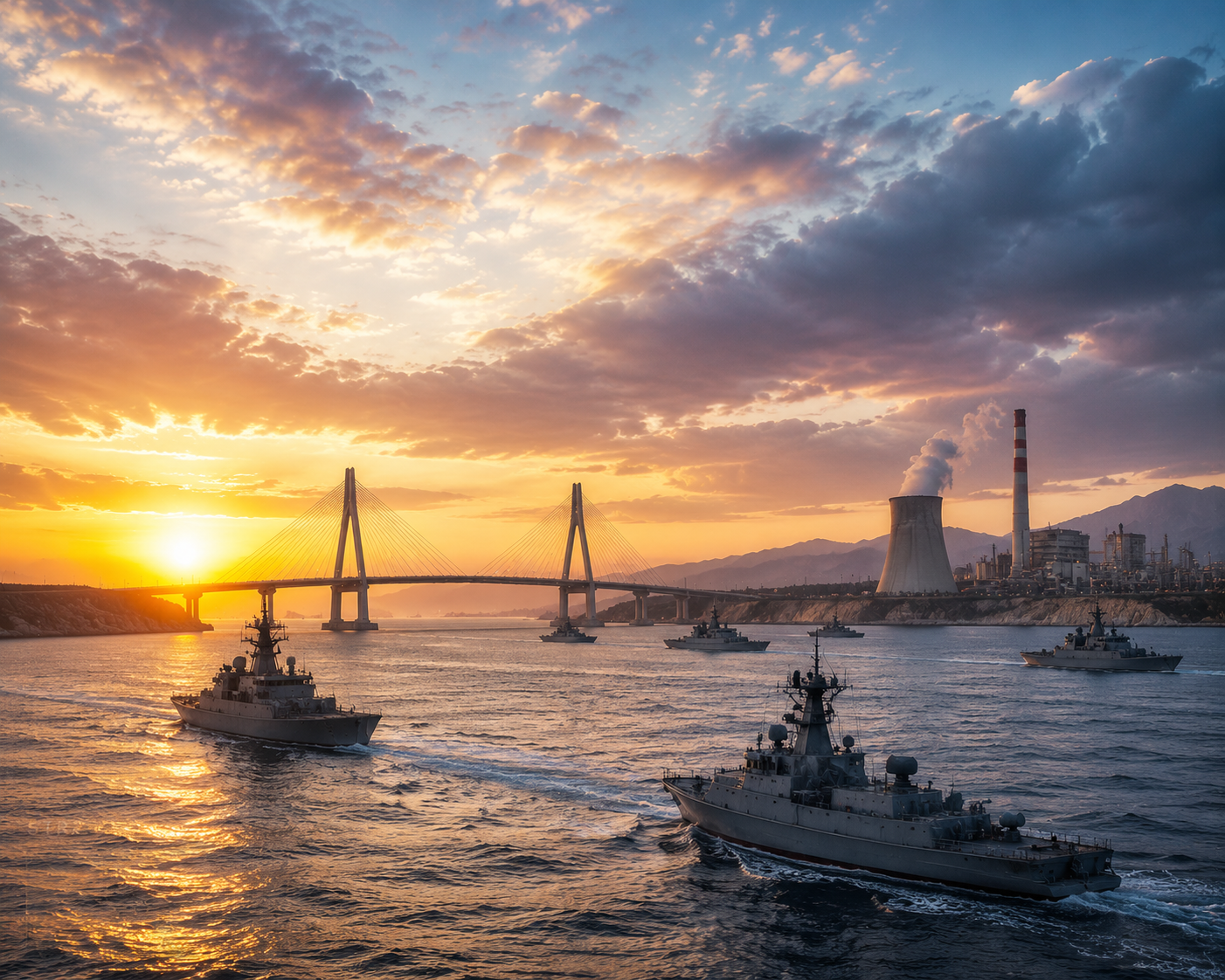

The geopolitical landscape in the Middle East has entered a volatile new phase today, July 23, 2026, as the United States and Iran exchange increasingly specific threats of military action. Following a series of attacks on vessels in the Strait of Hormuz, Donald Trump has issued a stark ultimatum to Tehran, threatening to dismantle critical Iranian infrastructure in a measured tit-for-tat strategy. In response, Iranian officials have invoked a doctrine of reciprocity, warning of an "eye for an eye" retaliation that could expand the scope of the conflict to include regional allies of the United States.
The Infrastructure Ultimatum
According to reports, Donald Trump has warned that the United States will bomb one Iranian bridge or power plant for every ship attacked in the Strait of Hormuz. These threats specifically identified targets "near Tehran," marking a significant escalation in rhetoric by pointing toward the heart of Iran’s administrative and economic center.
Despite the severity of the warning, Trump has characterized the current state of hostilities as a "skirmish." He suggested that a diplomatic resolution might still be on the horizon, stating that a "deal is near." However, this optimism is contrasted by the precision of his military threats, which aim to link the security of global maritime trade directly to the integrity of Iran’s domestic power and transport grids.
Tehran’s Doctrine of Reciprocity
Tehran has moved quickly to dismiss any notion of de-escalation, instead reinforcing its military stance. Iranian officials stated that their "defence doctrine is clear: eye for an eye," vowing a decisive response against any act of aggression. This rhetoric signifies a commitment to proportional, or perhaps asymmetrical, retaliation should the U.S. carry out its threats against Iranian soil.
Furthermore, the Iranian government has expanded the potential theater of conflict. Iran has warned that backers of U.S. strikes are also considered legitimate targets. This suggests that any regional partners providing logistical support or basing for U.S. operations could find themselves in the crosshairs of Iranian counter-strikes, significantly raising the stakes for stability in the broader Middle East.
Regional Stability and Energy Security
The current standoff is rooted in the ongoing instability within the Strait of Hormuz, a vital artery for global energy supplies. The U.S. infrastructure threats are a direct reaction to recent ship attacks in these waters. The prospect of a "one-for-one" strike policy, where a maritime incident triggers the destruction of a land-based power plant or bridge, introduces a dangerous new variable into global energy security.
As of today, July 23, the international community remains on high alert. While the U.S. administration maintains that these measures are a necessary deterrent to protect international shipping, the "eye for an eye" response from Tehran suggests that the cycle of violence may be difficult to contain. With critical infrastructure now explicitly on the table, the margin for error in the Persian Gulf has never been thinner.