
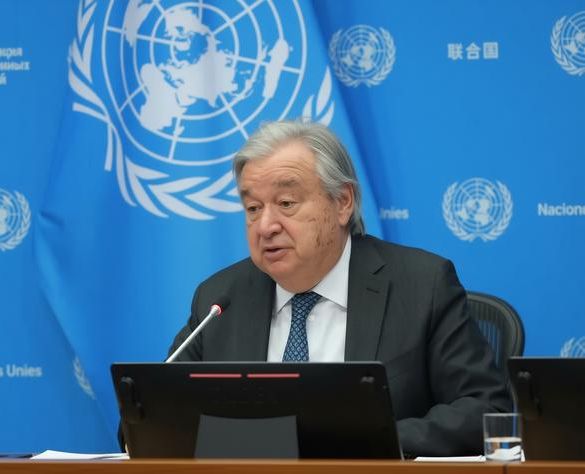

The geopolitical landscape in the Middle East has reached a critical tipping point. On July 24, 2026, the United Nations issued its most dire warning yet, with the UN Secretary-General stating that the current crisis is rapidly "getting out of control." This assessment follows a week of intense military activity, including a series of strikes by the United States and retaliatory actions by Iranian-aligned forces that have pushed the region to the brink of a wider war.
A Rapidly Expanding Regional Conflict
The conflict has moved far beyond a localized dispute, now involving multiple sovereign states across the Gulf. The Islamic Revolutionary Guard Corps (IRGC) has launched attacks on targets in Kuwait, Jordan, and Bahrain. This expansion of hostilities has sent shockwaves through global energy markets, with Brent crude prices surging to $100 per barrel.
In response to these developments, political rhetoric in Washington has reached a fever pitch. Former President Trump has threatened what he termed the "biggest Iran strike yet," signaling a potential for massive escalation if the IRGC continues its operations against regional allies. The intensity of the situation is underscored by the fact that the United States has recently completed its 11th consecutive night of strikes on Iranian interests. These strikes come as the crisis in the Strait of Hormuz deepens and traditional diplomatic channels appear to be faltering.
Maritime Security and the Houthi Threat
A significant portion of the current volatility is centered on the Red Sea and vital shipping lanes. The United States has threatened "major military punishment" in response to ongoing Houthi attacks. The Houthis have significantly escalated their stance, issuing threats to attack any shipping tankers that utilize Saudi Arabian ports on the Red Sea.
This maritime blockade strategy has further complicated international efforts to stabilize the region. The threat to global trade, combined with the direct military engagement between U.S. forces and Iranian-backed groups, has created a volatile environment where a single miscalculation could lead to a full-scale regional conflagration.
The Failure of Diplomacy and the UN Response
The United Nations has been vocal about the deteriorating situation throughout 2026. Earlier this year, UN Secretary-General António Guterres warned that the world was "staring down the barrel of a wider conflict," a sentiment that has been echoed in his recent statements on July 23 and 24. Despite the UN appointing a special envoy to push for peace earlier in the year, the momentum toward war has continued unabated.
With diplomacy currently described as "faltering" by observers on the ground, the international community is facing a situation where the mechanisms for de-escalation are being overwhelmed by military action. The UN chief’s warning that the situation is "getting out of control" serves as a final plea for restraint as the U.S. and Iran remain locked in a cycle of strikes and counter-strikes that show no signs of concluding.