


New Delhi: Fresh evidence from the United States is intensifying global concerns about ultra-processed foods (UPFs) and their impact on heart health. These concerns are also increasingly relevant for India, where consumption of such foods is rising at an alarming pace.
A major study to be presented at the American College of Cardiology’s Annual Scientific Session found that people consuming more than nine servings of ultra-processed foods daily were 67% more likely to suffer serious cardiac events compared to those consuming roughly one serving per day.
Ultra-processed foods range from chips, crackers, frozen meals and processed meats to sugary drinks, breakfast cereals and packaged breads. They are deeply embedded in modern diets due to convenience and aggressive marketing. But the study’s findings highlight a stark trade-off between convenience and cardiovascular health.
The researchers observed that with each additional daily serving of UPFs, the risk of heart attacks, strokes, or death from coronary heart disease increased by more than 5%. Even after accounting for calorie intake, overall diet quality, and risk factors like diabetes, hypertension, cholesterol and obesity, the elevated risk remained significant.
The study tracked 6,814 adults aged 45-84 years from the Multi-Ethnic Study of Atherosclerosis (MESA), all initially free from heart disease. Participants consuming the highest levels of UPFs averaged 9.3 servings per day, compared to just 1.1 servings among those in the lowest intake group. The findings suggest that the dangers of UPFs go beyond excess calories, potentially involving mechanisms like inflammation, metabolic disruption, increased visceral fat, and reduced satiety.
Interestingly, the research also revealed disparities in risk. Each additional serving of UPFs was associated with a 6.1% increase in cardiovascular risk among Black Americans, compared to 3.2% among non-Black individuals. Researchers pointed to structural factors such as targeted marketing and limited access to healthier food options as contributors to this gap.
While the study was based on self-reported dietary data and did not directly examine biological mechanisms, it reinforces a growing body of evidence linking ultra-processed diets with chronic diseases. Nutrition labels, often indicating high levels of added sugars, salt, and unhealthy fats, remain one of the most accessible tools for consumers to make informed choices.
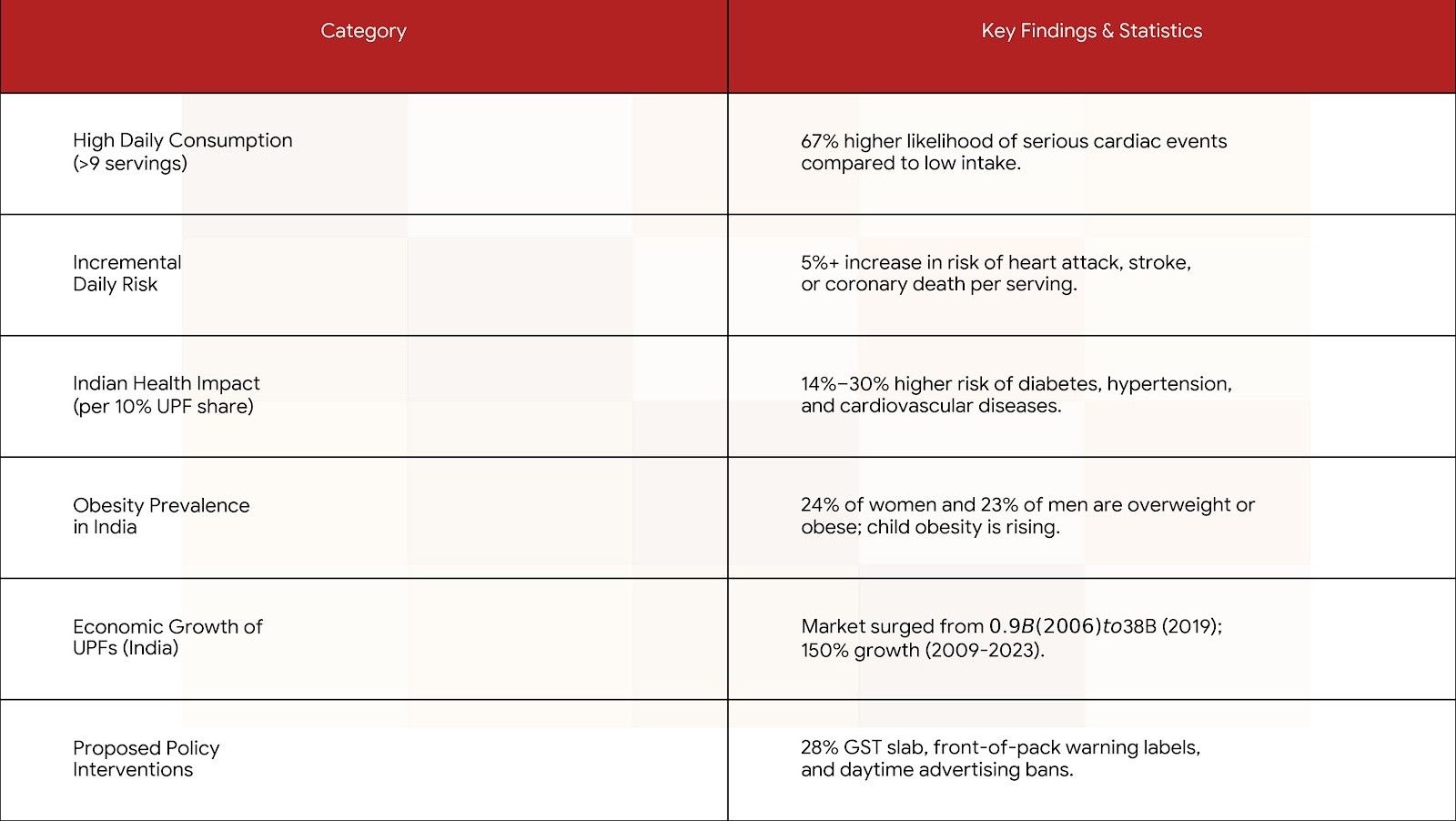
These findings resonate strongly in India, where dietary patterns are undergoing a dramatic transformation. The Economic Survey 2025-26 describes a “mammoth” surge in UPF consumption, positioning it as a key driver of the country’s escalating obesity and non-communicable disease crisis. Retail sales of UPFs in India have surged nearly 40-fold, from $0.9 billion in 2006 to about $38 billion in 2019. Between 2009 and 2023, the market expanded by over 150%, with a sharp 11.29% rebound between 2020 and 2021 following a brief pandemic-related dip.
This rapid growth reflects a shift away from traditional diets toward packaged and convenience foods. Household data shows that urban Indians now spend about 10.64% of their food budget on processed foods and beverages, while rural households are not far behind at 9.6%. Among product categories, sweet biscuits dominated with a 43% share of retail value in 2021, while salty snacks emerged as the fastest-growing segment, overtaking beverages to become the second-largest category. Convenience foods saw the fastest per capita growth during the pandemic, driven by their ease of preparation.
The health consequences of this dietary shift are already visible. Obesity rates in India have doubled over the recent years, with 24% of women and 23% of men now classified as overweight or obese according to NFHS-5 data. Among children under five, excess weight has increased from 2.1% in 2015-16 to 3.4% in 2019-21, and projections estimate that 83 million Indian children could be obese by 2035.
Research indicates that every 10% increase in the share of UPFs in the diet is associated with a 14-30% higher risk of diabetes, hypertension, and cardiovascular diseases.
Recognizing the scale of the problem, policymakers in India are considering aggressive interventions. The Economic Survey 2026 proposed moving ultra-processed foods into the highest GST slab of 28%, along with additional surcharges for products high in sugar, salt, and fat. It also recommended replacing simplified ‘star ratings’ with front-of-pack warning labels to better inform consumers. Another proposal under consideration is a ban on UPF advertising between 6 AM and 11 PM to reduce exposure among children and adolescents.
The convergence of evidence from the United States and India underscores a critical global health message: ultra-processed foods are not merely a dietary concern but a major public health risk. As consumption rises, so does the burden of heart disease and metabolic disorders. Addressing this challenge will require not only individual awareness but also systemic changes in food environments, regulation, and public policy.
In the meantime, the simplest advice remains powerful: prioritize minimally processed foods like whole grains, nuts, beans, fruits and vegetables, and treat ultra-processed options as occasional indulgences rather than daily staples.