
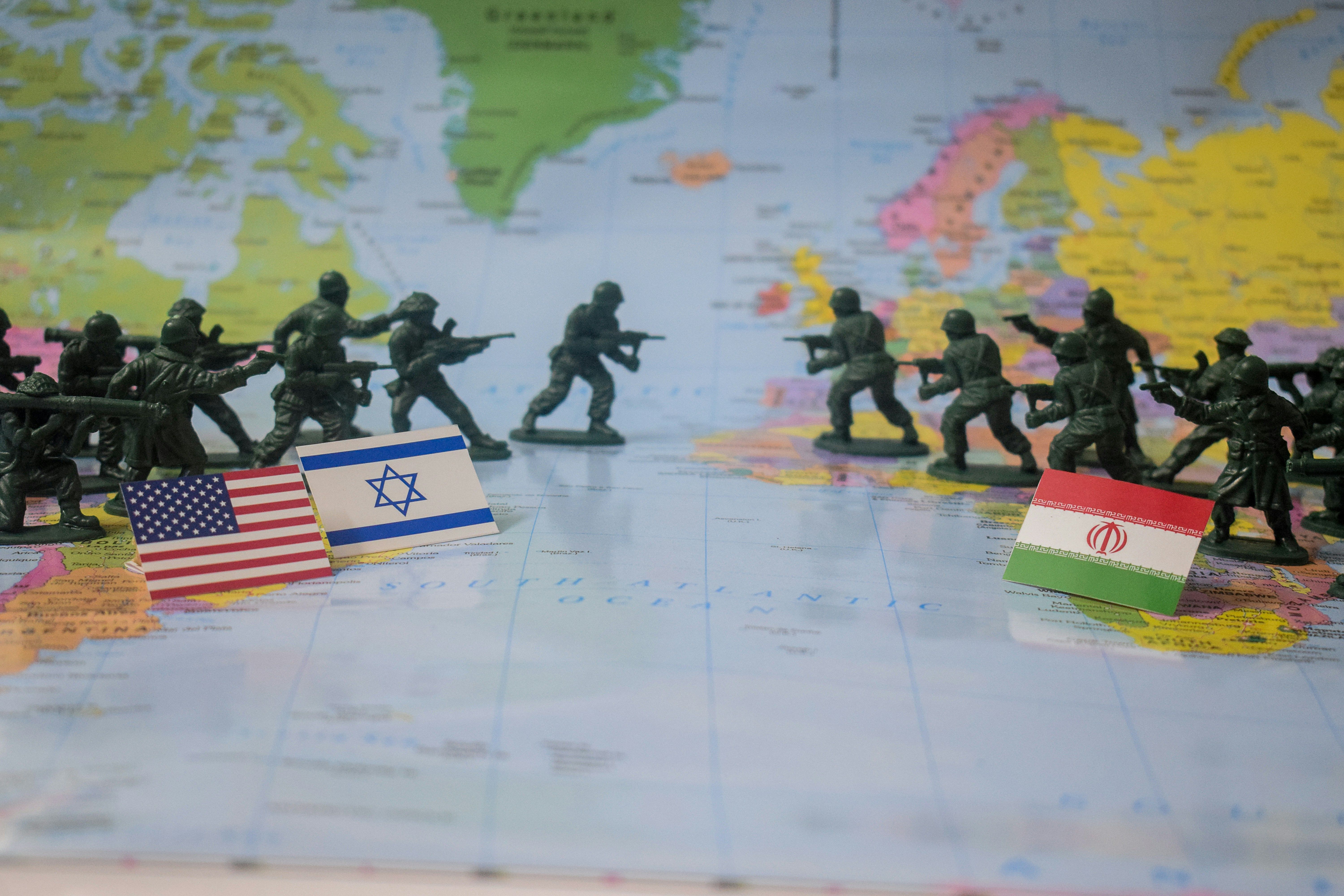

New Delhi: The first test of the US-Iran peace agreement came even before negotiators returned to the table — and it exposed just how fragile the agreement was. US-Iran talks are due Sunday (June 21), but Tehran has closed the Strait of Hormuz over continuing Israeli strikes in Lebanon, exposing the contradictions at the heart of a deal that was supposed to end one conflict but has struggled to contain another.
For four months, the United States and Iran stood on the edge of a wider Middle East catastrophe. The conflict drew in Israel and Hezbollah, disrupted global energy routes and consumed billions of dollars in military resources. Yet it ended not with a decisive military victory, but with a memorandum of understanding (MoU), a temporary diplomatic opening, and a far more uncomfortable debate in Washington: Was the war necessary at all?
Iran has accused Washington of acting in bad faith and failing to stop Israeli operations in Lebanon. While Iranian negotiators are travelling to Switzerland for technical discussions alongside US and Qatari mediators, Tehran has signalled that meaningful progress toward a final nuclear settlement will depend on whether Washington honours its commitments.
The message, therefore, is: the agreement has produced a pause in hostilities, not a guarantee of peace.
Victory Without Clarity
The war’s greatest legacy may be the gap between its enormous costs and its uncertain strategic gains.
President Donald Trump argued that military pressure was necessary to force Iran into negotiations over its nuclear programme and reshape the regional security order. Critics, however, say Washington has spent months fighting only to return to a negotiating position that looks remarkably similar to where it began.
Democratic Senator Chris Coons has delivered one of the sharpest criticisms, calling the outcome a “Pathetic. Failure. Inevitable conclusion of a combination of never making the case to the American people, flawed strategic vision, lack of grasp of the regional dynamics.”
Supporters of the war insist the military campaign eliminated a larger threat. Republican Senator Ron Johnson, according to media reports, argued, “We are safer today.”
The conflicting assessments underline the enduring fog of war. Unlike previous major military campaigns, the conflict was never formally authorised by Congress. Lawmakers repeatedly attempted to use war powers legislation to restrain the administration, yet failed to stop the campaign. At the same time, Congress never approved a new authorisation for the use of military force.
America therefore entered and exited a costly war without a national consensus over what victory would actually look like.
The Price Of Conflict
As the battlefield quietens, Washington must confront the financial and political bill.
The White House has sought a record $1.5 trillion Pentagon budget, while Republicans are considering an additional $350 billion increase to replenish military stockpiles and sustain America’s strategic posture after months of combat.
Congress is also demanding accountability over the conduct of the war. A particularly controversial episode involved a strike on an Iranian elementary school that killed more than 165 people, an attack US officials believe was based on faulty intelligence.
The incident has become a stark reminder that the fog of war does not end when the fighting stops. Intelligence failures, civilian casualties and strategic miscalculations often become visible only after governments declare their missions accomplished.
The diplomacy emerging from the conflict has generated another political fault line. A potential $300 billion reconstruction and economic development fund for Iran has alarmed many Republicans who fear Washington may be surrendering valuable leverage.
“The only concerns I have are the money and the conditions,” Senator Thom Tillis has been reported to have said.
Even supporters of diplomacy acknowledge the uncertainty. Senator Mike Rounds said, “I understand the President's trying to find a peaceful solution to this. I commend him for that. But we've got a lot of questions.”
An Unfinished Ending
Those unanswered questions extend beyond money and military spending. They strike at the heart of modern American foreign policy: Can a limited war deliver lasting political outcomes, or does it merely create another temporary truce waiting to collapse?
The continuing violence in Lebanon suggests the latter danger remains very real. Israeli strikes and Hezbollah attacks have persisted despite ceasefire efforts, demonstrating the limits of a US-Iran understanding when key regional actors remain outside the agreement.
Israeli Prime Minister Benjamin Netanyahu has insisted Israeli forces will stay in southern Lebanon until all threats are neutralised, while Hezbollah has refused to end hostilities without an Israeli withdrawal.
For Trump, the agreement offers a chance to claim that force brought Tehran back to the negotiating table. For critics, it represents an expensive detour that led Washington back to diplomacy after thousands of deaths, enormous financial costs and months of regional instability.
The ultimate judgment may emerge from the negotiations in Switzerland. A comprehensive nuclear agreement would allow the administration to argue that military pressure created the conditions for peace.
But if Iran again weaponises the Strait of Hormuz, if Lebanon descends into another cycle of violence, or if the nuclear dispute remains unresolved, history may remember the conflict not as a strategic breakthrough but as a costly exercise in ambiguity.
The war has ended on paper. The argument over whether it ever needed to be fought has only just begun.
(Cover Photo by Saifee Art on Unsplash)