


New Delhi: The world is obsessed with Gen Z. Brands chase them, workplaces study them, and social media turns them into cultural weather vanes. But beneath the noise sits a far larger and economically stronger generation that has quietly become the backbone of the global economy: millennials.
The latest Ipsos Generations Report 2026 says the global conversation has moved away from millennials just when their financial, social and workplace influence is peaking. The report argues that while Gen Z captures attention, millennials now carry the weight of economies, workplaces, housing markets and family structures across the world.
Millennials (also known as Gen Y) are the demographic cohort born between 1981 and 1996. Sandwiched between Gen X and Gen Z, they are generally characterized as the first generation to come of age during the rise of the internet and modern digital technology.
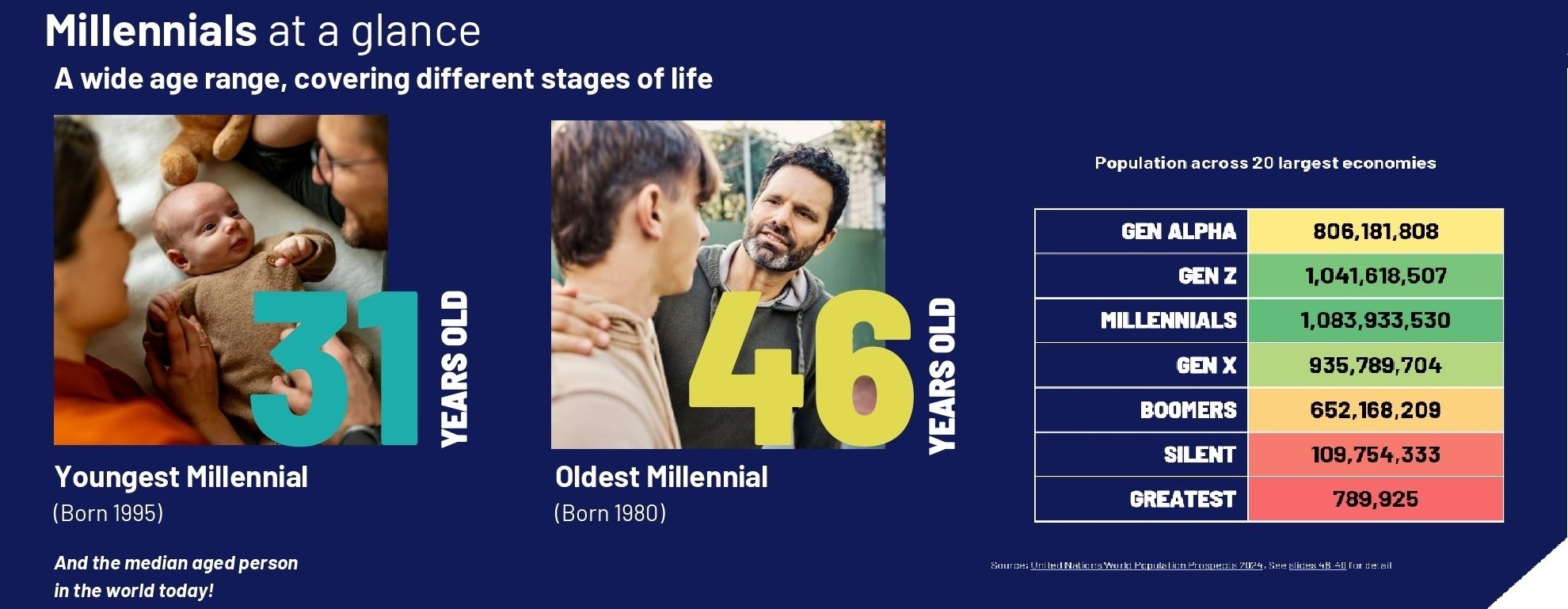
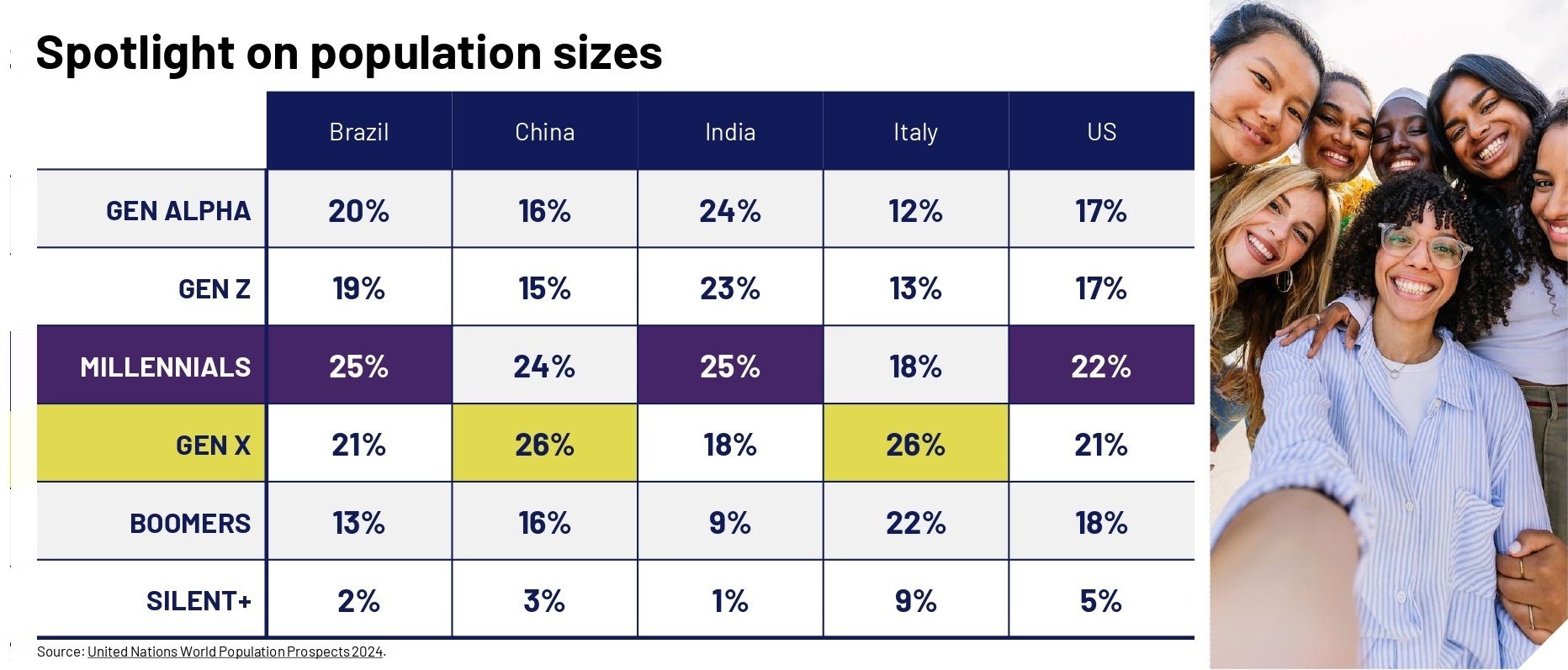
According to the IpsosReport, millennials today make up 23% of the population across the world’s 20 largest economies. In countries such as India, Brazil and the US, they remain the single largest adult demographic. The report says the “world’s median person is now a 31-year-old millennial”, underlining how central this generation has become to politics, business and consumption patterns worldwide.
The Silent Majority
Millennials are no longer the rebellious young adults who once dominated marketing campaigns and media stereotypes. The oldest millennials are now 46, the youngest 31. Many are raising children, paying mortgages, caring for ageing parents and occupying senior corporate roles. “But millennials have been displaced by a new young generation,” says the report. “Recent years have seen the focus of attention turn away from millennials and towards Gen Z.”
The shift in public attention, however, masks economic reality. The report says millennials remain the largest generation across the biggest economies, even as advertisers and companies increasingly pivot towards younger consumers.
“They may now be older and more boring than they were 15 years ago but this is a group that you should not be ignoring,” says the report.
The generation’s journey has also been uniquely shaped by crisis after crisis. Millennials came of age during the rise of the internet, entered the workforce around the 2008 financial crash and later navigated a pandemic economy, inflation and housing instability.
“This is the generation who grew up and started to mature with the internet and mobile phones by their side,” says the report. “They are old enough to remember a time before the world was constantly connected.”
It also warns against treating millennials as a monolithic bloc. Educational divides, income disparities and local cultural experiences have created sharp internal differences within the generation. “In the US, college-educated millennials’ incomes have surpassed Gen Xers at the same age,” says the report. “But in contrast, blue-collar millennials are not having it significantly better than previous generations.”
Pressure Point Years
The report paints a striking picture of how age, rather than generation labels, shapes workplace behaviour and emotional stress.
Drawing from more than 3.6 million employee responses globally, Ipsos found that workers across generations tend to move through similar stages: early optimism, rising pressure, burnout risks and eventual pragmatism.
“What emerged was not a story of generational difference, but of progression,” says the report. “Rather than Gen Z, millennials, or Gen X experiencing work fundamentally differently, the data points to a consistent workforce lifecycle.”
The hardest years appear to fall squarely on older millennials now aged between 36 and 45. Ipsos describes them as “the squeezed middle” — employees carrying organisational pressure while also managing family responsibilities and financial commitments.
“Strain, workload and barriers are highest for this cohort… This group absorbs inefficiencies rather than escalating them upward as they are seen as capable to manage.”
Yet the report says this pressure has not destroyed workplace loyalty. Despite rising strain, job enjoyment among this group remains at 77%, while workplace pride stands at 76%.
The findings also challenge popular assumptions about younger workers. The report says employees aged 16-25 are the most optimistic but also the loneliest and least likely to feel they belong at work. “This cohort is our optimist group… They are ‘finding their feet’ with rose-tinted glasses.”
At the same time, people aged 26-35 — largely younger millennials — are viewed globally as the workforce most comfortable with AI, digital tools and innovation. According to the report, this age group ranks highest for being “at ease with AI”, “innovative” and “a team player”.
Changing Life Maps
Beyond workplaces, the report shows how millennials are reshaping traditional ideas of adulthood.
Marriage is happening later. Home ownership is becoming harder. Parenthood is increasingly delayed. Yet traditional aspirations have not disappeared.
“Six in 10 Gen Z still expect one day to own their own home, more than one in two expect to get married, and one in two expect to become a parent,” says the report.
Housing pressure remains one of the defining anxieties of modern adulthood. According to the report, 71% of people across 29 countries believe young people will struggle to secure the right housing even if they work hard and get good jobs.
It also identifies another major social shift: the rise of pets as family members. It says 51% of US pet owners now consider pets “just as much a part of their family as human members”.
Fernando Alvarez Kuri, Senior Cluster Director, Ipsos in Mexico, captures the emotional shift sharply: “The pet market is booming. There is a strong humanisation of pet dogs, which are called ‘perrijos’, a mixture of the word perro (dog) and hijo (son). This reflects the importance of pets within the family as members.”
Perhaps the report’s most important conclusion is also its simplest: generations are often overhyped, while life stages matter more.
“Generational segmentation can be a useful starting point, but do not assume it will be your final destination,” says Emmanuel Probst, author of Generational Marketing: Breaking Free from Stereotypes.
That may explain why millennials, despite fading from headlines, continue to dominate the real economy. They are no longer the future. They are the present.
(Cover photo: PickPic.com)