
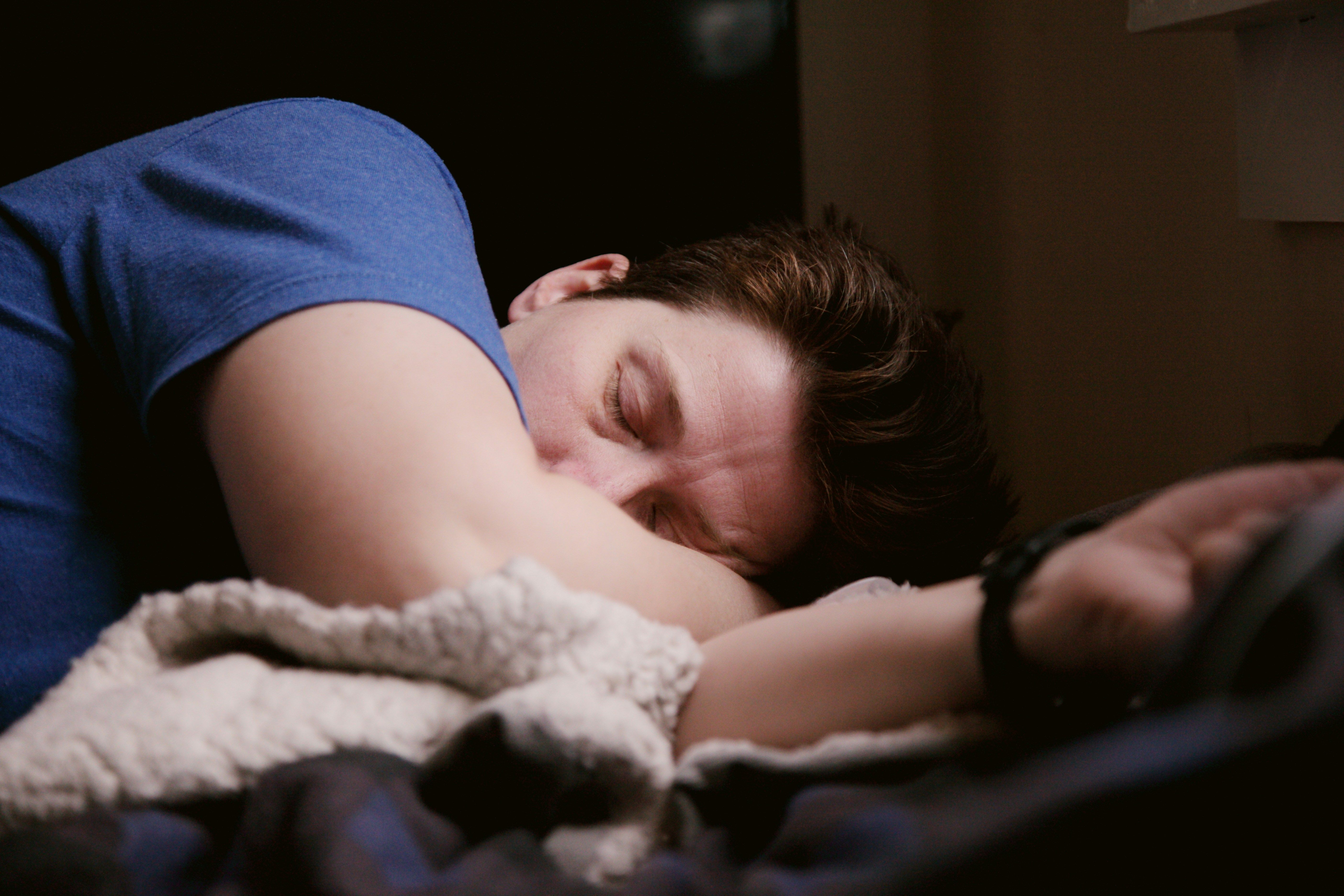

New Delhi: A bad night’s sleep may not be beyond repair after all. New research is offering hopeful evidence that “catch-up sleep” — getting extra rest immediately after sleep deprivation — could help lower the risk of early death.
According to the report published online in Nature Communications, people who slept too little but compensated with longer sleep the following night showed markedly lower mortality risks than those who stayed sleep-deprived without recovery. The findings arrive at a time when millions across the world are trapped in cycles of late-night work, stress, screen exposure and chronic exhaustion.
The report tracked 85,618 adults from the UK Biobank over nearly eight years and analysed more than 574,000 nights of accelerometer-recorded sleep data. The researchers identified five sleep patterns, ranging from regular sleep to severe sleep restriction with or without “rebound” sleep. The most worrying group was people who repeatedly slept far below their body’s sleep requirement and failed to recover afterwards.
“In an era of widespread short and irregular sleep, understanding which real-world sleep patterns associate with adverse outcomes is critical,” said the researchers. “Sleep rebound appeared to attenuate these associations, suggesting that increased sleep duration following sleep restriction may buffer the adverse effects of prior sleep deprivation.”
The findings are striking because they challenge the long-held assumption that the damage from missed sleep cannot be repaired. Instead, the report suggests that the timing of recovery sleep matters deeply. Sleeping longer immediately after a poor night may be more beneficial than waiting until the weekend to collapse into bed.
The study found that participants experiencing severe sleep restriction without rebound had a 42% higher risk of death compared with regular sleepers. But when rebound sleep followed deprivation, the elevated mortality risk largely disappeared statistically.
Beyond Weekend Sleep
The research report also dismantles the popular myth that weekend sleep alone can undo a week of exhaustion. The researchers found that sleep rebound did not happen only on weekends. Recovery sleep occurred throughout the week, often the very next night after deprivation.
“Moving beyond traditional weekday-weekend analyses, our results suggest that the compensatory pathway of sleep rebound may better account for the attenuation of sleep restriction-associated mortality risk than the circadian disruption pathway,” the research noted. “It is possible that extending sleep in the subsequent night(s) following sleep restriction may be preferable to deferring sleep recovery until the weekend.”
That distinction may prove crucial in modern urban lifestyles where weekday sleep loss has become routine. Sleep specialists have long warned that chronic deprivation raises risks of obesity, diabetes, heart disease, depression and cognitive decline. This report adds another layer: failing to recover from repeated sleep loss may quietly increase mortality risk over time.
The report observed that nearly 28% of participants experienced short-term sleep restriction, but only 46.3% of them managed rebound sleep afterwards. Those who failed to recover tended to be older, less physically active, more likely to smoke and more likely to have obesity.
“Our findings suggest that short-term sleep restriction might be detrimental, particularly for short sleepers, and highlight acute sleep rebound as a potential strategy to mitigate mortality risk,” the research authors said.
Importantly, the researchers stressed that rebound sleep does not erase all damage. Chronic cycles of sleep deprivation may still harm heart health and brain function even when recovery sleep occurs.
“Collectively, these findings highlight that different patterns of catch-up sleep may have different associations with health outcomes,” the report stated. “However, interventional studies are necessary before firm clinical recommendations can be established.”
Why Recovery Matters
Scientists believe sleep rebound may work because the body uses recovery sleep to repair metabolic, hormonal and inflammatory disruptions caused by sleep loss. Sleep deprivation is known to impair insulin sensitivity, increase inflammatory markers and disrupt stress hormones — all of which contribute to long-term disease risk.
The report explained that rebound sleep may help stabilise carbohydrate metabolism and reduce systemic inflammation by restoring balance to the body’s stress-response systems. Researchers also pointed to earlier experimental evidence showing improvements in glucose metabolism after recovery sleep.
The strongest mortality risks were found among habitual short sleepers — people already getting insufficient sleep as a lifestyle pattern. Among them, repeated sleep restriction without rebound was associated with significantly higher mortality risk.
“Sleep rebound may offer protective effects by buffering the negative health consequences of sleep restriction-induced sleep debt,” the researchers wrote. “These findings suggest that individuals, especially short sleepers, may benefit from two protective strategies: avoiding sleep restriction and achieving acute sleep rebound when sleep loss occurs.”
The study’s implications stretch far beyond the bedroom. In a world running on deadlines, night shifts and digital overstimulation, the research reframes sleep not as a luxury, but as an active recovery mechanism tied directly to survival.
For exhausted professionals, students and shift workers, the message may be unexpectedly reassuring: one terrible night is not necessarily catastrophic — provided the body is allowed to recover quickly afterwards.