
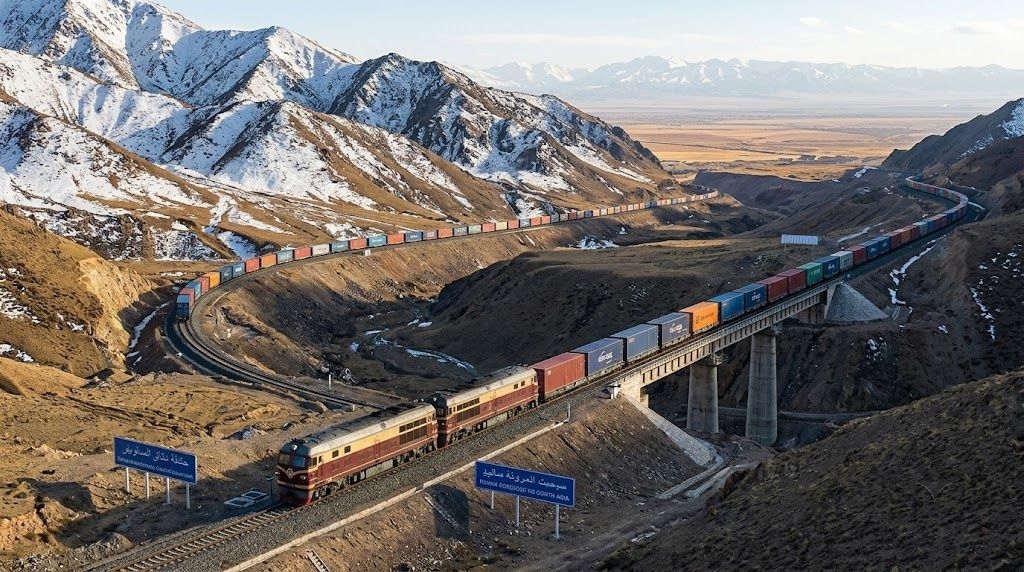

In an effort to mitigate mounting maritime supply chain vulnerabilities, Moscow has proposed exploring a direct rail route connecting to the Indian Ocean. As per reports, Russian Deputy Prime Minister Marat Khusnullin suggested examining the viability of a direct rail link running from Moscow to the Indian Ocean.
The strategic initiative aims to significantly reduce dependence on critical maritime chokepoints, specifically the Strait of Hormuz and the Bosphorus, which have faced escalating operational risks and geopolitical crises.
Strategic Routing Through Central and South Asia
According to reports, the proposed railway corridor would traverse through Central Asia, Iran, and Pakistan. By cutting overland through these regions, the conceptualized infrastructure project seeks to offer a secure, continuous transit alternative that avoids maritime bottlenecks entirely.
While the initiative remains in the conceptual stage, with Russian leadership explicitly calling for the idea to be "explored," it addresses long-standing anxieties regarding maritime trade disruptions. The Strait of Hormuz, in particular, remains a volatile artery for global energy and cargo flows, leaving international commerce vulnerable to regional instabilities.
Implications for Trade and Connectivity
For New Delhi, a dependable overland corridor bypassing traditional sea lanes could reshape regional economic integration. The proposed rail link aligns with broader geopolitical discussions surrounding trans-continental logistics, offering a land-based counterweight to conventional sea routes through West Asian waters.
Analysts note that while the logistical hurdles of constructing or harmonizing rail gauges across multiple sovereign nations are immense, the political will to evaluate alternative transit corridors highlights the urgency felt by Moscow to secure reliable trade pathways.
Looking Ahead
As discussions surrounding the trans-regional railway materialize, policymakers and industry stakeholders will closely watch whether bilateral and multilateral frameworks are established to study the technical feasibility of the route. Details on funding, timelines, and specific technical agreements have not been reported yet.