
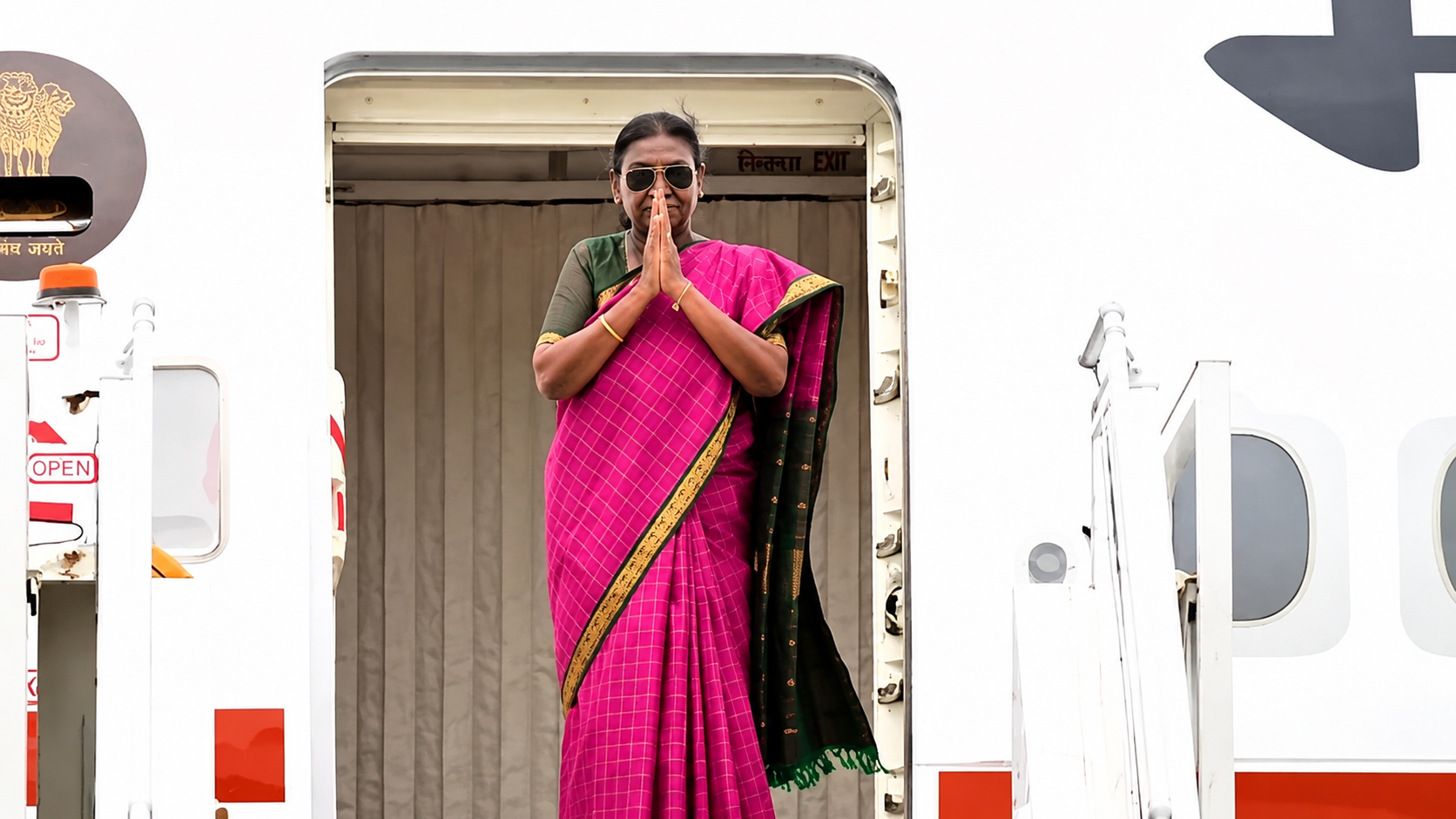

President Droupadi Murmu has arrived in Romania today, July 23, 2026, for a two-day state visit that underscores India’s deepening diplomatic engagement with Southeast Europe. This visit is the final leg of a multi-nation tour that has seen the Indian Head of State opening new chapters in bilateral relations across the region. As India seeks to diversify its partnerships within the European Union and its neighbors, the engagements in Bucharest represent a critical step in high-level political and economic outreach.
Strengthening Ties in Bucharest
According to reports, President Murmu’s two-day state visit to Romania commences today. This engagement is designed to consolidate the growing rapport between New Delhi and Bucharest. Romanian President Nicusor Dan is scheduled to receive President Murmu this Thursday, providing a platform for discussions on mutual interests ranging from trade to strategic cooperation.
While specific details of the bilateral agreements have not been reported yet, the visit is framed as a pivotal moment for India-Romania relations. The presence of the Indian President in Bucharest signifies a reciprocal interest in enhancing diplomatic visibility and exploring new avenues for collaboration in a rapidly evolving global geopolitical landscape.
A Historic Tour of Southeast Europe
The arrival in Romania follows a series of "historic" and "first-ever" engagements earlier this week. On July 21, President Murmu arrived in North Macedonia, marking the first time any Indian Head of State has visited the country. This landmark visit was preceded by a similar historic stop in Moldova on July 20.
The Presidential visit to North Macedonia was a significant milestone in India’s diplomatic history. By visiting nations that have traditionally seen limited high-level interaction with New Delhi, the President is signaling India's intent to broaden its footprint beyond the traditional power centers of Western Europe. These visits have been characterized by a focus on establishing a foundational political understanding that can later be leveraged for economic and cultural exchange.
Strategic Implications for the Region
The broader context of this tour is the "boost" it provides to India’s regional relations. The visit to Moldova earlier this week was specifically intended to catalyze bilateral ties. The Moldovan leg has been characterized as a historic first, suggesting that India is actively filling diplomatic voids in Eastern and Southeast Europe.
By engaging with Romania, a key member of the European Union and NATO, India is positioning itself as a versatile partner capable of maintaining strong ties with diverse European stakeholders. The analytical consensus across recent reports suggests that this tour is less about immediate transactional gains and more about long-term strategic positioning. Strengthening these ties ensures that India has a vocal set of partners in a region that serves as a gateway between the East and the West.