
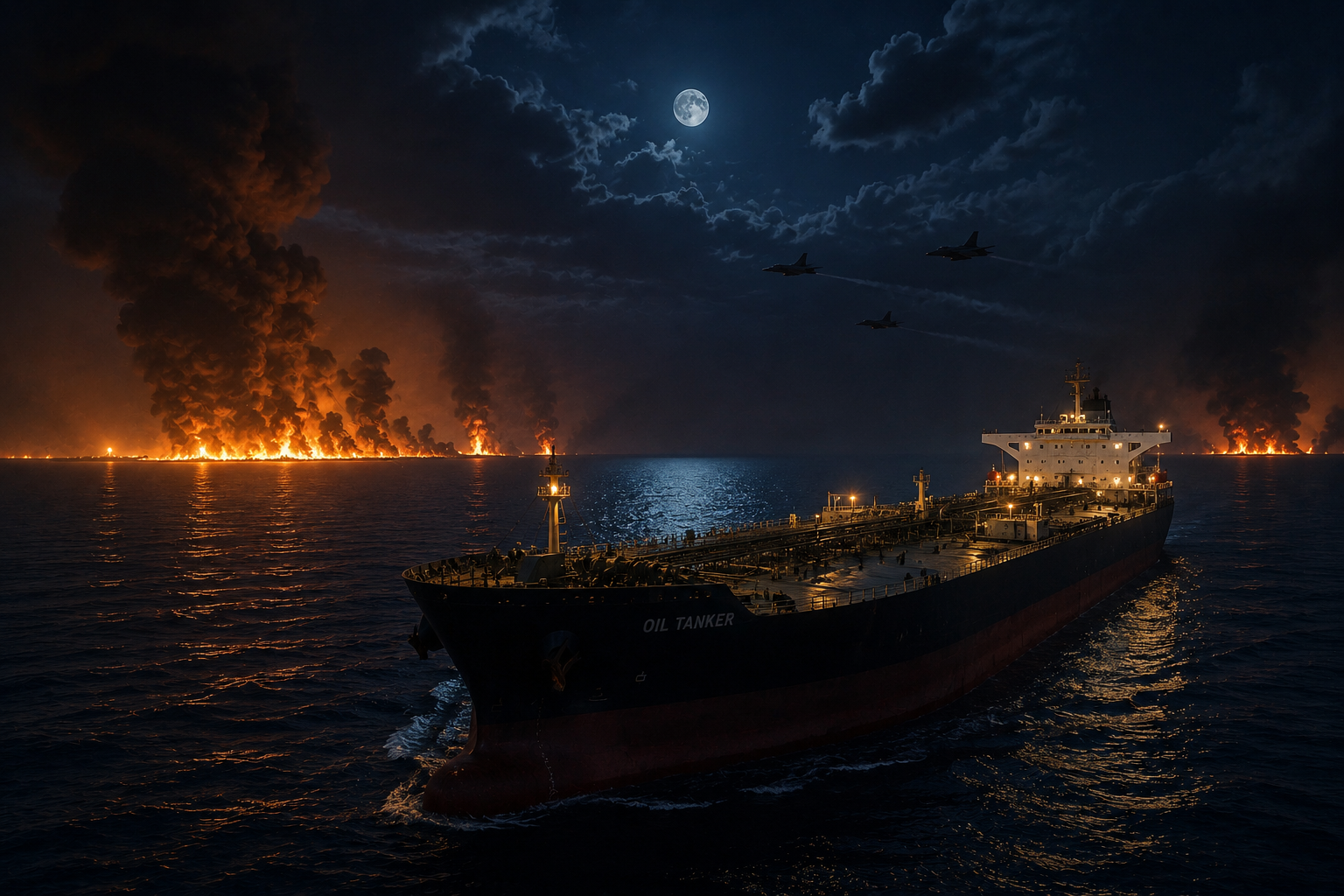

The maritime security landscape in the Middle East has reached a volatile threshold today, 23 July 2026. As the conflict between the United States and Iran enters its second week of direct confrontation, Yemen’s Houthi rebels have claimed responsibility for a series of attacks on oil tankers in the Red Sea. These developments mark a significant expansion of the combat zone, transforming one of the world’s most vital shipping lanes into a primary front.
Targeting Global Energy Corridors
Houthi forces officially claimed credit this morning for strikes targeting Saudi tankers navigating the Red Sea. The group has specifically aimed at vessels belonging to Saudi Arabia, heightening the risk of a new maritime "chokepoint" that could disrupt global energy supplies.
While the full extent of the damage to the vessels remains under assessment, these actions are being viewed as a strategic escalation intended to pressure regional and international actors. By targeting Saudi interests, the Houthis have effectively linked the ongoing hostilities in Iran to the broader security of the Arabian Peninsula, complicating the geopolitical calculus for Riyadh and its allies.
Twelve Nights of US Bombardment
Simultaneously, the United States has maintained its aggressive military posture against Iranian targets. As of today, the U.S. has launched its 12th consecutive night of what observers describe as devastating bombardments on Iran. This sustained campaign represents a significant commitment of U.S. air and naval power, intended to degrade Iranian military capabilities.
Details on the specific targets within Iran for this 12th night have not been reported yet, but the continuity of the strikes suggests a strategy of persistent pressure rather than a limited surgical intervention. This 12-day streak of aerial operations marks one of the most intense periods of direct U.S. military action in the region in recent years, signaling that a diplomatic de-escalation remains out of reach.
A Widening Regional Conflict
The dual nature of these developments, U.S. strikes on the Iranian mainland and Houthi strikes in the Red Sea, indicates that the war is no longer contained within traditional borders. The Houthis' entry into the fray via tanker strikes is a direct response to the continued U.S. attacks on Iran, showcasing the interconnected nature of the regional alliance networks.
Analysts note that the expansion of the conflict into the Red Sea introduces a layer of economic warfare. The threat to oil tankers not only endangers the environment but also risks a sharp spike in global insurance premiums and shipping costs. As the U.S. continues its campaign against Iran, the Houthi response suggests that the maritime corridor will remain a high-risk zone for the foreseeable future.