


New Delhi: The modern world’s dependence on plastic has long been framed as an environmental crisis. Increasingly, however, scientists are warning that it may be something far more intimate… and far more dangerous. Tiny fragments known as nanoplastics and microplastics (NMPs), once thought to be largely inert, are now being detected inside the human body, with implications that reach into the very core of our biological systems.
A recent report published in The Lancet – Diabetes and Endocrinology adds to a growing body of research suggesting that these particles are not merely passing through us, but actively interfering with the endocrine system, the network of glands and hormones that regulates everything from metabolism to reproduction.
Studies have shown the pervasive presence of NMPs in human tissues, including blood, and their potential to impair metabolic and hormonal health. “This growing body of evidence underscores the urgent need to better understand the mechanisms by which NMPs interfere with endocrine function and to address their effect on public health,” the report says.
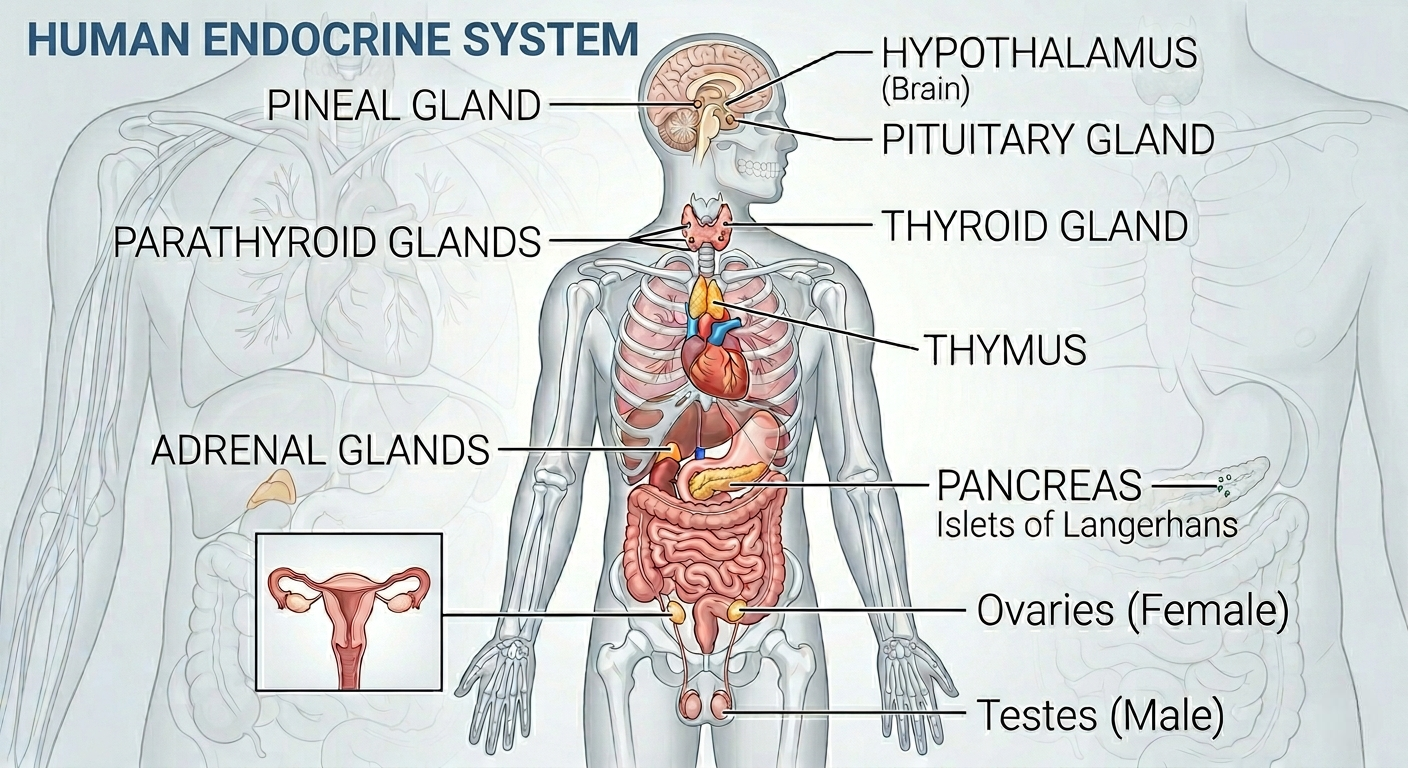
The endocrine system is particularly vulnerable because of its sensitivity. Hormones operate at extremely low concentrations, and even minor disruptions can cascade into significant physiological effects. Endocrine glands such as the thyroid, pancreas and adrenal glands are highly vascularised, making them easy targets for circulating microplastics.
Emerging laboratory studies suggest that NMPs can mimic natural hormones, disrupt intracellular signalling pathways, and interfere with the finely tuned hormonal crosstalk that maintains systemic balance. In effect, these particles may behave like rogue biochemical messengers, sending distorted signals throughout the body.
Independent research from institutions such as the World Health Organization has also highlighted the widespread presence of microplastics in drinking water and food chains, suggesting that human exposure is both continuous and unavoidable. A 2022 study in the journal Environment International found microplastics in 80% of human blood samples tested, underscoring how deeply embedded these particles have become in daily life.
Particularly alarming is the risk posed to vulnerable populations. Pregnant women may unknowingly transfer these particles across the placenta, potentially affecting foetal endocrine development. Children, whose hormonal systems are still developing, may face lifelong consequences from early exposure.
The report further notes that NMPs rarely exist in isolation. They act as carriers for a toxic cocktail of substances — proteins, lipids, bacteria, viruses and environmental pollutants — amplifying their biological impact. Once inside the body, they may trigger inflammation, oxidative stress, and even cell death, compounding their disruptive effects.
Race to Respond
The implications of these findings extend far beyond theoretical concern. In-vitro studies have demonstrated that NMPs can alter the function of critical endocrine organs, including thyroid, adrenal, ovarian, and pancreatic islet cells, highlights The Lancet report. These disruptions are increasingly being linked to rising rates of metabolic disorders such as diabetes, obesity, and infertility, it adds.
Environmental stressors like microplastic exposure have also been associated with accelerated ageing, suggesting that their impact may be both immediate and cumulative. Over time, this could place additional strain on already burdened healthcare systems.
“Well-designed clinical trials are essential to establish causative links between NMP exposure levels and specific endocrine and metabolic disorders,” the report emphasises.
Yet, significant scientific and regulatory gaps remain. There is still no universally accepted method for detecting and quantifying microplastics in human tissues, making it difficult to assess exposure levels accurately. Contamination during sampling and analysis further complicates the picture.
At the policy level, the absence of defined safety thresholds for NMP exposure leaves regulators struggling to respond effectively. While some countries have begun restricting single-use plastics, global production continues to rise, driven by demand for convenience and low-cost materials.
The report calls for prevention strategies that go beyond individual behaviour, urging systemic change. Reducing industrial plastic production, limiting the use of plastic containers — particularly for bottled water — and investing in advanced recycling technologies are seen as critical steps.
“However, regulatory frameworks remain inadequate, with no established safety thresholds for NMP exposure. Policy interventions, alongside advancements in catalytic and biotechnological recycling and degradation, are needed to mitigate this growing health threat,” the report warns.
Meanwhile, researchers are exploring potential medical interventions. Therapeutic apheresis, a procedure traditionally used to filter harmful substances from the blood, is being investigated as a possible method to remove circulating microplastics. Other approaches, including probiotic modulation of the gut microbiome, aim to mitigate the biological impact of these particles.
The endocrine system itself may offer a pathway forward. Because hormonal changes can be measured with precision, it provides a unique lens through which to monitor the health effects of microplastic exposure.
“In conclusion, the endocrine and metabolic systems, with their well characterised hormonal readouts, provide a unique opportunity to monitor and address the health effects of NMP exposure. Endocrinologists, given their expertise in hormonal systems and metabolic regulation, are uniquely positioned to lead interdisciplinary efforts in this field. Coordinated scientific action is essential to protect human health from this pervasive and under-recognised threat,” the report concludes.
What is becoming clear is that the plastic crisis is no longer confined to oceans and landfills. It has entered the human body — quietly, invisibly, and with consequences that science is only beginning to understand.
(Cover photo by Noman Khan on Unsplash)