
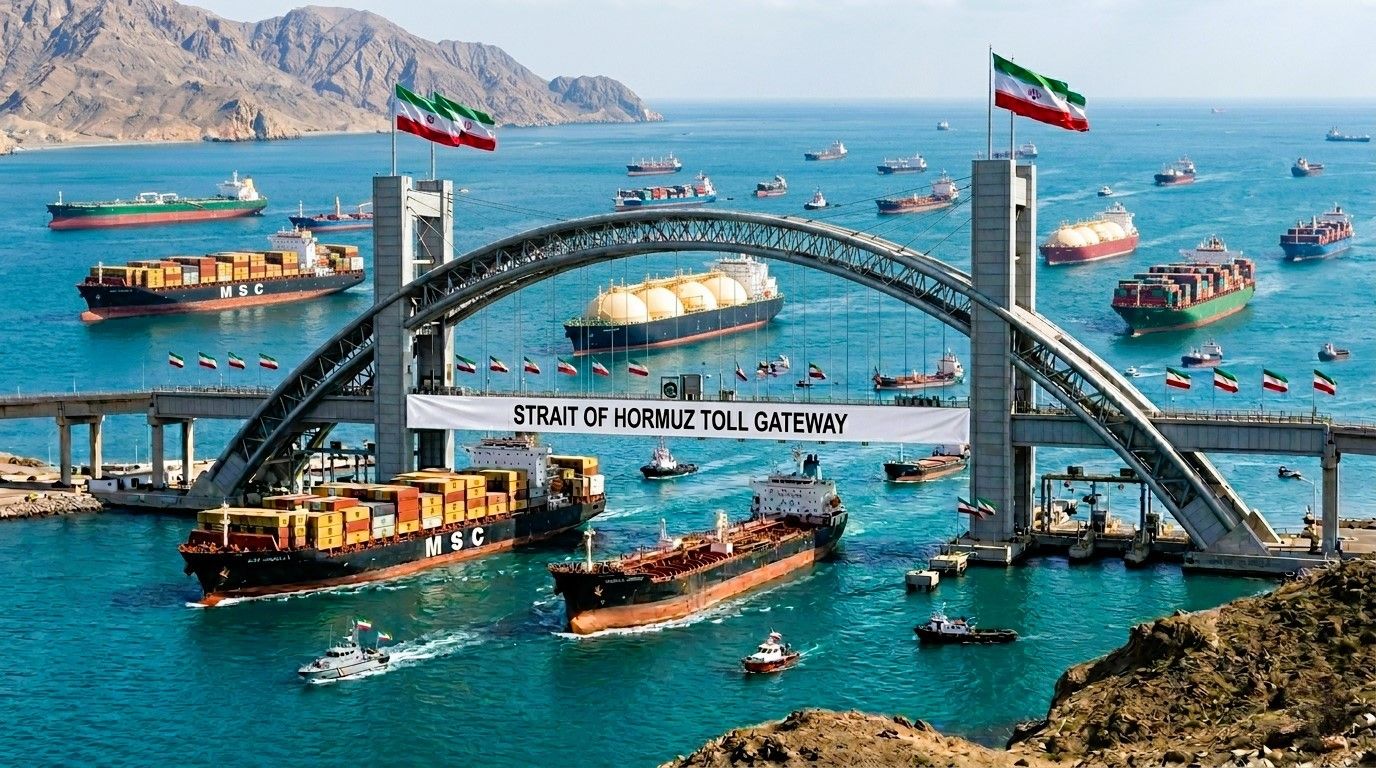

New Delhi: Iran is preparing to soon roll out a new mechanism to regulate maritime traffic through the Strait of Hormuz, signalling what officials describe as a broader effort to formalise Tehran’s control over shipping movement in one of the world’s most sensitive energy corridors.
The proposed framework would introduce designated transit routes, coordination procedures and specialised maritime services for vessels operating through the strategic waterway.
Ebrahim Azizi, head of the national security committee in Iran’s parliament, said Tehran had completed preparations for the mechanism and that operational details would be announced soon. According to remarks carried by Iranian media and international news agencies, Azizi said the system would apply primarily to commercial vessels and countries “cooperating with Iran”. He added that Iran would collect fees for navigation support, monitoring and other specialised services linked to the arrangement.
Iran says vessels from countries it considers “friendly” or non-hostile — including India, China and Turkiye — will continue to receive safe passage, while ships linked to “hostile” states such as the United States and Israel will face restrictions or denial of transit through the Strait of Hormuz.
The Strait of Hormuz, situated between Iran and Oman, remains one of the world’s most important maritime chokepoints. Nearly a fifth of global oil and liquefied natural gas trade passes through the narrow passage connecting the Persian Gulf to the Arabian Sea. Any attempt to alter transit procedures in the area is therefore closely watched by energy markets, shipping companies and military powers with interests in the Gulf.
Regional Security Framework
Iran’s latest proposal builds on a series of earlier initiatives aimed at reshaping maritime security architecture in the region. Since 2019, Tehran has repeatedly argued that Gulf security should be managed by regional states rather than foreign military coalitions.
Following attacks on oil tankers and a spike in tensions between Iran and the United States during that period, Iranian officials introduced what they called the ‘Hormuz Peace Endeavour’, or HOPE, initiative at the United Nations. The proposal called for collective regional cooperation on shipping security, freedom of navigation and energy stability without external intervention.
Iranian military commanders and lawmakers have also floated earlier ideas involving mandatory coordination for foreign vessels transiting near Iranian territorial waters. In several public statements over the past few years, officials from the Islamic Revolutionary Guard Corps suggested that ships entering the Strait of Hormuz should identify themselves to Iranian authorities and comply with regional maritime guidelines. Tehran has consistently argued that its naval presence is necessary to maintain security in the Gulf, particularly after incidents involving tanker seizures, drone attacks and naval stand-offs with Western forces.
The current proposal appears to expand on those earlier concepts by creating a more structured mechanism for vessel management. Iranian media reports suggest the framework could involve designated shipping corridors monitored by Iranian authorities, as well as service charges linked to escort coordination, navigation assistance or maritime oversight.
Azizi also indicated that vessels associated with the ‘Freedom Project’ — viewed as a reference to Western-led maritime escort operations in the Gulf — would not be allowed access to the designated route. Iran has long opposed US-led naval missions in the region, arguing that they increase tensions and undermine regional sovereignty. Tehran views such operations as part of broader Western efforts to challenge Iranian influence over Gulf security.
The dispute over maritime control in the Strait of Hormuz has intensified in recent years alongside wider geopolitical tensions involving Iran, the United States and Israel. Since the collapse of the 2015 nuclear agreement and the re-imposition of US sanctions, Iranian officials have repeatedly warned that pressure on Tehran could have consequences for energy flows through the Gulf.
Iran has occasionally threatened to restrict shipping access in response to sanctions or military pressure, although it has generally stopped short of attempting a full blockade. Still, several incidents involving the detention or seizure of commercial tankers over the past decade have heightened concerns among international shipping operators.
The latest proposal is already attracting attention from major oil-importing nations, particularly in Asia, where economies remain heavily dependent on Gulf crude supplies. Shipping analysts say any new fee structure or compulsory routing system could raise insurance costs and alter commercial shipping patterns through the region.
While Iran insists the mechanism is designed to improve maritime management and ensure secure transit for cooperating vessels, Western governments continue to stress that navigation through the Strait of Hormuz must remain open under international law. The United States has repeatedly stated that freedom of navigation in the Gulf is a core strategic interest, and multinational naval patrols in the region remain active amid continuing security concerns.