
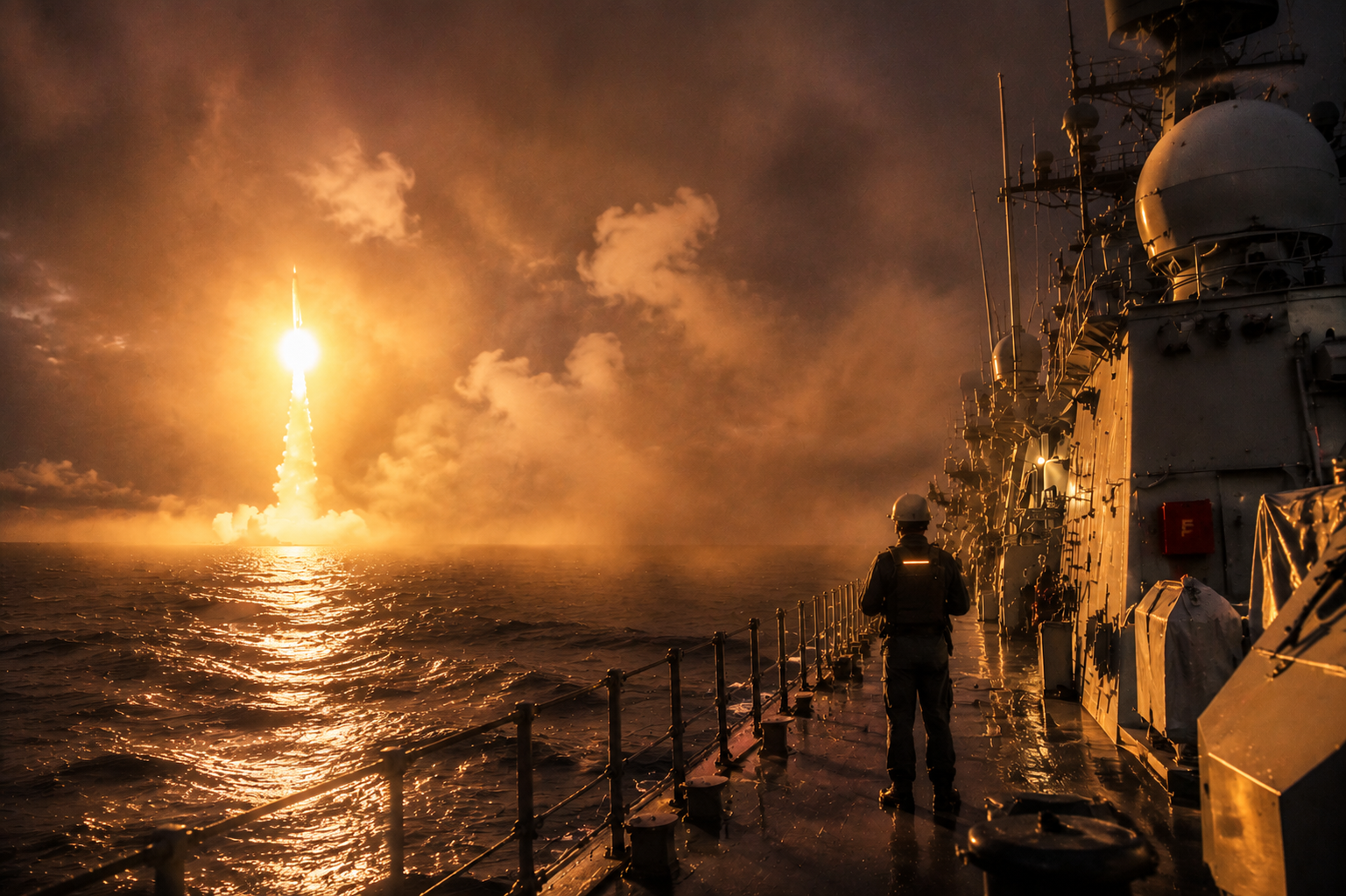

The geopolitical landscape in the Middle East and the Indian Ocean has reached a critical flashpoint today, July 18, 2026. Following a week of sustained military exchanges, Iranian forces have claimed a direct missile strike on a United States vessel in the northern Indian Ocean. This development marks a significant expansion of the current conflict, moving beyond localized skirmishes into vital international shipping lanes.
Escalation in the Indian Ocean
According to reports, the Iranian Army and the Islamic Revolutionary Guard Corps (IRGC) have targeted what they described as a "hostile American vessel" in the Indian Ocean. While specific details regarding the extent of the damage or the exact class of the ship have not been fully reported yet, Tehran has framed the operation as a direct response to ongoing American military pressure.
This maritime strike coincides with a warning from the IRGC regarding expanded operations against US-linked assets. The claim of hitting a warship follows seven consecutive nights of US airstrikes directed at Iranian interests, creating a cycle of retaliation that now threatens maritime security far beyond the Persian Gulf.
Seven Nights of US Airstrikes
The situation on the ground within Iran and its neighboring territories has become increasingly dire. The United States conducted its seventh consecutive night of strikes as of early this morning. These operations have resulted in significant casualties, with Tehran reporting that at least 38 people have been killed in the latest wave of attacks.
In addition to the loss of life, the strategic nature of the US targets appears to be shifting. Recent American strikes have moved toward infrastructure, with new reports of attacks on roads and bridges. These actions appear designed to degrade logistical capabilities, though they have simultaneously fueled Tehran's resolve to strike back at regional US installations.
Regional Contagion and Economic Impact
The conflict is no longer contained within the borders of Iran. Tehran has claimed retaliatory strikes against American bases located in Kuwait, Jordan, and Bahrain. This multi-front engagement suggests a coordinated effort by Iranian forces to challenge the US presence across the entire Gulf region.
"Iran fires missiles at US assets across Gulf in retaliatory strikes," reported the Deccan Chronicle, highlighting the breadth of the current military theater.
The economic consequences of this instability are already manifesting. Investing.com reports that as the US widens its strike zone and Tehran targets regional bases, maritime traffic through the Strait of Hormuz has begun to fall. This decline in shipping volume reflects growing international concern over the safety of the world's most critical energy transit point.