
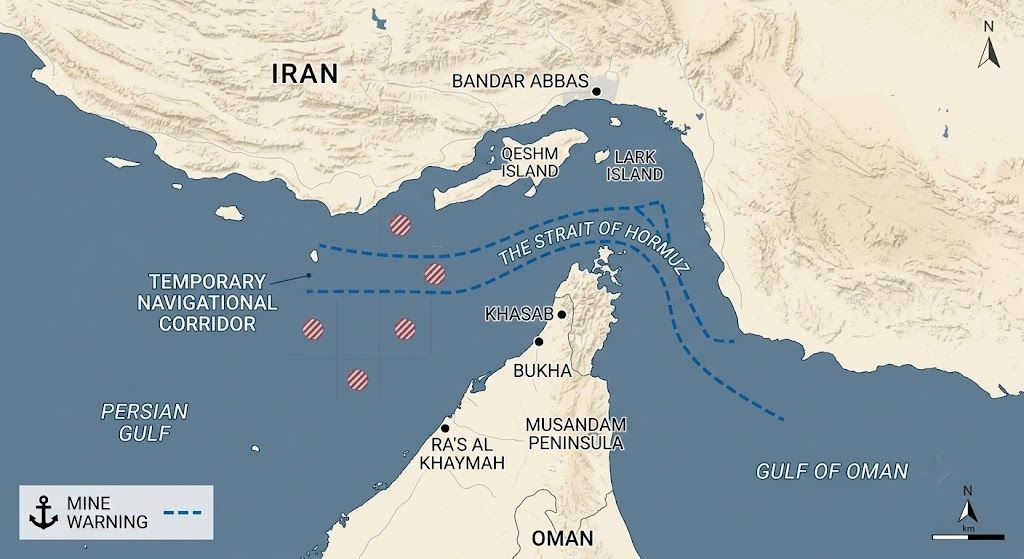

As regional shipping pressures mount amidst an ongoing impasse with Washington, Iran and Oman have entered discussions regarding a temporary navigational corridor through the critical Strait of Hormuz. The diplomatic engagement comes as a deep regional shipping crisis persists, drawing heightened attention to one of the world's most vital energy transit chokepoints.
Exploring a Joint Navigational Corridor
According to reports, the proposal involves establishing a "joint temporary navigational corridor" alongside a potential mine-clearing project in the Strait of Hormuz. These talks are part of broader efforts by Tehran and Oman to actively manage the strategic waterway amid escalating regional frictions. The discussions focus specifically on creating a temporary shipping route to bypass or safely navigate the current geopolitical blockades.
Market Reactions and Global Shipping Relief
The diplomatic outreach between Tehran and Muscat has already registered tangible impacts on international commodity markets. Crude oil prices extended their decline as news of the potential temporary shipping route circulated. The prospect of an easing in navigation bottlenecks through the strait has offered a degree of calm to markets rattled by the prolonged US–Iran standoff. The initiative is a direct response to mounting US pressure and the resulting disruptions across vital maritime supply lines.
Strategic Implications of Omani Mediation
Oman has historically maintained a diplomatic balancing act in the Persian Gulf, frequently acting as an intermediary between Western powers and Tehran. The current discussions over the Strait of Hormuz underline Muscat's pivotal role in attempting to stabilize maritime security. While details concerning the formal implementation timeline or the scope of the mine-clearing operations remain fluid, the willingness of both nations to coordinate on a temporary corridor signals a shared urgency to prevent total navigational paralysis in the Gulf.