
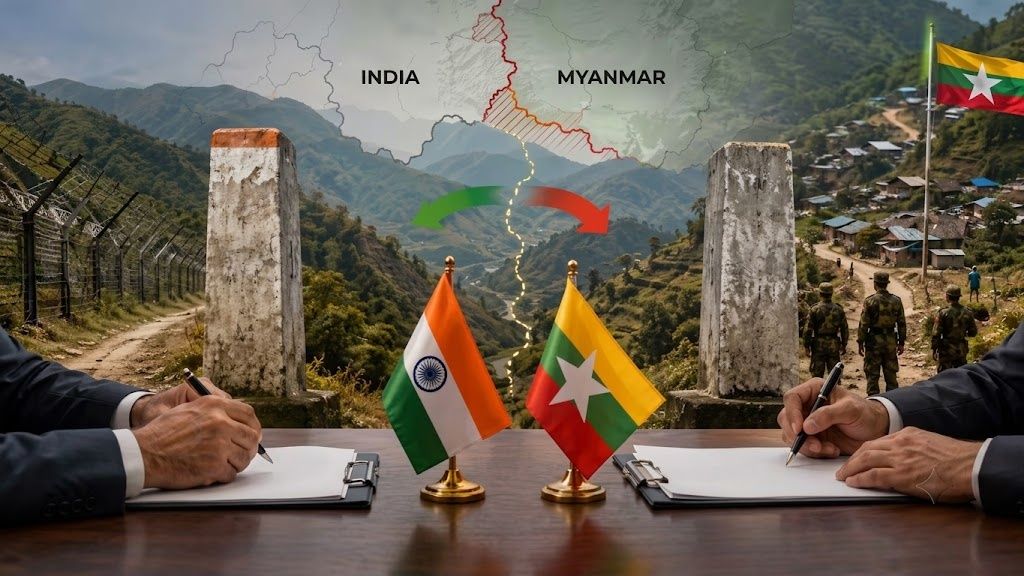

As of August 6, 2026, diplomatic relations between New Delhi and Naypyidaw have entered a critical phase following revelations regarding a proposed realignment of the international boundary. Yesterday, the Ministry of External Affairs (MEA) confirmed that a proposal to exchange territory with Myanmar is currently under active discussion. This development comes amid a broader push to stabilize the 1,643-kilometer border, which has seen increasing volatility due to regional conflicts and shifting geopolitical interests.
The Proposal for Territorial Exchange
According to reports on August 5, the MEA has officially acknowledged that a territory swap is on the table. While specific details regarding the acreage or the exact coordinates of the land involved have not been reported yet, the confirmation of "ongoing border talks" marks a significant step in bilateral negotiations.
The MEA’s response to these reports suggests that the discussions are part of a long-term strategy to resolve lingering boundary disputes. Such swaps are traditionally aimed at simplifying border management where the current line cuts through ethnic communities or difficult terrain, though the strategic implications of this particular proposal remain under close scrutiny by security analysts.
Regional Security and the China Factor
The timing of these negotiations is notable given the shifting dynamics of the neighborhood. In July 2026, reports indicated that China is actively exploring a new corridor near the Indian border, with both Bangladesh and Myanmar playing a prominent role in Beijing’s regional infrastructure plans. This "new corridor" has heightened New Delhi’s urgency to solidify its own border security and administrative control.
Furthermore, the border region has been a focal point for various security initiatives. While earlier efforts in 2019 focused on economic integration, including plans to establish four "Border Haats," the current discourse has shifted toward more security-focused measures. The discussion of a territory swap coincides with wider regional debates regarding frontier management, including the effectiveness of fencing. In June 2026 that fencing the Myanmar frontier alone may not suffice to address the complex security challenges in the region.
Local Impact and Humanitarian Concerns
The prospect of territorial realignment has sparked apprehension among the diverse communities inhabiting the borderlands. Earlier reports highlighted deep-seated concerns in specific areas, such as the "village of headhunters," where residents fear that changes to the border could disrupt ancestral lands and cultural ties.
The complexity of the situation is further compounded by internal conflicts within Myanmar. roposals to resolve the long-standing Kachin conflict underscore the fragile environment in which these border adjustments are being negotiated. Details on how the proposed swap will specifically impact these ethnic enclaves or the movement of people have not been reported yet.
As the MEA continues its dialogue with Myanmar’s leadership, the focus remains on whether a territorial exchange can provide the stability New Delhi seeks or if it will introduce new administrative and social challenges. With regional rivals expanding their influence, the outcome of these talks will likely redefine India’s eastern frontier for decades to come.