
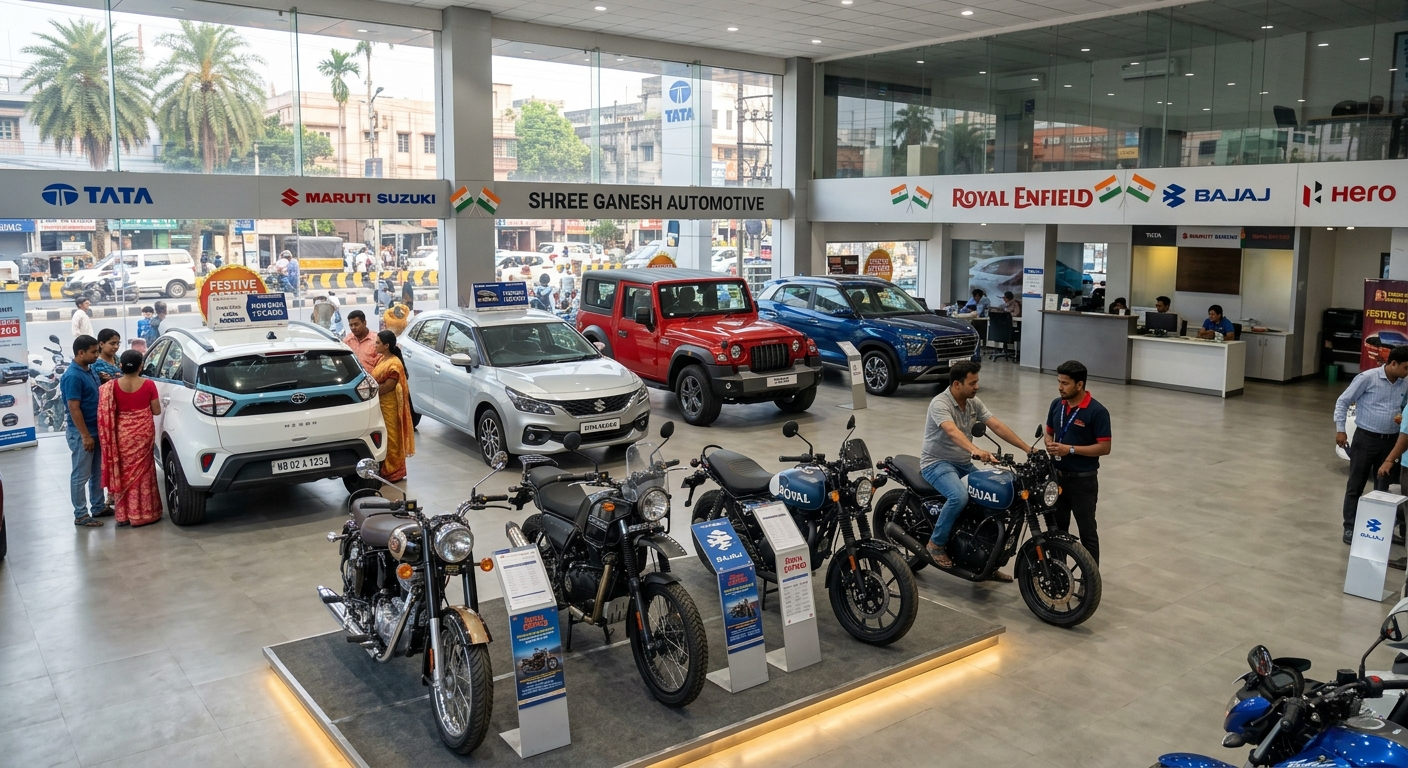

New Delhi: India’s automobile industry began FY2027 on a strong note, with both passenger vehicle and two-wheeler segments reporting robust wholesale and retail growth in April 2026, driven by GST rationalisation, fresh model launches and sustained consumer demand.
According to the latest Icra reports on passenger vehicle and two-wheeler sales, the sector continues to benefit from improved affordability, healthy replacement demand and a prolonged wedding season, although emerging macroeconomic risks could temper momentum in the coming quarters.
Passenger vehicle wholesale volumes rose 25% year-on-year to 4.4 lakh units in April 2026, while retail sales climbed 16%. The report said demand remained supported by “GST rate cuts, extended summer wedding season and healthy demand for newly launched models”.
Inventory levels also improved sharply, falling to 28-30 days from 50 days a year earlier and 60 days in September 2025, aided by stronger retail off-take.
The utility vehicle segment continued to dominate the market, accounting for 68% of total passenger vehicle volumes in FY2026. However, the report noted that mini, compact and super-compact car segments have also begun recovering after GST reductions.
While utility vehicles are expected to remain the primary growth engine, passenger car demand is projected to improve steadily.
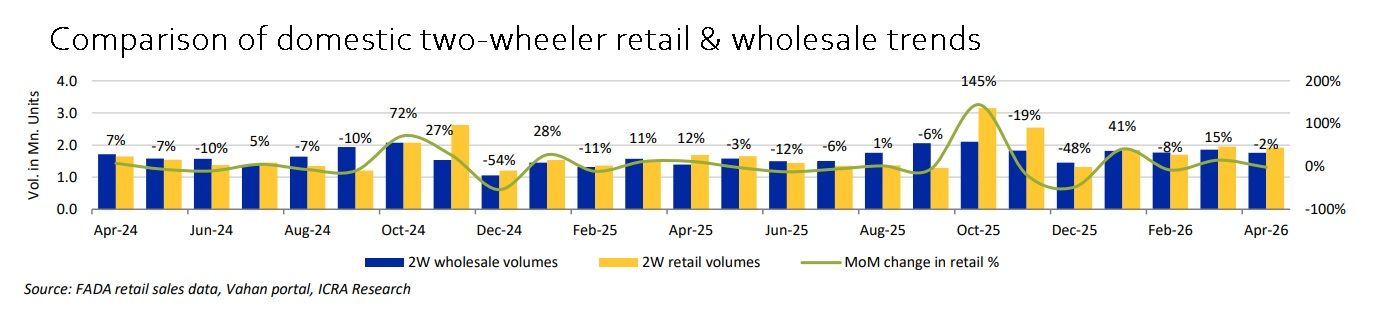
The two-wheeler industry also delivered strong numbers. Domestic wholesale volumes surged 29.2% year-on-year to 1.9 million units in April 2026, while retail sales increased 13%.
The report attributed the growth to “improved vehicle affordability, lower-than-expected price hikes, and sustained rural cash flows amid strong crop harvests”.
Exports Gain Pace
Export momentum emerged as another key growth driver across vehicle categories.
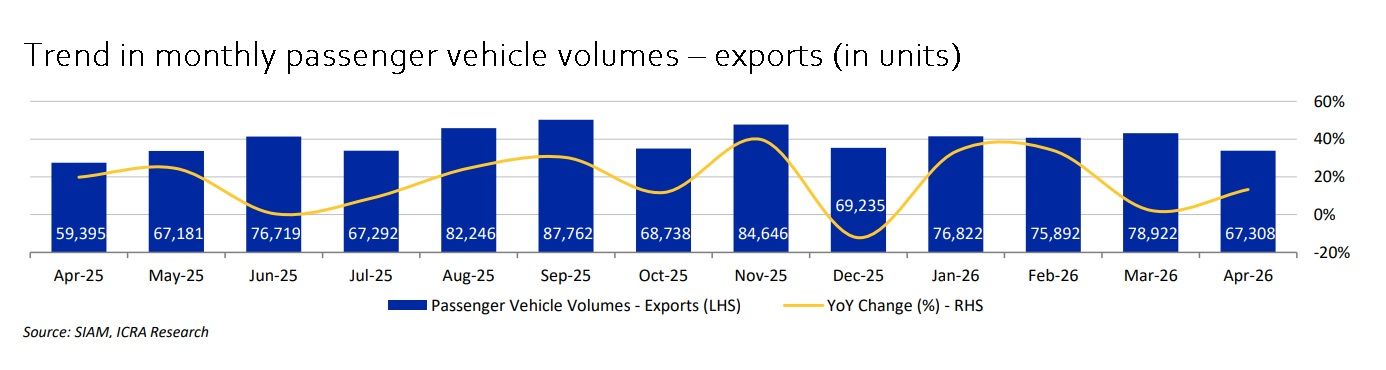
Passenger vehicle exports increased 13% sequentially in April 2026, signalling stronger global supply push from Indian original equipment manufacturers. Maruti Suzuki India Ltd retained its leadership in exports with a 49% market share in FY2026, followed by Hyundai Motor India Ltd.
The two-wheeler export market performed even more strongly, with overseas shipments rising 38.3% year-on-year in April. For the full FY2026, exports grew 23.3%, supported by expanding product portfolios and improving international recognition of Indian brands.
Electric mobility also maintained strong traction within the two-wheeler market. Retail electric two-wheeler sales climbed 68.1% year-on-year to 1,54,337 units in April 2026. Penetration within the overall two-wheeler segment rose to 8.1%, reflecting increasing consumer acceptance and broader product availability.
Icra said electric two-wheeler volumes grew 21.9% in FY2026, underlining the segment’s resilience despite policy recalibrations and competitive pricing pressures.
Risks Cloud Outlook
Despite the strong start to the fiscal year, Icra expects growth moderation in FY2027 as base effects, inflationary pressures and weather-related uncertainties begin weighing on sentiment.
The passenger vehicle industry is projected to record wholesale volume growth of 4-6% in FY2027. The report said the moderation reflects “the elevated base of FY2026 and the weak monsoon outlook”. It added that “the impact of the ongoing West Asia crisis on inflation and, in turn, demand sentiment remains key”.
The two-wheeler industry is also expected to grow at a slower pace of 3-5% in FY2027 despite supportive demand conditions. “An anticipated weak monsoon due to El Nino, coupled with expected vehicle price increases driven by fuel price hikes and input cost inflation, is likely to moderate volume growth momentum in the coming months,” according to the report.
The evolving geopolitical situation in West Asia has emerged as a common concern for both segments due to potential supply-chain disruptions and the risk of elevated commodity prices. Industry participants are also closely monitoring crude oil movements, which could impact input costs, inflation and consumer affordability.
Even so, the underlying demand narrative for India’s auto industry remains intact. GST rationalisation, rural income stability, premiumisation trends and new launches are expected to continue supporting market volumes, especially as manufacturers deepen their focus on exports and electric mobility.