

New Delhi: For years, Indian car buyers sitting on the fence have asked the same question: Is switching to an EV really worth it? This month, that hesitation appears to be cracking.
“If petrol was cheaper, you could ignore it. With global oil looking to cross $120 is the war goes on, petrol prices here are bound to shoot up. It feels like I’ll be lighting money on fire every morning if I don’t switch,” says Suresh Nair, who is currently evaluating the Tata Nexon EV. “The stability of charging at home, completely insulated from global wars, is a major, major relief.”
That sentiment is spreading quickly, fuelled by renewed volatility in global oil markets. Escalating tensions involving Iran and Israel have once again chocked the Strait of Hormuz. While there is no confirmed long-term closure, even the threat of disruption has been enough to push crude prices sharply upward in recent weeks.
For a country like India, which imports the vast majority of its crude oil, the impact is immediate and unavoidable. Fuel prices at the pump may not spike overnight due to short-term buffers, but the direction of travel is clear. And consumers are reacting.
What’s changing now is the way buyers are thinking. For years, EV discussions in India revolved around high upfront costs. Today, the focus has decisively shifted toward running costs and long-term savings.
In cities such as Delhi, running an EV typically costs around ₹2 to ₹4 per kilometre. A comparable petrol SUV can cost ₹8 to ₹12 per kilometre under current conditions. For someone driving about 1,000 km a month, that difference translates into savings of roughly ₹5,000 to ₹8,000 monthly, or close to ₹1 lakh annually.
Just as important as the savings is the predictability. Electricity prices remain relatively stable, while petrol and diesel are tied to global shocks.
“The conflict has sparked genuine fears of petrol and diesel shortages,” notes Team GaadiWaadi in a recent analysis. “Buyers are moving towards the stability of home-charged power, viewing it as energy security.”
This idea of energy independence at the household level is beginning to resonate just as strongly as cost savings.
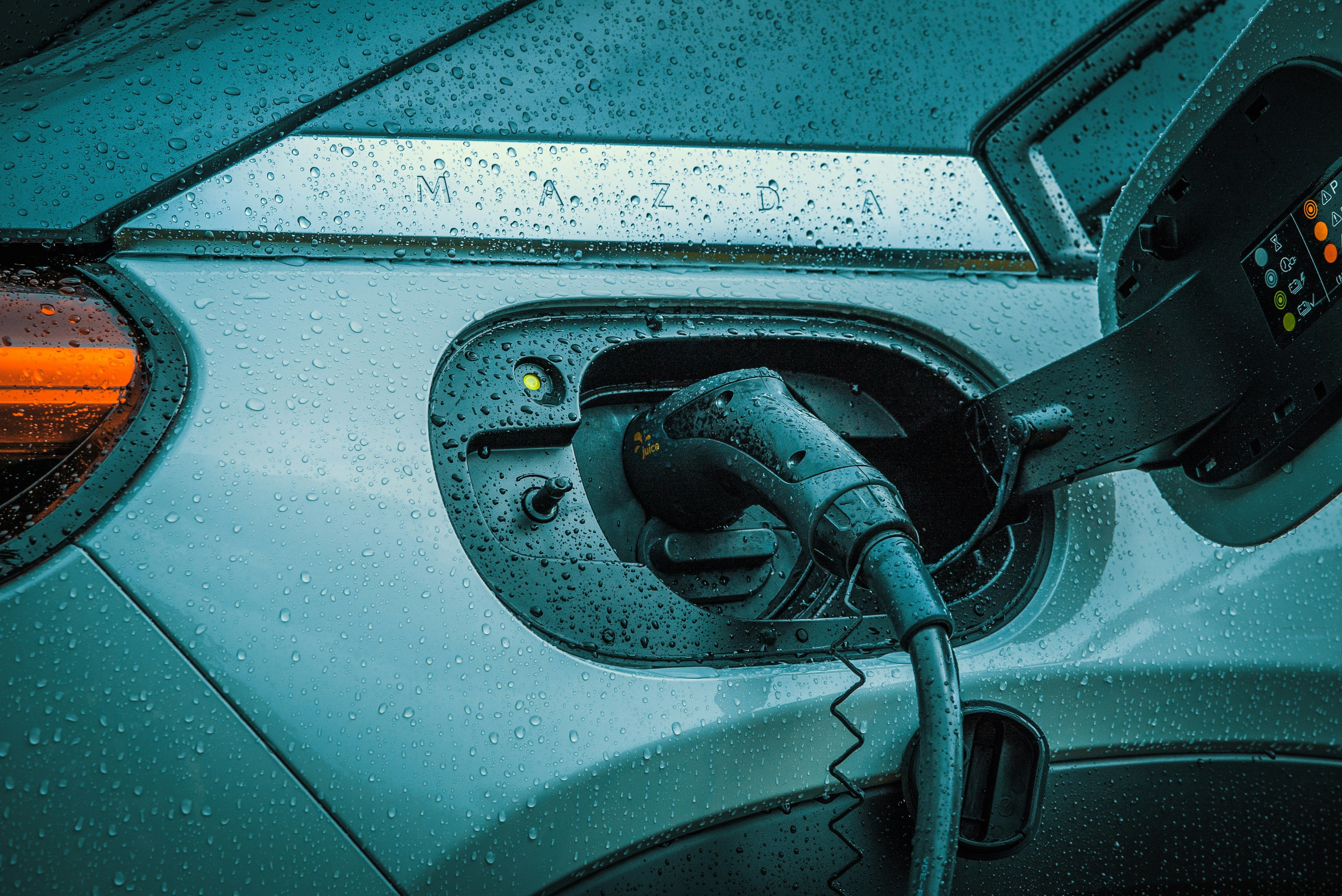
Just as important as the running-cost savings is the predictability. Electricity prices remain relatively stable, while petrol and diesel are tied to global shocks. This has become a vital trigger. (Photo by JUICE on Unsplash)
This shift in mindset is now clearly visible in market data. Electric passenger vehicle sales in India crossed roughly 90,000 units in FY2025, marking growth of about 35% year-on-year. Early FY2026 trends indicate continued momentum, with registrations in the first two months of the year up nearly 20% compared to the same period last year.
Tata Motors continues to dominate the segment with a market share exceeding 65%, and its EV lineup, including the Nexon EV and Tiago EV, has been sustaining monthly volumes of around 5,000-6,000 units in early 2026. Mahindra & Mahindra is seeing strong early traction for its expanding electric SUV portfolio, with some models building booking pipelines stretching several weeks in major urban centres.
Meanwhile, JSW MG Motor India has reported a roughly 25% quarter-on-quarter increase in bookings for its EV models, driven largely by rising fuel cost concerns. Dealers across metros say that customer conversations are now led by running cost comparisons rather than environmental motivations.
Fleet adoption is accelerating this shift further. Corporate buyers and mobility operators are increasing EV penetration due to lower operating costs and favourable depreciation structures, with fleet EV adoption in urban markets estimated to have climbed to nearly 15%, up from under 10% a year ago.
Global Trend
What’s happening in India is part of a broader global pattern. Across markets, spikes in fuel prices have consistently driven interest in EVs. In both Europe and the United States, recent fuel volatility has widened the gap between EV running costs and internal combustion vehicles, pushing more consumers toward electrified options. Analysts note that EV consideration rates tend to rise sharply during such periods, reinforcing a trend observed repeatedly over the past decade.
The underlying principle is simple: oil is global and volatile, while electricity is local and relatively stable. In times of uncertainty, that distinction becomes decisive.
Automakers are responding quickly. Alongside pricing adjustments, they are offering exchange bonuses, financing schemes, and bundled charging solutions to reduce entry barriers. Discounts on certain variants, particularly from previous model years, have helped narrow the upfront cost gap, making EVs more accessible.
“The steep discounts are primarily concentrated on last year’s stock and top-end variants... some price rationalization was necessary to stimulate demand and accelerate volumes for these trims,” observes Puneet Gupta, Director at S&P Global Mobility.
That rationalization is now colliding with a real-world trigger — fuel price anxiety — creating a powerful push toward electrification.
For years, the question (particularly in Asia) was whether this was the right time to buy an EV. Increasingly, that question is being replaced by something more immediate: whether it still makes sense to stay with petrol or diesel at all.
“This is Asia’s ‘Ukraine moment’. The closure of the Strait of Hormuz has shut down the world's most important fossil fuel trade route... Asia now faces a reckoning, but with increasingly cost-competitive electro-tech alternatives available,” mentions Ember Energy Analysis.
The transition will take time. Infrastructure, pricing, and consumer confidence will continue to evolve. But moments like this, when global instability directly impacts everyday costs, have a way of accelerating decisions.
For many Indian buyers, the shift is no longer theoretical.
It’s personal.
(Cover photo by Michael Marais on Unsplash)