
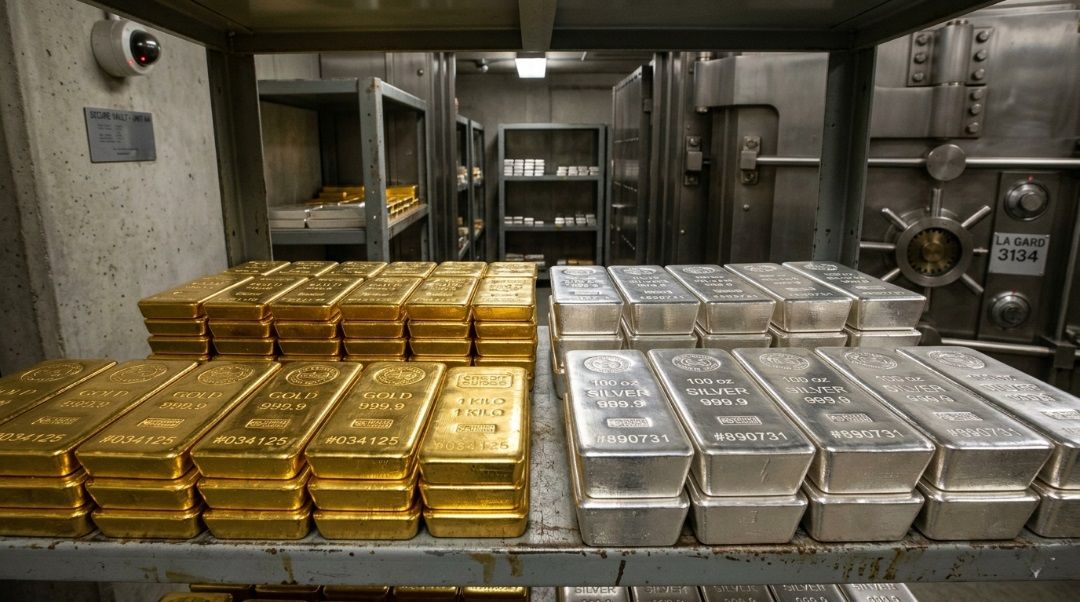

New Delhi: The Indian government’s decision to increase import duties on gold and silver to 15% represents a significant economic intervention aimed at shielding the rupee and reducing pressure on the country’s external finances during a period of escalating geopolitical tension in West Asia.
The policy, announced on Wednesday (May 13), reflects growing concern within the government over rising imports of precious metals at a time when higher crude oil prices and global uncertainty are already straining India’s trade balance.
The government’s primary objective is to cut down on imports that are considered non-essential while protecting foreign exchange reserves. India remains one of the world’s largest consumers of gold, but domestic production is extremely limited, forcing the country to depend heavily on imports.
Recent trade data shows that India imported nearly $72 billion worth of gold during FY26, marking an increase of roughly 24% over the previous fiscal year. Silver imports rose even more sharply, crossing $12 billion after recording growth of almost 150%.
Such import growth has become a major concern for policymakers because purchases of gold and silver contribute little to productive economic activity compared to imports like machinery, technology, or industrial equipment. Precious metals are largely viewed as stores of wealth rather than drivers of manufacturing or exports.
As a result, rising imports increase demand for US dollars without generating equivalent economic returns, thereby putting downward pressure on the rupee and widening the current account deficit.
The latest tariff increase also comes against the backdrop of instability in West Asia, which has pushed global oil prices higher. Since India imports more than four-fifths of its crude oil requirements, any rise in energy prices directly increases the country’s import bill. At the same time, volatility in global financial markets and foreign capital outflows have weakened the rupee in recent months. According to media reports, India’s foreign exchange reserves remain close to $690 billion, although the Reserve Bank of India has had to intervene in currency markets repeatedly to limit excessive depreciation.
In this environment, reducing precious metal imports could provide some relief to the economy. Economists believe that if the higher duty succeeds in slowing demand, India could save several billion dollars in foreign exchange over the next year. Even a moderate decline in imports may help narrow the trade deficit and reduce stress on the rupee.
According to recent estimates by ICRA, India’s merchandise trade deficit widened sharply to $27.1 billion in February 2026, nearly double the level seen a year earlier. The agency identified strong gold imports and elevated commodity prices as key reasons behind the deterioration and warned that the current account deficit could approach 1% of GDP in FY26 despite strong growth in services exports.
Policy Impact Still Uncertain
However, the effectiveness of the policy remains uncertain because gold demand in India has historically shown strong resilience. Gold continues to hold cultural, religious, and financial importance for Indian households, particularly during weddings and festivals. Even during periods of rising prices, demand often remains stable because many families treat gold as a long-term savings instrument.
In fact, market reports indicate that investment demand for gold has strengthened further in 2026 due to weak stock market performance and heightened global uncertainty. Gold exchange-traded funds reportedly witnessed inflows that surged 186% year-on-year during the first quarter of the year.
This suggests that while jewellery purchases may decline temporarily, especially among price-sensitive consumers, investment-related buying could continue at elevated levels. Consequently, the new import duty may slow the pace of imports without causing a dramatic collapse in overall demand.
Another important concern linked to higher import duties is the possibility of increased smuggling. India has experienced this issue repeatedly whenever tariffs on gold rise sharply. Before import duties were reduced in 2024, illegal inflows through Gulf-based networks had expanded considerably.
Industry experts are now warning that the jump to 15% could once again encourage unofficial channels because of the large price difference between domestic and international markets. Trading centres such as Dubai are expected to play a key role if smuggling activity rises again.
The policy could also create pressure within India’s jewellery sector, which supports millions of jobs across states including Gujarat, Maharashtra, Tamil Nadu and West Bengal. Higher duties raise raw material costs for jewellers and increase retail prices for consumers. If demand weakens significantly, smaller manufacturers and exporters may face declining business activity and employment challenges.
Despite these risks, the government appears prepared to absorb short-term economic pain in exchange for greater financial stability. Protecting the rupee and controlling the trade deficit have become urgent priorities as geopolitical tensions continue to affect global commodity markets. Prime Minister Narendra Modi’s recent public appeal urging citizens to avoid unnecessary gold purchases for a year underlined the seriousness of the government’s concerns regarding rising imports and foreign exchange outflows.
The increase in gold and silver import duties is unlikely to produce a transformational impact on the Indian economy by itself. However, it may provide temporary support by reducing import demand, easing pressure on the rupee, and helping contain the widening trade deficit during a period of global uncertainty.