


New Delhi: Childhood obesity is rising at an unprecedented pace worldwide, with the World Obesity Federation warning that more than one in five children aged 5-19 are now living with overweight or obesity. The situation is particularly concerning for India, which ranks second globally after China in the number of affected children and is witnessing one of the fastest annual increases.
According to the World Obesity Atlas 2026 released by the World Obesity Federation on March 4, the prevalence of obesity among school-age children across the world has risen sharply from 4% in 1975 to an alarming 20% in 2022. In 2022, 20.7% of children aged 5-19 worldwide were living with overweight or obesity, up from 14.6% in 2010.
Globally, about 180 million children were living with obesity in 2025. Projections from the World Obesity Federation indicate that by 2040 around 227 million children aged 5-19 will have obesity. An estimated 507 million school-age children are expected to be living with overweight or obesity by 2040, marking the first time that more children worldwide will live with obesity than with underweight.
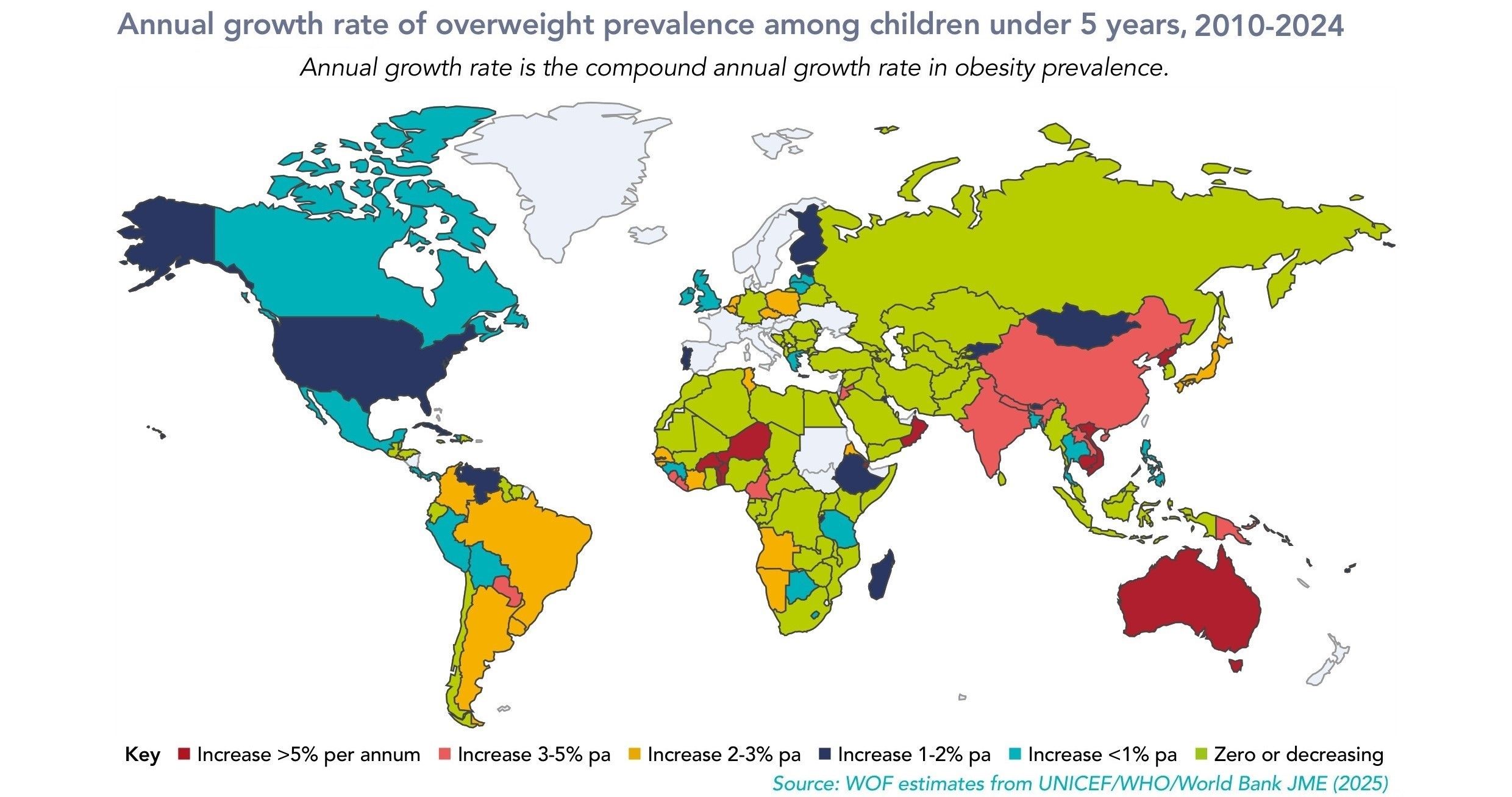
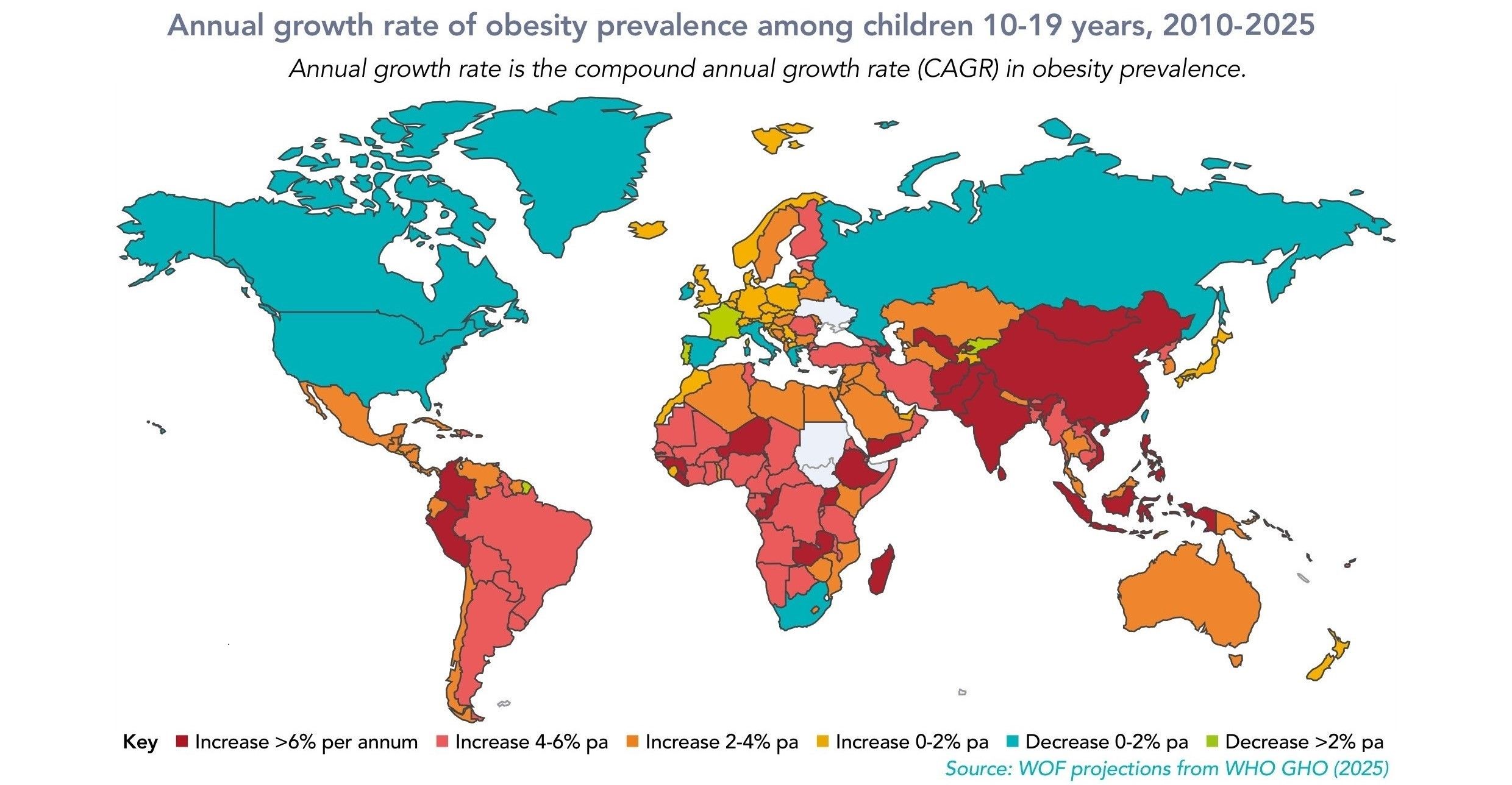
The report also highlights stark geographical disparities in childhood obesity. More than half of school-age children are overweight or living with obesity in 10 countries, all located in the Western Pacific and the Americas. In contrast, the most rapid increases in obesity prevalence are occurring largely in low- and middle-income countries, where changing diets, urbanization and reduced physical activity are accelerating the trend.
In an alarming trend, by 2040, at least 120 million school-age children are expected to show early signs of chronic diseases linked to excess weight. Estimates indicate that 57.6 million children could exhibit early signs of cardiovascular disease and 43.2 million may show signs of hypertension as a consequence of overweight and obesity.
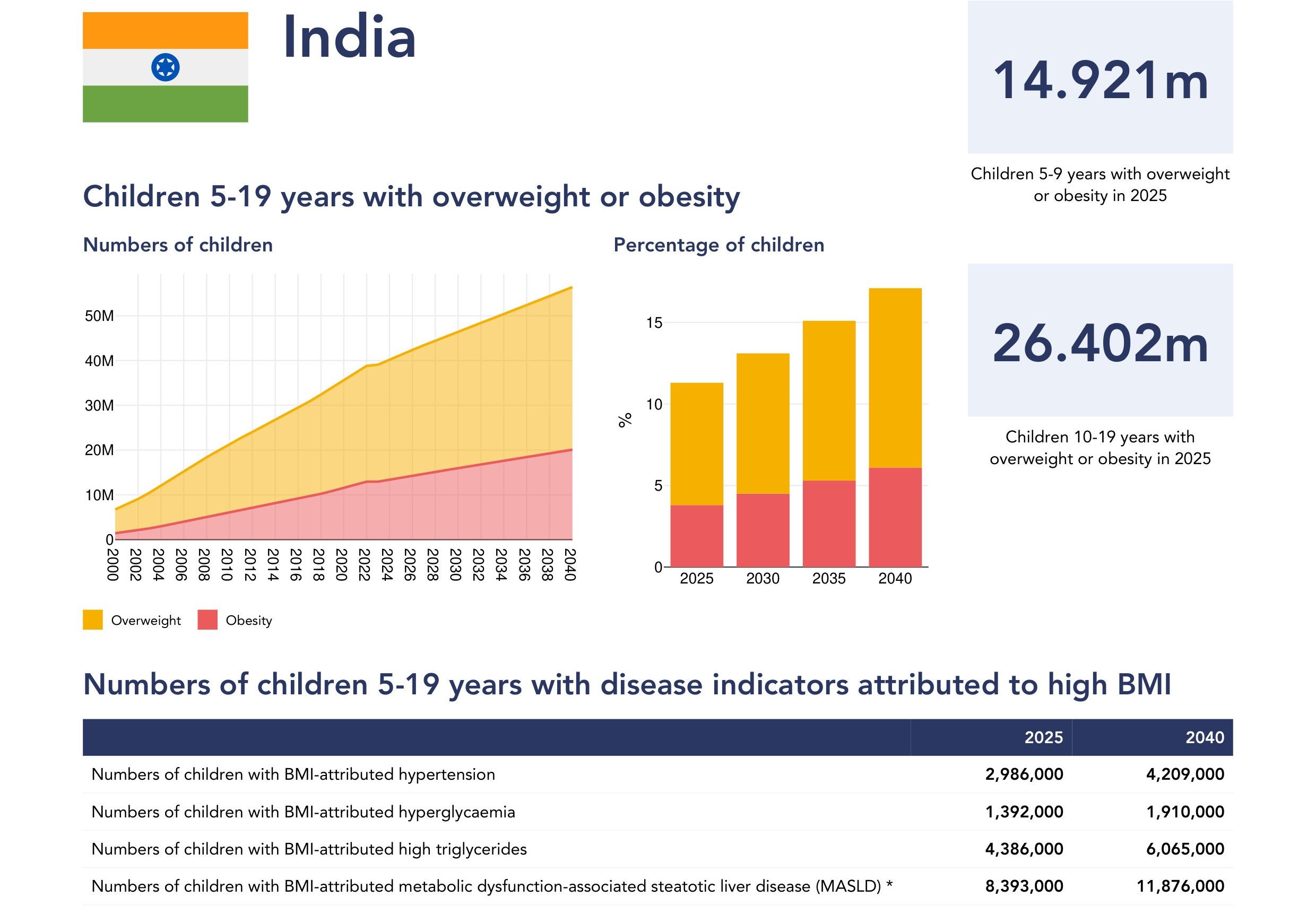
In India, the scale of the problem is already stark. The Atlas estimates that by 2025, more than 41 million Indian children aged 5-19 were classified as overweight or obese. This includes 14.92 million aged 5-9 years and 26.40 million adolescents aged 10-19, bringing the total to 41.32 million individuals in this age group. Childhood obesity rates in India are increasing at an average of 5% annually, placing the country among those experiencing the fastest growth in prevalence.
The World Health Organization defines obesity as abnormal or excessive fat accumulation that presents a risk to health. It is classified in adults by a Body Mass Index of 30 or higher, with BMI ≥ 25 defined as overweight. For kids under 5 years, weight-for-height >2 standard deviations above WHO Child Growth Standards median is overweight; >3 is obesity. For children aged 5-19, it is defined as BMI-for-age >2 standard deviations above the WHO Growth Reference median.
BMI is a simple measure used to assess whether a person’s weight is appropriate for their height. It is calculated by dividing a person’s weight in kilograms by the square of their height in metres (kg/m²) and is commonly used to classify underweight, normal weight, overweight and obesity.
Health experts warn that obesity during childhood frequently persists into adulthood, sharply increasing the risk of non-communicable diseases such as diabetes, heart disease and certain cancers. Beyond physical illness, children living with obesity often face psychosocial challenges that affect well-being and long-term quality of life.
“The increase in childhood obesity worldwide shows we have failed to take seriously a disease that affects one in five children. Governments urgently need to step up prevention and management efforts for children living with overweight and obesity, and ensure that they receive the care they need,” said Johanna Ralston, chief executive of the World Obesity Federation.
She emphasised the need for stronger policy measures to reduce exposure to obesity risk factors. “We need to implement policies to create healthy environments, whether children are at home, school or out and about: We know that taxes on sugar-sweetened drinks and limits on advertising unhealthy food to children work, alongside greater access to physical activity and monitoring that starts in primary care. There is no reason to hesitate in bringing these about: it is not right to condemn a generation to obesity and the chronic and potentially fatal non-communicable diseases that often go with it,” she added.
The World Obesity Federation has also warned that the world is likely to miss the 2025 global target to halt the rise in childhood obesity, and even the extended 2030 deadline appears out of reach for most countries.
The Atlas highlights measures that could reverse current trends, including taxes on sugar-sweetened beverages, restrictions on marketing unhealthy foods to children — particularly on digital platforms — promotion of breastfeeding, healthier school food standards and stronger integration of prevention and treatment within primary health systems.
Globally, nearly three billion, including children, are already living with overweight or obesity, and projections suggest the number could approach four billion — around half the world’s population — by 2035. Health experts warn that without urgent action, childhood obesity will continue to accelerate, placing growing strain on health systems and shaping the long-term health of future generations.