

New Delhi: India’s love affair with gold has run into an economic reality check. Higher import duties, elevated prices and cautious consumer sentiment have combined to cool demand, even as the precious metal retains its status as the country’s preferred store of wealth. The latest trends suggest that India’s gold market is not weakening; it is recalibrating.
The report titled India Gold Market Update: Demand Cools, authored by Kavita Chacko, Research Head-India, World Gold Council, offers a nuanced reading of a market caught between short-term policy headwinds and enduring structural demand. By the third week of June, it has become evident that the surge in domestic prices following the government’s duty hike had altered buying behaviour across jewellery, investment and digital channels.
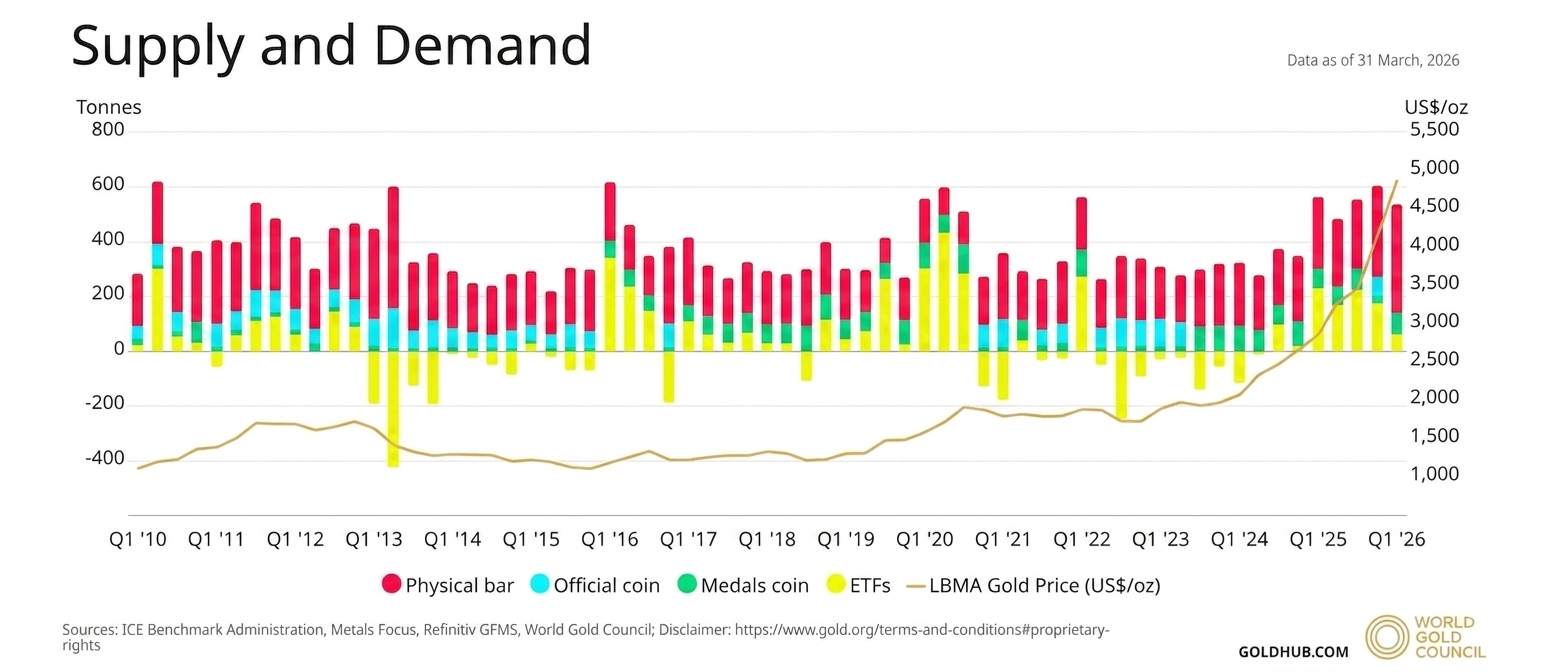
The report highlights a market adjusting to a new pricing environment rather than abandoning the asset. International gold prices have remained broadly flat on a year-to-date basis, but domestic prices are up around 13%, largely due to the mid-May import duty hike and the depreciation of the rupee against the US dollar.
“Gold’s returns have moderated from the highs seen in early 2026. As of 15 June, international and domestic gold prices were down 4.2% and 3.7%, respectively, from the end of May. However, y-t-d performance diverges: while international prices are broadly flat, domestic prices are up around 13.2%,” the report notes.
That divergence matters. For Indian consumers, local factors now influence purchasing decisions as much as global bullion trends. Elevated inflation concerns and expectations of tighter monetary policy have increased the opportunity cost of holding gold, while improved investor sentiment has encouraged some profit booking.
The sharp rise in import duty from 6% to 15% also disrupted market dynamics. Discounts in the domestic market widened dramatically before narrowing as supply-demand conditions stabilised.
Demand Takes Breather
The slowdown is visible across segments, but the reasons vary.
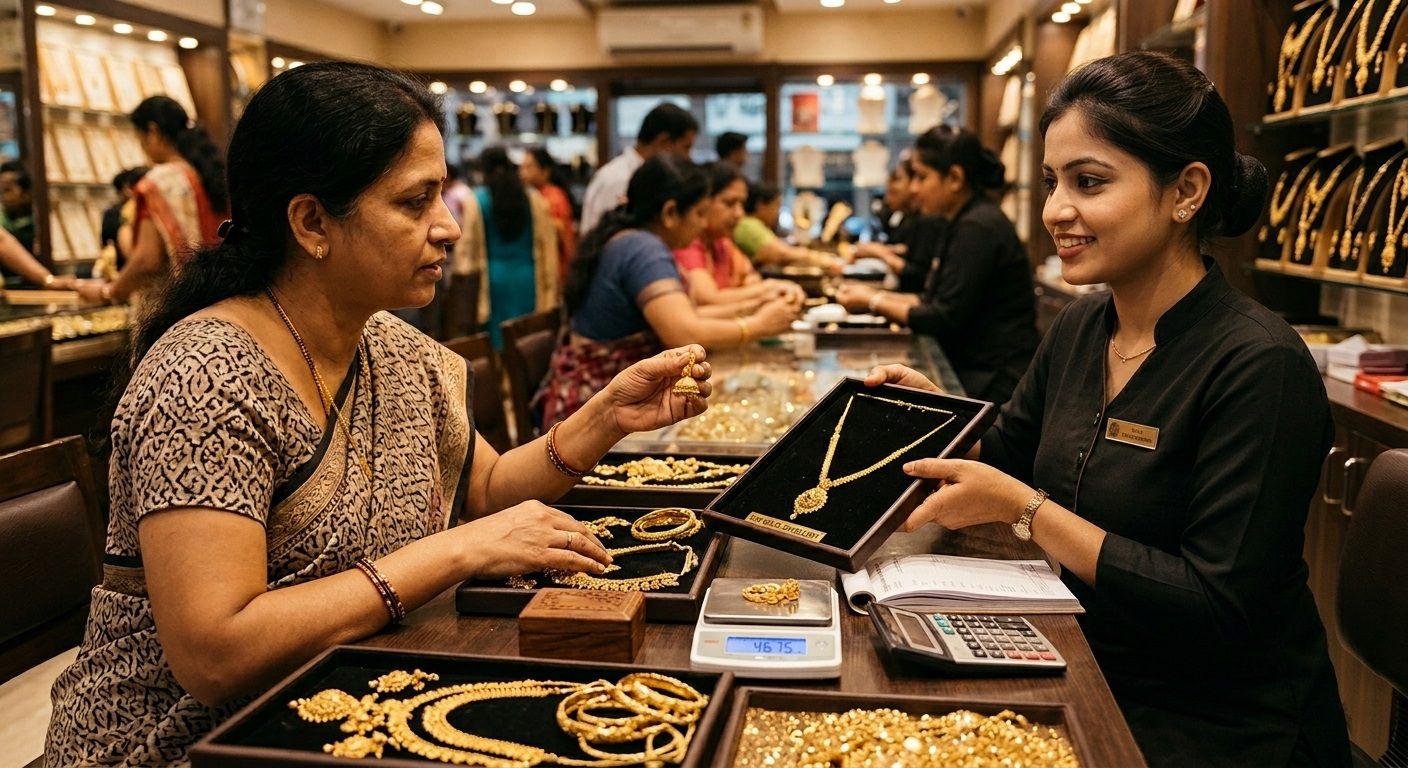
Jewellery demand, traditionally the backbone of India’s gold market, has entered its seasonal soft patch. The report observes that higher prices and an inauspicious period in the Hindu calendar reduced retail footfalls, while volatility encouraged consumers to postpone purchases.
“Market feedback suggests that gold jewellery demand remained subdued through May and early June, a seasonally soft period. Gold price volatility also led to a cautious, ‘wait-and-watch’ approach among consumers across regions and segments,” observes Chacko.
Another notable trend is the growing importance of exchange transactions. “In response to this softening, retailers have focused on old-gold exchange transactions. Anecdotal evidence suggests that the share of exchange business has risen between 5-15%, and for some retailers has accounted for as much as 60-70% of sales,” notes the WGC report.
That shift reveals an evolving consumer mindset. Rather than abandoning gold purchases, households are optimising existing holdings to manage higher prices.
The report also suggests that PM Modi’s appeal to moderate gold buying may have influenced discretionary purchases, particularly in urban markets. Yet rural demand appears more resilient, reflecting gold's deep cultural and financial significance outside metropolitan India.
Investment demand has also cooled, although not uniformly. Indian gold ETFs recorded their first monthly net outflow since April 2025, with investors locking in gains after the duty-driven price spike. “Domestic gold ETFs recorded their first monthly net outflow since April 2025. Net outflows stood at Rs 7.25 billion ($76 million), the largest on record in rupee terms.”
But the correction was short-lived. Investor interest returned in early June, with fresh inflows suggesting that strategic allocations to gold remain intact despite temporary profit-taking.
Long Game Matters
The broader picture is more reassuring for the gold industry than headline numbers suggest.
Digital gold transactions have moderated from their January peak, but they remain above the 16-month average, indicating that younger investors continue to view gold as an accessible financial asset. Gold remains one of the higher-transacting categories on the UPI ecosystem.
Imports tell a similar story of adjustment rather than collapse. Higher duties pushed monthly imports down 39% from April levels to around $3.4 billion, but imports were still 34% higher than a year earlier.
The report underlines this transition. “Against the backdrop of the sharp mid-May increase in import duties, gold imports declined 39% m/m to $3.4 billion, though they remained 34% higher y/y. In volume terms, imports are notably lower than April, reflecting a moderation in import volume as the higher duty structure took effect.”
For policymakers, this moderation offers some relief by easing pressure on the current account and merchandise imports. For the industry, it represents a period of adjustment before the festive and wedding seasons revive demand.
India’s relationship with gold has survived currency crises, financial reforms and repeated changes in taxation. The latest duty hike and price volatility are unlikely to alter that structural reality. Instead, they are reshaping how consumers buy, invest and recycle the precious metal.
Kavita Chacko’s analysis suggests that while demand has cooled in the short term, the underlying drivers of India’s gold market remain resilient. Seasonal factors, cultural preferences, investment diversification and economic uncertainty continue to support the asset’s long-term appeal.
The immediate outlook may be one of caution, but history suggests that India’s gold market rarely stays subdued for long. Once the festive calendar returns and price volatility eases, the world's second-largest consumer of gold could once again remind investors that temporary slowdowns and long-term conviction are not mutually exclusive.