
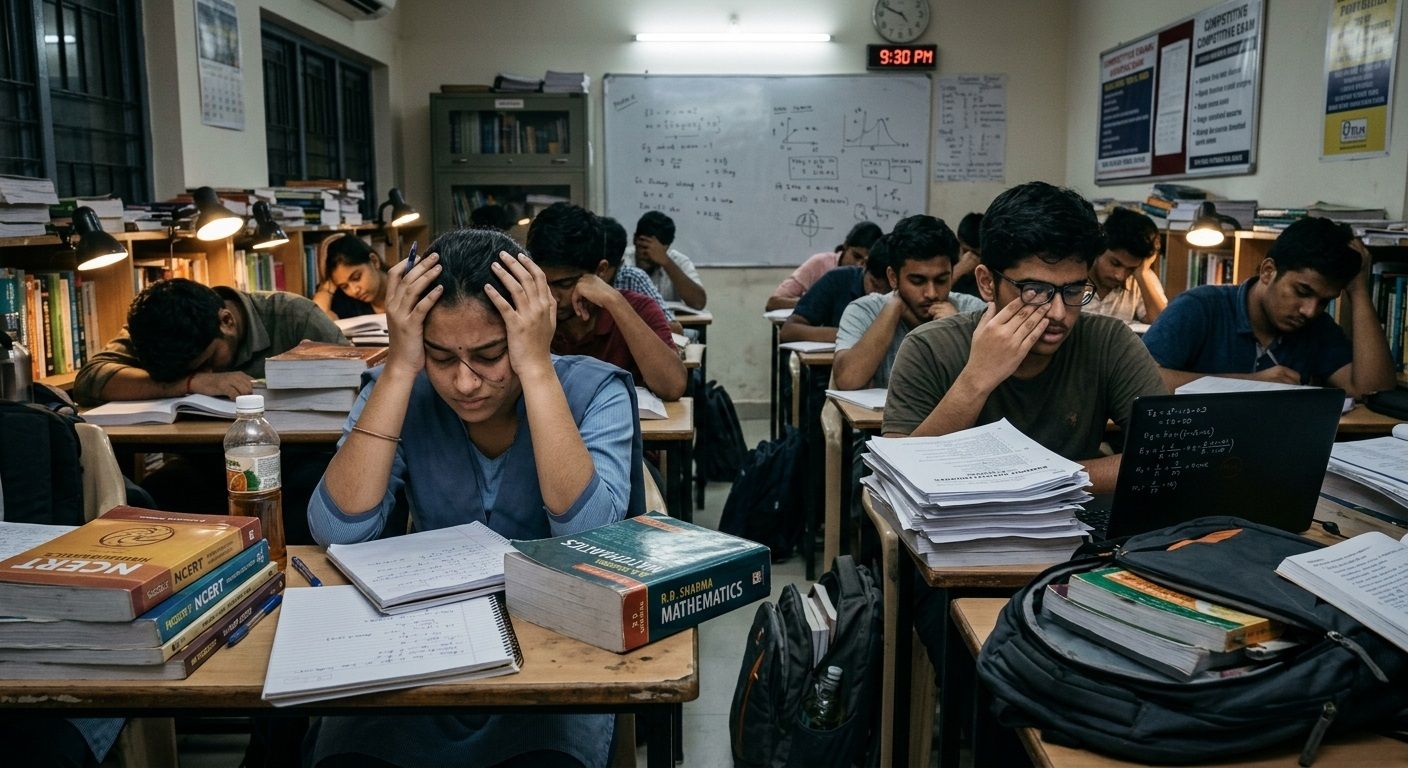

New Delhi: For millions of Indian students, the dream of becoming a doctor, engineer or civil servant is shaped by a handful of fiercely competitive entrance examinations. Tests such as the National Eligibility-cum-Entrance Test (NEET-UG), the Joint Entrance Examination (JEE) and the Union Public Service Commission (UPSC) Civil Services Examination have come to define academic ambition, with years of preparation often resting on performance in a single sitting.
Among them, NEET-UG stands out as one of the country’s largest and most competitive examinations. In 2025, more than 22.7 lakh candidates registered for NEET-UG, competing for only a fraction of the MBBS seats available nationwide, according to the National Testing Agency (NTA). For many aspirants, years of intensive coaching, substantial financial investment and immense parental expectations culminate in just a few hours inside an examination hall.
Yet the true cost of these high-stakes examinations often extends far beyond the results. Months — and sometimes years — of preparation are characterised by prolonged study hours, chronic sleep deprivation, physical inactivity, irregular eating habits and persistent anxiety over ranks, cut-offs and admissions. Mental health experts have repeatedly warned that the psychological burden associated with India’s competitive examination culture has become a significant public health concern rather than merely an educational issue.
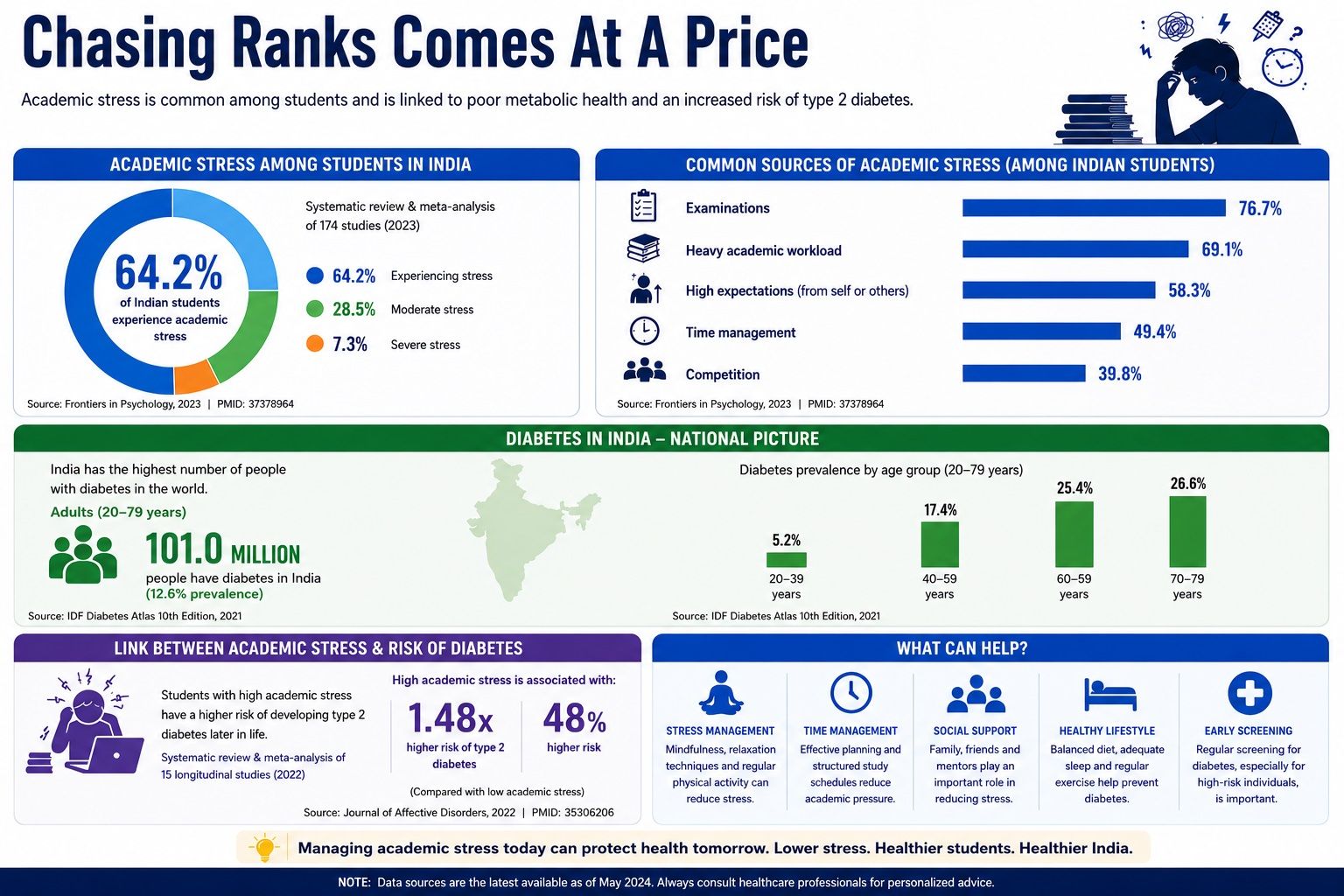
Increasingly, researchers are asking whether the consequences extend beyond mental well-being. Emerging evidence suggests that while academic stress does not directly cause diabetes, sustained exposure to stress hormones, combined with unhealthy lifestyle behaviours during prolonged exam preparation, can disrupt metabolism, impair glucose regulation and increase the risk of developing Type 2 diabetes, particularly among students who are genetically predisposed or already overweight. In a paradox that deserves greater attention, the relentless pursuit of admission into the country’s most prestigious professional courses may itself be contributing to the burden of chronic disease among India’s youth.
India’s diabetes epidemic is no longer confined to older adults. Increasingly, researchers are finding that the risk factors for Type 2 diabetes are taking root much earlier, among adolescents and college students.
While obesity, unhealthy diets and physical inactivity remain the primary drivers, mounting evidence suggests that chronic academic stress may be an important contributor. It does not directly cause diabetes, but it can trigger biological and behavioural changes that increase the likelihood of developing the disease, particularly in students with a family history of diabetes or those already carrying excess weight.
India is home to an estimated 89.8 million adults aged 20-79 years living with diabetes, according to the International Diabetes Federation (IDF) Diabetes Atlas, 11th Edition (2025). There is no exact total population count for Indians under 20 with Type 2 diabetes due to limited national screenings. Nationwide data shows that up to 40% of all youth-onset diabetes cases in India are Type 2, with prevalence among adolescents (10-19 years) ranging between 2% and 5%.
The IDF report places India among the countries with the largest diabetes burden globally and projects that the number of people living with the disease will continue to rise over the coming decades.
Scientists say the link between academic stress and diabetes begins with the body’s stress response. During periods of prolonged psychological stress, such as months of examination preparation or sustained academic pressure, the brain signals the release of hormones including cortisol and adrenaline. While these hormones are designed to help the body respond to immediate challenges, persistently elevated cortisol levels increase glucose production in the liver and reduce the body’s sensitivity to insulin. This condition, known as insulin resistance, is one of the earliest metabolic abnormalities that precedes Type 2 diabetes. The World Health Organization (WHO) notes that stress can make blood glucose management more difficult and indirectly contribute to diabetes risk through unhealthy lifestyle behaviours.
Evidence suggests that Indian students experience sustained stress rather than isolated episodes. A longitudinal study published in 2021 in the scientific journal PLOS ONE, which followed undergraduate students across an academic year, found that academic demands consistently emerged as the most significant source of stress. The researchers also observed persistently elevated salivary cortisol levels, particularly among female students, indicating that the physiological effects of academic stress may remain active for prolonged periods rather than subsiding after examinations.
Although stress alone is insufficient to cause diabetes, endocrinologists increasingly recognise it as a factor that can accelerate metabolic dysfunction when combined with obesity, genetic susceptibility and unhealthy lifestyle habits.
Lifestyle Drives Disease
The biological effects of stress are reinforced by changes in daily behaviour that are common among students facing academic pressure. Long study hours often reduce opportunities for exercise, while inadequate sleep, irregular meal timings and dependence on processed snacks or sugar-rich beverages become increasingly common during examination periods. Emotional eating and prolonged screen time further compound these risks.
Each of these lifestyle factors independently contributes to obesity and insulin resistance. Together, they create a metabolic environment that increases the likelihood of developing prediabetes and, eventually, Type 2 diabetes.
Recent Indian data indicate that these warning signs are already visible among young adults. A 2025 multi-centre survey report, published in a mainstream daily, involving 10,000 college students across Chennai, Trichy and Pune, found that only 38.4% of participants had a normal body weight. More than 43% were overweight or obese, 30.6% had abdominal obesity, 4.7% had hypertension and 2.2% already had elevated blood glucose levels. These findings suggest that a significant proportion of Indian students are entering adulthood with metabolic risk factors traditionally associated with much older populations.
The WHO identifies physical inactivity, unhealthy diets and excess body weight as three of the leading modifiable risk factors for Type 2 diabetes. Academic stress may intensify each of these risks by disrupting sleep, reducing physical activity and encouraging unhealthy eating patterns.
Prevention Needs Priority
The growing body of evidence points to an important shift in how diabetes prevention should be viewed. Rather than focusing solely on diet and exercise, experts argue that mental health should become an integral part of metabolic health strategies.
According to the WHO, adults should undertake at least 150 minutes of moderate-intensity physical activity every week, while children and adolescents should aim for an average of 60 minutes of moderate-to-vigorous physical activity daily. These recommendations not only improve cardiovascular fitness but also enhance insulin sensitivity and help reduce stress.
Similarly, diabetes specialists recommend that students maintain adequate sleep, eat balanced meals at regular intervals and avoid relying on ultra-processed foods during periods of academic pressure. Educational institutions also have an important role to play by strengthening counselling services and identifying students who are at higher metabolic risk because of obesity or a family history of diabetes. Early screening for prediabetes in such groups can enable timely intervention before irreversible complications develop.
The evidence does not support the conclusion that examinations or academic competition directly cause diabetes. Instead, research published in PLOS ONE, recommendations from the World Health Organization, and epidemiological estimates from the International Diabetes Federation collectively suggest that chronic academic stress can amplify the biological and behavioural pathways that lead to insulin resistance and Type 2 diabetes. For a country already carrying one of the world’s largest diabetes burdens, recognising this connection offers an opportunity to intervene earlier. Protecting students’ mental well-being may ultimately prove to be an important investment in preventing the next generation of diabetes.