
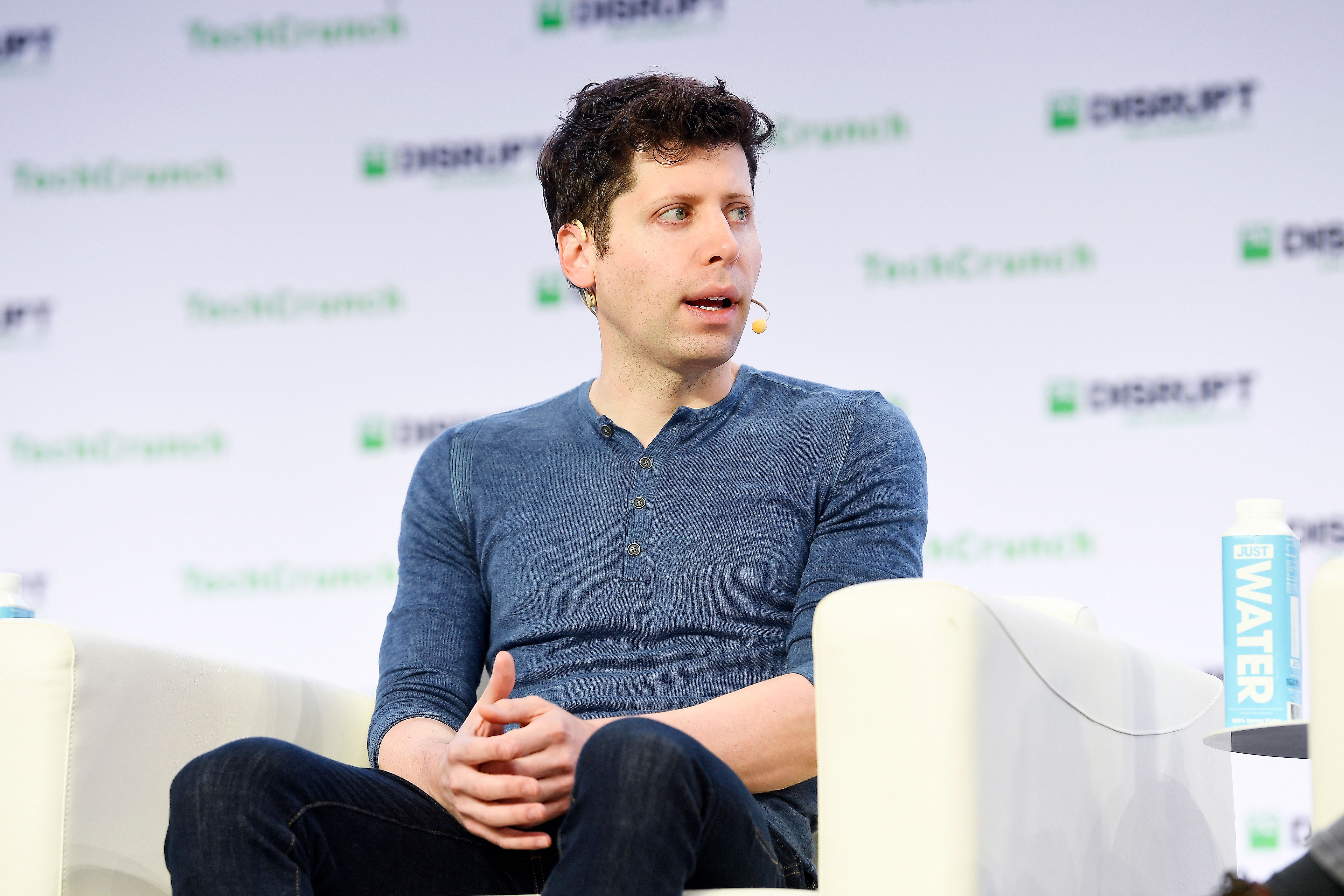

New Delhi: The AI debate is entering a new phase. After years of warnings about mass white-collar disruption, OpenAI CEO Sam Altman now says the immediate jobs fallout from AI has been far less severe than many feared.
Speaking via video link at an AI event hosted by Commonwealth Bank in Sydney, Altman said one of his own predictions about the rapid erosion of entry-level white-collar work had not materialised.
One of the areas where he personally had been wide of the mark was on AI’s short-term impact on entry-level white-collar jobs, which had not been nearly as bad as he had once predicted, he said. “I’m delighted to be wrong about that.”
Instead, the bigger risk emerging for business is the widening gap between AI capability and organisational readiness. The technology is advancing rapidly, but companies, institutions and management structures are struggling to absorb it at the same pace.
“Overall, I think the technology has gotten to a notable place,” Altman said. “We have these incredibly smart models [but] I think one has to look at the state of the economic adoption and say we're still very early.”
The comments point to a growing reality inside global boardrooms: AI is unlikely to produce an overnight employment collapse, but it is beginning to redraw the competitive landscape at speed. Companies slow to adapt risk falling behind rivals already embedding AI into coding, operations, customer service and decision-making.
Businesses Must Adapt
Corporate planning cycles are breaking under AI pressure. Altman said the central challenge for executives is no longer deciding whether AI matters, but how to run companies when technological change is moving faster than traditional business cycles.
“How can I run a company on an annual or quarterly cycle when the whole world is changing every month, or every two months, or less,” he said. “I think that business is going to get reinvented when the world has to move at a much faster clock cycle to be competitive.”
The rapid adoption of AI coding tools inside large companies has become an early indicator of how quickly enterprise behaviour can shift once executives recognise the competitive stakes.
“It was one of these moments where people realised, hey, if we don’t get serious about this, we won’t be competitive,” he said.
Acknowledging there had been upsides and downsides, it was “truly one of the most rapid adoptions of new technology at a serious enterprise level... that I’ve ever seen”, he said.
Yet Altman cautioned that most businesses still lack a workable blueprint for deploying AI securely and productively at scale. “But at the same time, no one has a playbook about how to deploy those quickly enough across the company and make sure that people are being productive and secure with it,” he said.
The result is likely to be a prolonged transition period where companies experiment aggressively, restructure workflows and rethink how employees and AI systems interact.
The strongest organisations were embracing controlled experimentation, learning quickly and reallocating resources decisively when early AI investments showed promise. (Photo by Levart_Photographer on Unsplash)
Transparency is becoming a strategic necessity. Altman argued that the speed and uncertainty surrounding AI requires leaders to abandon overly polished messaging and communicate more openly about risks and unknowns.
“We try to think out loud,” the OpenAI chief said. “I believe that so much of society here is going to be impacted by this, that we are all stakeholders, and it is better for us to be going in the direction of too much transparency and occasionally being wrong.”
AI Gets Personal
He acknowledged that OpenAI itself had been better at forecasting technological progress than predicting the broader economic and social consequences of AI adoption. “My scorecard, at the highest level would be we’ve been roughly right on technological predictions and pretty wrong on the social and economic implications,” he said.
That uncertainty is becoming a defining management issue as companies race to integrate AI while employees, regulators and investors demand greater accountability around how the technology will reshape work.
Altman warned businesses could no longer afford the “psychologically convenient” assumption that major disruption remained years away. Instead, the strongest organisations were already embracing controlled experimentation, learning quickly and reallocating resources decisively when early AI investments showed promise.
“This is the thing that I’ve observed the best companies do,” he said.
The next AI phase will be constant, embedded and deeply personal
Altman suggested today’s chatbot-style AI systems are only an early step toward a far more integrated model in which AI agents operate continuously in the background. “What I think will be possible soon is you will have an AI that is always running. It is understanding you and your goals and your company’s goals. And it’s just trying to be as helpful as it can, given the amount of computing resources it has available.”
That evolution could fundamentally reshape workplace structures, internal communication and decision-making. But Altman also made clear there were limits to automation, particularly in areas involving trust and human relationships.
Asked about using AI to manage personal communications, he said the experiment reinforced the importance of preserving human interaction. “We really do care about our interactions with people,” he added, saying his personal communication “which is a huge amount of my time, is not something that I can imagine myself outsourcing to an AI anytime soon”.
For now, the economic payoff from AI remains uneven. Executives continue to ask whether large AI investments are translating into measurable productivity gains and stronger revenues.
Altman insisted it was still early. “My best answer to that is it’s all still very new, and it’s just going to take a little bit longer, to figure out how a company actually does run more efficiently and to make these great new products,” he said. “But if a year from now we’re still talking about the same question, I'd be more concerned.”
(Cover photo: Wikimedia Commons)