
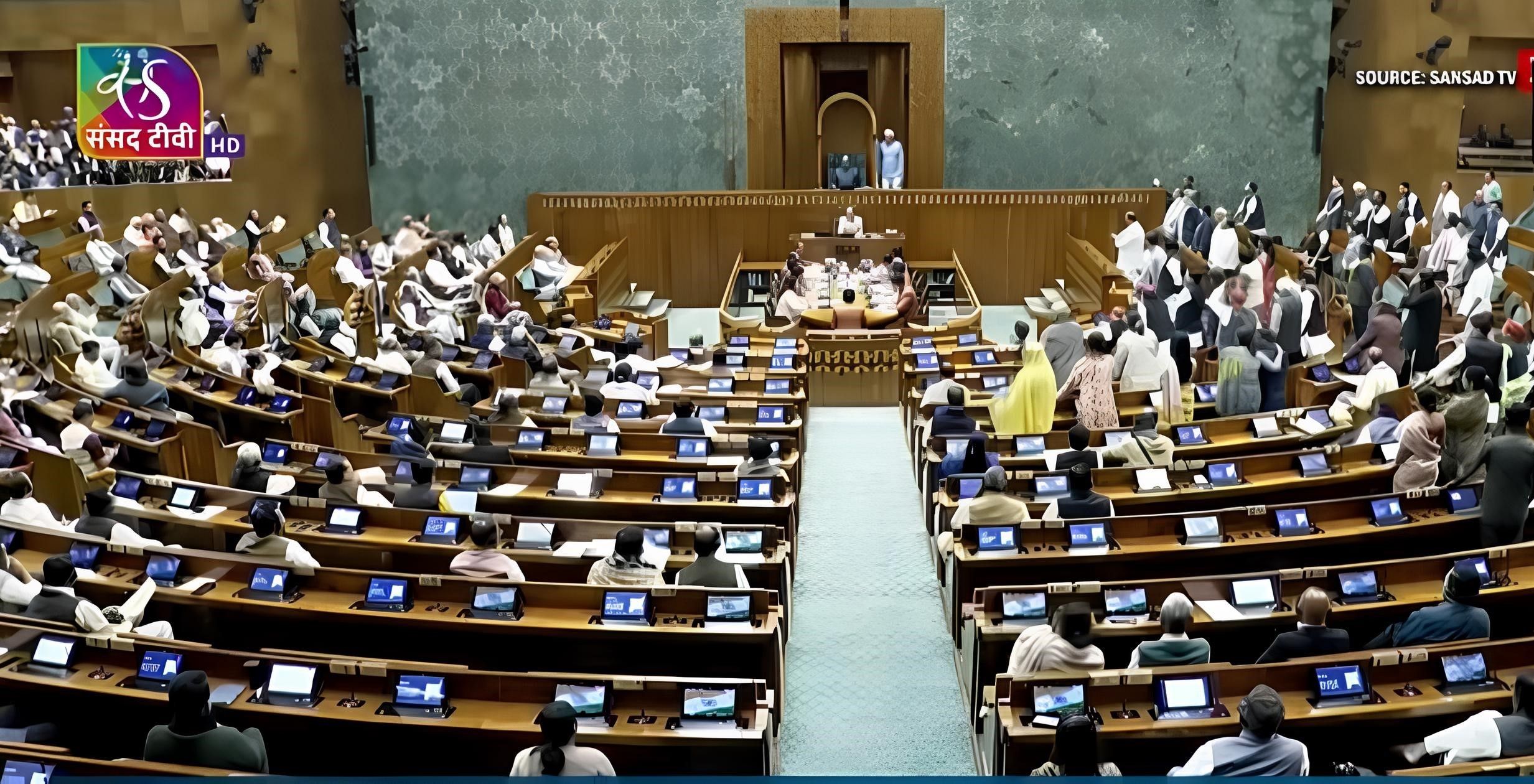

New Delhi: The winter session of Parliament drew to a close with the government projecting it as a decisive chapter in Prime Minister Narendra Modi’s reforms agenda, even as repeated opposition protests disrupted proceedings and stalled some planned discussions.
Parliamentary Affairs Minister Kiren Rijiju on Friday described the session as a milestone for the “reform express”, pointing to the passage of key legislations on rural employment, insurance and nuclear energy, while accusing the opposition — particularly the Congress — of derailing debate on pressing concerns such as air pollution in the Delhi-NCR region.
Rijiju said both Houses cleared eight Bills after discussion, signalling the government’s resolve to push ahead with structural reforms aimed at improving everyday life. He said the enactments passed during the session would accelerate economic and social transformation and insisted that the reform momentum would continue.
At the same time, he blamed sustained protests for preventing the House from taking up a discussion on deteriorating air quality in the capital region, alleging that Congress chose to prioritize opposition to the Viksit Bharat Guarantee for Rozgar and Ajeevika Mission (Gramin) Bill and persuaded other opposition parties to follow suit.
He also termed the conduct of some members during the debate on the rural employment legislation as unacceptable. He further alleged that some Congress members conveyed there was no urgency to debate pollution, leading to the issue being dropped.
Despite frequent adjournments triggered by sloganeering and members entering the Well of the House — particularly during discussions on electoral reforms and certain taxation measures — the Lok Sabha managed to transact substantial business.
Over the course of the session, 10 government Bills were introduced and eight were passed, including amendments to indirect tax laws, insurance statutes and legislation governing nuclear energy. Financial business was also concluded, with the House passing the Appropriation (No. 4) Bill, 2025 after voting on the Supplementary Demands for Grants for 2025-26 on December 15, a sitting marked by heated exchanges between the treasury benches and the Opposition before proceedings could be wrapped up.
The session featured several long and high-decibel debates. On December 8, Prime Minister Modi initiated a special discussion to commemorate 150 years of the national song ‘Vande Mataram’, which ran for over 11 hours and saw participation from 65 members, amid repeated interventions by the Chair as members attempted to raise parallel issues.
The debate on electoral reforms, spread over December 9 and 10, lasted around 13 hours with 63 members speaking and was among the most disrupted, though it was eventually concluded.
Oversight Mechanisms
Parliamentary oversight mechanisms remained active despite the charged atmosphere. During the session, 300 starred questions were admitted, with 72 answered orally, while 3,449 un-starred questions were taken up. Zero Hour witnessed heightened activity, with 408 matters of urgent public importance raised and 372 matters discussed under Rule 377.
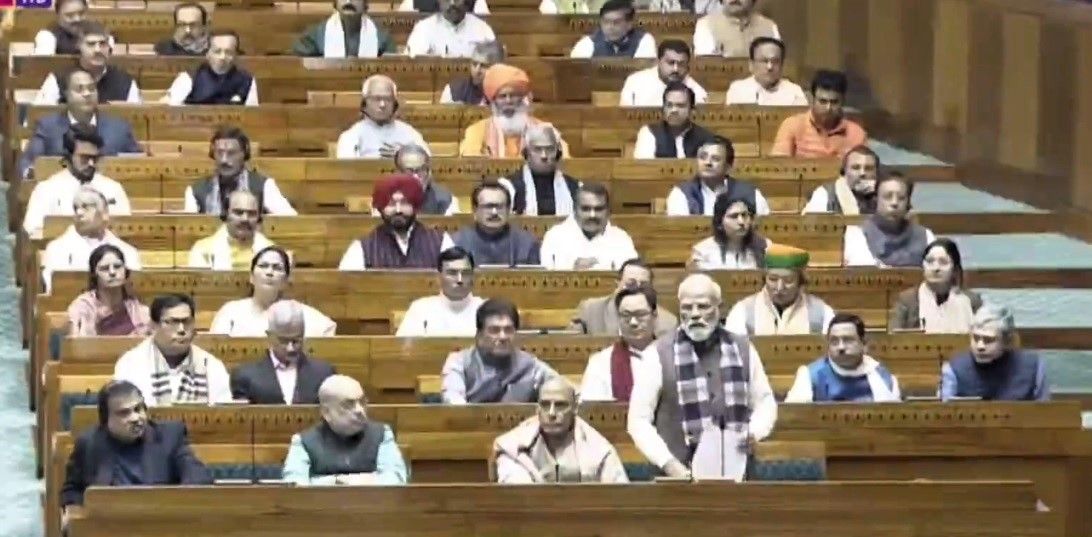
On December 8, Prime Minister Modi initiated a special discussion to commemorate 150 years of the national song ‘Vande Mataram’, which ran for over 11 hours and saw participation from 65 members.
On December 11 alone, 150 members sought to raise issues during Zero Hour, prompting repeated appeals from the Speaker for restraint. Ministers made 35 statements under Direction 73A, while 38 statements were presented in total, including those under Rule 372 and by the Minister of Parliamentary Affairs. In addition, 2,116 papers were laid on the Table of the House and 41 reports of departmental parliamentary standing committees were presented.
Private Members’ business also found room in the packed agenda. As many as 137 Private Members’ Bills were introduced on December 5, while a Private Members’ Resolution moved by Congress MP Shafi Parambil was taken up on December 12 and later withdrawn with the permission of the House after discussion amid protests over time allocation. The session also saw a moment of parliamentary diplomacy on December 2, when the Lok Sabha accorded a warm welcome to Shalva Papuashvili, Chairman of the Parliament of Georgia, and his delegation during their official visit, even as unrelated issues briefly intruded into proceedings.
Overall, while the winter session was marked by sharp political contestation, frequent disruptions and competing narratives from the treasury benches and the Opposition, the government has sought to underline legislative output and productivity as evidence that Parliament remained functional.
The Speaker, in his concluding remarks, repeatedly emphasised that despite protests, the House succeeded in pushing through significant legislative and financial business.