
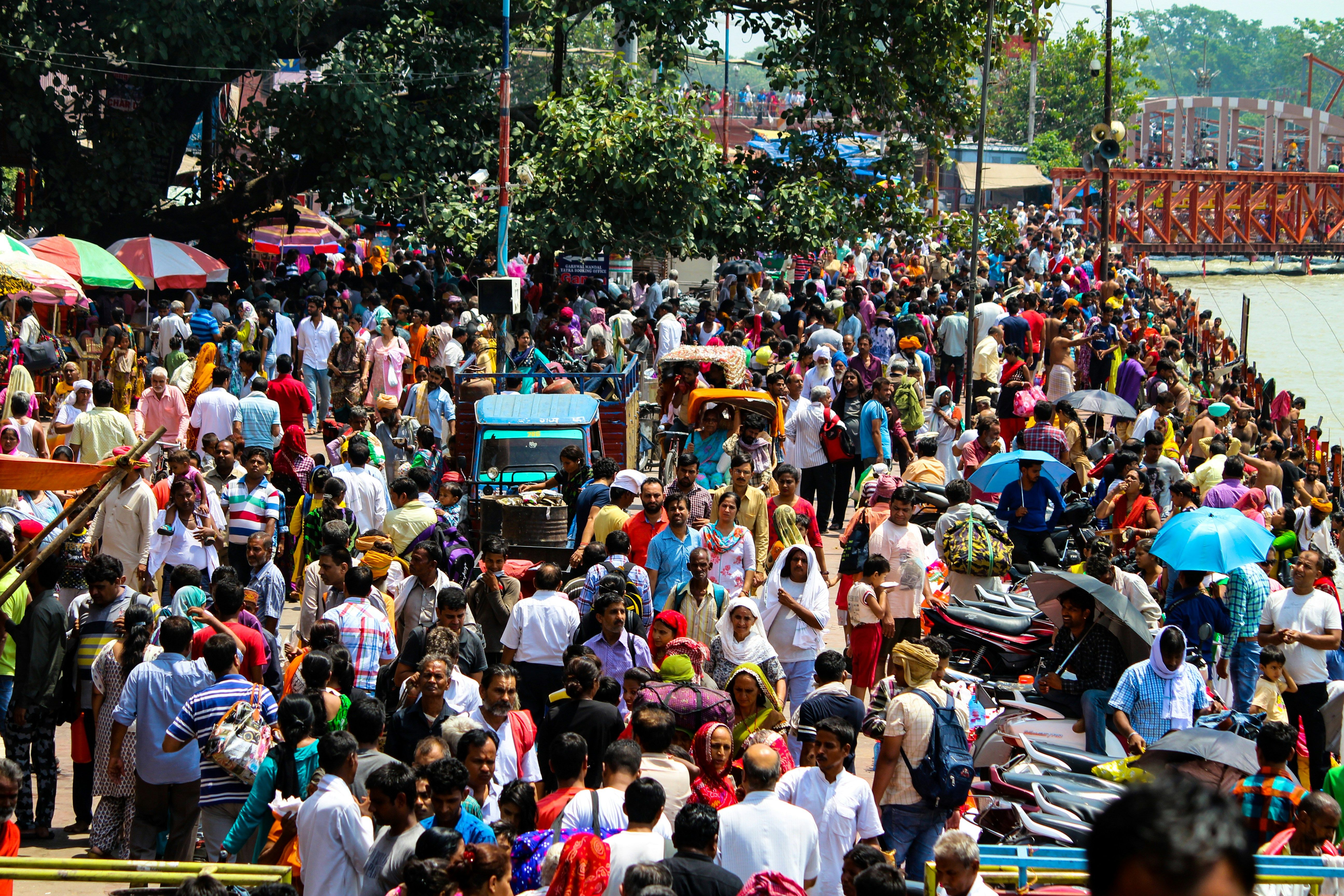

New Delhi: The long-overdue bells of the Indian Census are finally tolling, ending a 15-year “statistical blackout” that has left the world’s most populous nation navigating its developmental path with a blurred map.
As the machinery for the 2026-27 Census hums to life on April 1, it marks more than just a routine head-count; it represents a major shift in how the Indian State perceives, categorizes and serves its 1.4 billion citizens. For a country that overtook China in 2023 to become the global demographic heavyweight, the absence of fresh data since 2011 has been a growing liability, hampering everything from the delivery of subsidized grains to the precision of legislative delimitation.
The primary urgency for this exercise stems from the big “data vacuum” created by the COVID-19 pandemic’s disruption of the 2021 schedule. In the decade and a half since the last census, India has undergone a radical transformation. We have seen the mass adoption of digital payments, a surge in internal migration driven by climate change and economic aspirations, and a fundamental restructuring of the urban-rural divide. Yet, for nearly five years, policymakers have been forced to rely on projections and sample surveys which, while useful, lack the granular finality of a decennial census. This delay has had real-world consequences. Under the National Food Security Act, for instance, quotas for subsidized rations are still tied to 2011 figures, potentially excluding over 100 million people who should otherwise be eligible.
Furthermore, the implementation of welfare schemes — the backbone of India’s social contract — has suffered from a lack of “last-mile” clarity. Without an accurate count of specific demographic pockets, the allocation of resources for schools, hospitals, and sanitation remains an exercise in informed guesswork. The absolute necessity of the 2027 Census lies in its role as a “reset button” for the Indian administrative apparatus. It is the only mechanism capable of validating the success of the ‘Digital India’ mission while simultaneously identifying those who have been left behind by the breakneck speed of 21st-century growth.
Digital Sovereignty
What distinguishes this census from its predecessors is a comprehensive embrace of technology that borders on an administrative revolution. The era of the smudge-prone paper form is officially over. In its place is a fully digital ecosystem where 30 lakh+ enumerators will be armed with secure mobile applications and tablets.
This shift is not merely about saving paper; it is about the “velocity of data”. By utilizing real-time data entry and validation, the government aims to drastically reduce the time lag between collection and publication — a process that previously took years. AI-assisted verification will now act as a silent auditor, flagging inconsistencies in family structures or age-gender ratios the moment they are entered, ensuring a level of accuracy that manual checking could never achieve.
Perhaps the most significant procedural innovation is the introduction of self-enumeration. For a 15-day window before the physical door-to-door phase, citizens can log into a dedicated portal to independently fill out their household details. This democratizes the process and likely improves data quality, as individuals are often the best custodians of their own biographical facts. Coupled with geo-tagging, where every household is digitally mapped via GPS, the system minimizes the “missing building” syndrome that has historically plagued dense urban slums and remote Himalayan hamlets. The 2027 Census is designed to be an omnipresent, yet invisible, digital net.
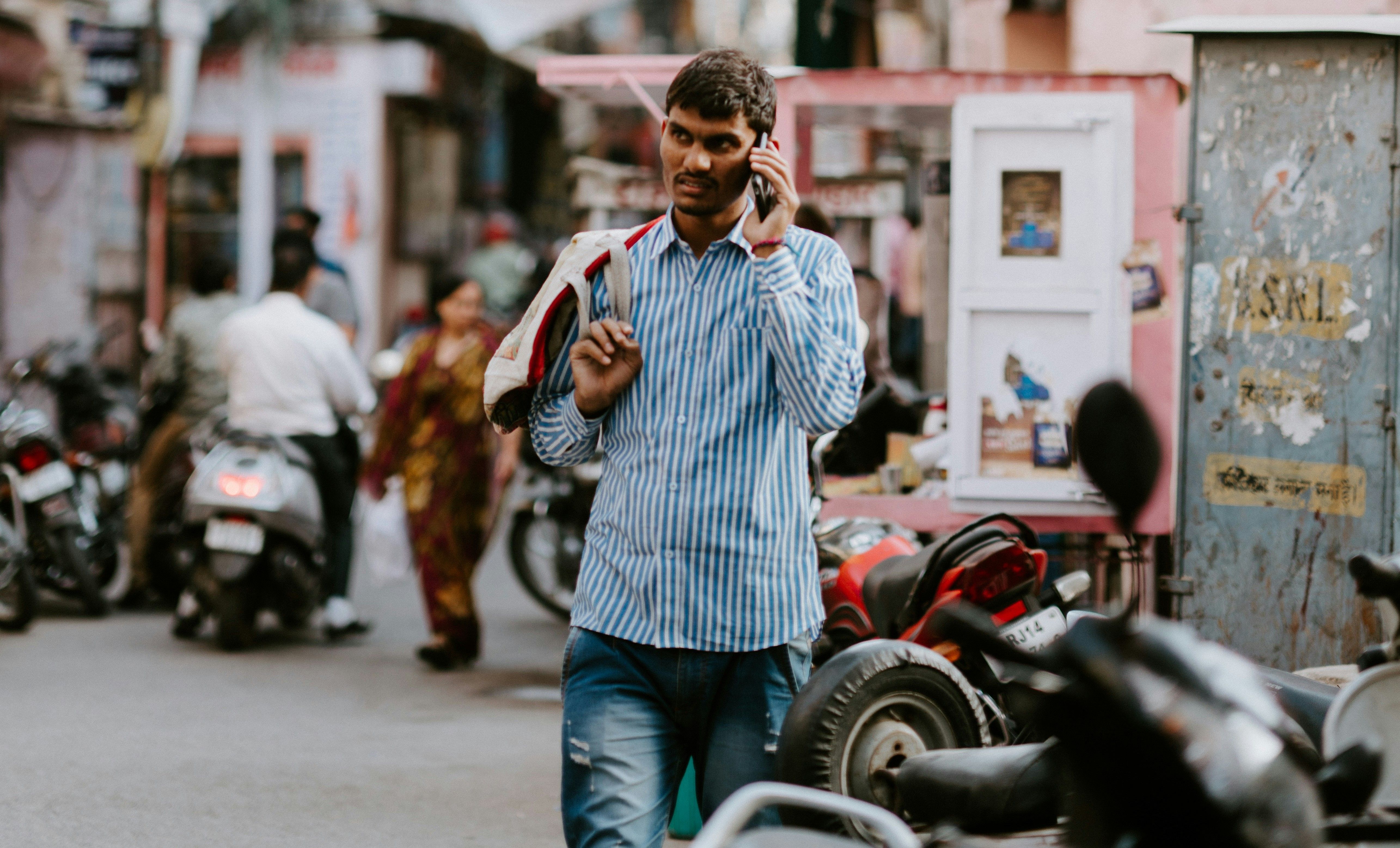
On the economic front, the focus of the 2026-27 Census has shifted from basic literacy to digital literacy. New questions regarding smartphone ownership and internet access will provide the first definitive map of India’s “digital divide” (Photo by Annie Spratt on Unsplash)
Identity Politics
Beyond the digital hardware, the 2027 Census is set to become the most politically consequential exercise in the history of modern India. The decision to include a nationwide caste count for all communities has turned a technical survey into a high-stakes ideological battlefield. For years, regional parties and opposition blocs have clamoured for a caste census, arguing that the 1931 data — the last comprehensive count used for policy — is a relic that fails to reflect the current socio-economic standing of the Other Backward Classes (OBCs). They view this data as the “X-ray” needed to justify expanding the 50% cap on reservations, potentially reshaping the electoral map by mobilizing specific identity groups.
On the other hand, the ruling establishment has historically been wary of such a count, fearing it could fragment the consolidated Hindu vote bank and trigger a ‘Mandal 2.0’ era of identity-based agitation. Critics argue that quantifying every sub-caste risks deepening social fissures and moving the nation away from a meritocratic ‘Viksit Bharat’. Yet, the 2025 cabinet decision to proceed suggests a strategic pivot: an attempt to co-opt the narrative of social justice while ensuring the data is collected under a centralized, digital framework.
The “caste question” is no longer just about sociology; it is about the future of legislative seat distribution. The upcoming delimitation exercise, which will redraw parliamentary constituencies, relies heavily on these figures. Southern states, which have successfully controlled population growth, fear a loss of political clout to the more populous Northern states, turning the census into a federal tug-of-war over who holds the keys to New Delhi.
Inclusive Mandates
The scope of the questions has also evolved to reflect a changing social morality and a modern economy. For the first time, the census will explicitly record transgender identity, moving beyond the binary constraints of the past. In a nod to shifting urban social structures, the government is considering treating live-in couples as “married” for the purpose of the count, a subtle but significant recognition of evolving domestic realities. On the economic front, the focus has shifted from basic literacy to digital literacy. New questions regarding smartphone ownership and internet access will provide the first definitive map of India’s “digital divide”.
Moreover, the inclusion of climate-related displacement as a metric for migration highlights a growing awareness of environmental stressors on the Indian population. However, the lingering shadow of previous controversies, such as the National Register of Citizens (NRC), continues to haunt the exercise. In many pockets, there remains a palpable “trust deficit”, where marginalized groups fear that data collection might be a precursor to citizenship scrutiny. This political anxiety poses a unique challenge for enumerators, who must convince a sceptical public that their digital tablets are tools for welfare, not surveillance.
Administrative Fortification
To manage this gargantuan task, the Union Government has authorized an outlay of ₹11,718 crore. This is not just a logistical budget but a massive training investment. A hierarchy of trainers, starting from 100 National Trainers down to 45,000 Field Trainers, is currently working to ensure that the 31 lakh “foot soldiers” of the census are proficient in both the technology and the nuances of the questionnaire. The process is divided into two distinct phases: House-listing and Housing Census (HLO) starting on April 1; and Population Enumeration (PE) in early 2027. This staggered approach allows the state to freeze administrative boundaries, ensuring no new districts or tehsils are created mid-process, and provides a stable frame for the count.
As we stand on the precipice of this exercise, it is clear that the 2027 Census is more than an administrative requirement; it is a vital organ of the Indian state. It will provide the “denominator” for every national achievement, from our GDP per capita to our vaccination rates. If successful, it will transform India from a country that “estimates” its progress to one that “calculates” it with digital precision. The world is watching, for when India counts its people, it is essentially counting the future of one-sixth of humanity. The transition from paper to pixel is complete; now, the challenge is to ensure that in the rush to digitize and categorize, no citizen is left as a mere ghost in the machine.
(Cover photo by Shashank Hudkar on Unsplash)