

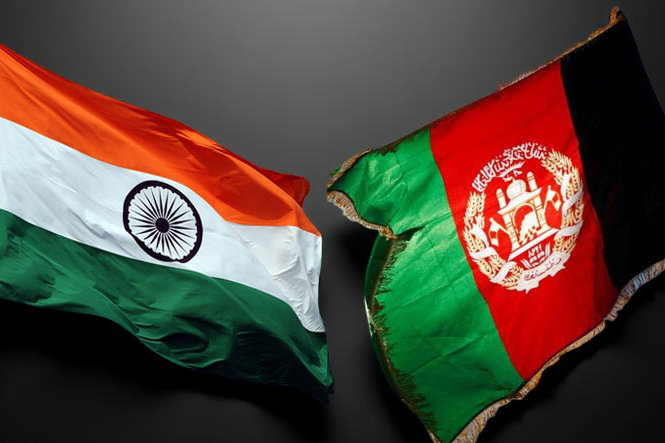
When Taliban foreign minister Amir Khan Muttaqi arrived in New Delhi this week, it was not just another diplomatic courtesy call. His visit — the first of its kind since the Taliban’s return to power in 2021 — signalled a decisive shift in India’s Afghanistan Policy from strategic distancing to pragmatic engagement. By announcing the formal reopening of its embassy in Kabul and upgrading its technical mission, India has chosen realism over rhetoric, development over denial. Yet, this calibrated outreach comes with significant diplomatic, political and moral implications — both within the region and beyond.
India’s re-entry into Afghanistan’s diplomatic landscape must be understood as a product of hard-nosed realpolitik. For years, India had been one of the largest development partners of the erstwhile Afghan Republic, pouring more than $3 billion into infrastructure, health and education. When the Taliban stormed Kabul in August 2021, India’s immediate reaction — closing its embassy and evacuating diplomats — was driven by security concerns and a moral refusal to legitimize a regime that had come to power through force.
However, the regional dynamics have since evolved dramatically. Pakistan’s relations with the Taliban have soured over the latter’s refusal to rein in the Tehreek-e-Taliban Pakistan (TTP), while China’s influence has grown through its Belt and Road overtures and mining interests. In this shifting strategic terrain, India appears to have recognized that absence in Kabul only cedes ground to adversaries. Reopening the embassy, even without formally recognizing the Taliban government, is thus a statement of intent: India wants to stay in the Afghan game.
Recognition Without Legitimization
It is crucial to note that India’s move does not equate to formal recognition of the Taliban regime. New Delhi continues to maintain that its engagement is “for the Afghan people,” not “with the Afghan government”. Yet, the optics tell a different story. By hosting Muttaqi in New Delhi and agreeing to receive Afghan diplomats here, India has effectively normalized "working-level relations". The Taliban, predictably, will project this as a diplomatic victory — a validation from South Asia’s largest democracy.
Critics argue this blurs the moral line India has long drawn against regimes that undermine human rights, especially those restricting women’s freedoms and education. But proponents counter that India’s moral posture cannot come at the expense of its security or strategic interests. “You can’t influence Kabul by boycotting it,” said a former Indian diplomat familiar with Afghan affairs. “Engagement, however uncomfortable, gives you a seat at the table — and that’s better than shouting from the corridor.”
Terrorism & Security Dilemma
External Affairs Minister S Jaishankar’s remarks during the meeting were telling. He underscored that “shared threats of cross-border terrorism” must be tackled jointly — a not-so-veiled reference to Pakistan-based terror networks with historic footprints in Afghanistan. The Taliban’s assurance that Afghan soil would not be used against any country is reassuring on paper, but history offers little comfort. The Taliban’s ability — and willingness — to restrain groups like the Haqqani Network remains doubtful.
Still, India’s engagement allows it to directly communicate its red lines. After the Pahalgam terror attack, New Delhi’s emphasis on Taliban “sensitivity” to its concerns hints at back-channel assurances. Whether these translate into tangible action is uncertain, but even the possibility of operational cooperation marks a new chapter in India-Afghan security dialogue — one that would have been unthinkable just two years ago.
Soft Power Dimension
Beyond geopolitics, India’s announcements of aid and development projects carry immense symbolic weight. The pledge to rebuild housing in earthquake-hit regions, provide ambulances and medical equipment, and offer more student visas signals a renewal of India’s “people-first” policy toward Afghanistan. Over 500 Indian-funded projects already dot the Afghan landscape — roads, hospitals, schools, and the parliament building among them. Reinvigorating that legacy reinforces India’s long-term soft power footprint.
Sports and education, notably cricket and scholarships, offer another avenue of influence. In a country where young Afghans still look up to India for opportunities, these gestures resonate far beyond diplomacy. They also subtly challenge China’s transactional approach, offering an alternative model of partnership built on empathy rather than extraction.
Regional Repercussions
The ripple effects of this diplomatic thaw will not go unnoticed in Islamabad or Beijing. Pakistan, long seen as the Taliban’s chief patron, will view India’s re-entry as a strategic intrusion into what it considered its sphere of influence. With Islamabad’s ties with Kabul deteriorating, India’s quiet diplomacy could exploit the cracks to its advantage.
China, meanwhile, will tread cautiously. While it has recognized the Taliban de facto and invested in Afghan minerals, it will be wary of India’s growing engagement undermining its monopolistic ambitions. For Washington and other Western capitals, India’s outreach may serve as a useful bridge for humanitarian coordination — a channel they themselves cannot officially maintain.
Walking the Fine Line
India’s Afghan gambit is not without risks. Any terrorist strike linked to Afghan elements could instantly derail the fragile trust. Equally, domestic critics will question the wisdom of engaging with a regime that curtails women’s rights and silences dissent. Yet, India’s strategy reflects a pragmatic understanding: to safeguard its interests, it must engage with whoever holds power in Kabul.
This is diplomacy in shades of grey — neither recognition nor rejection, but calibrated coexistence. In choosing engagement over estrangement, India is betting that development and dialogue can shape Afghanistan’s future more effectively than isolation ever could. Whether this gamble pays off will depend not on statements or aid packages, but on whether the Taliban can match its words with credible action.
For now, India has reopened not just an embassy, but a door — cautiously, strategically, and with eyes wide open.