
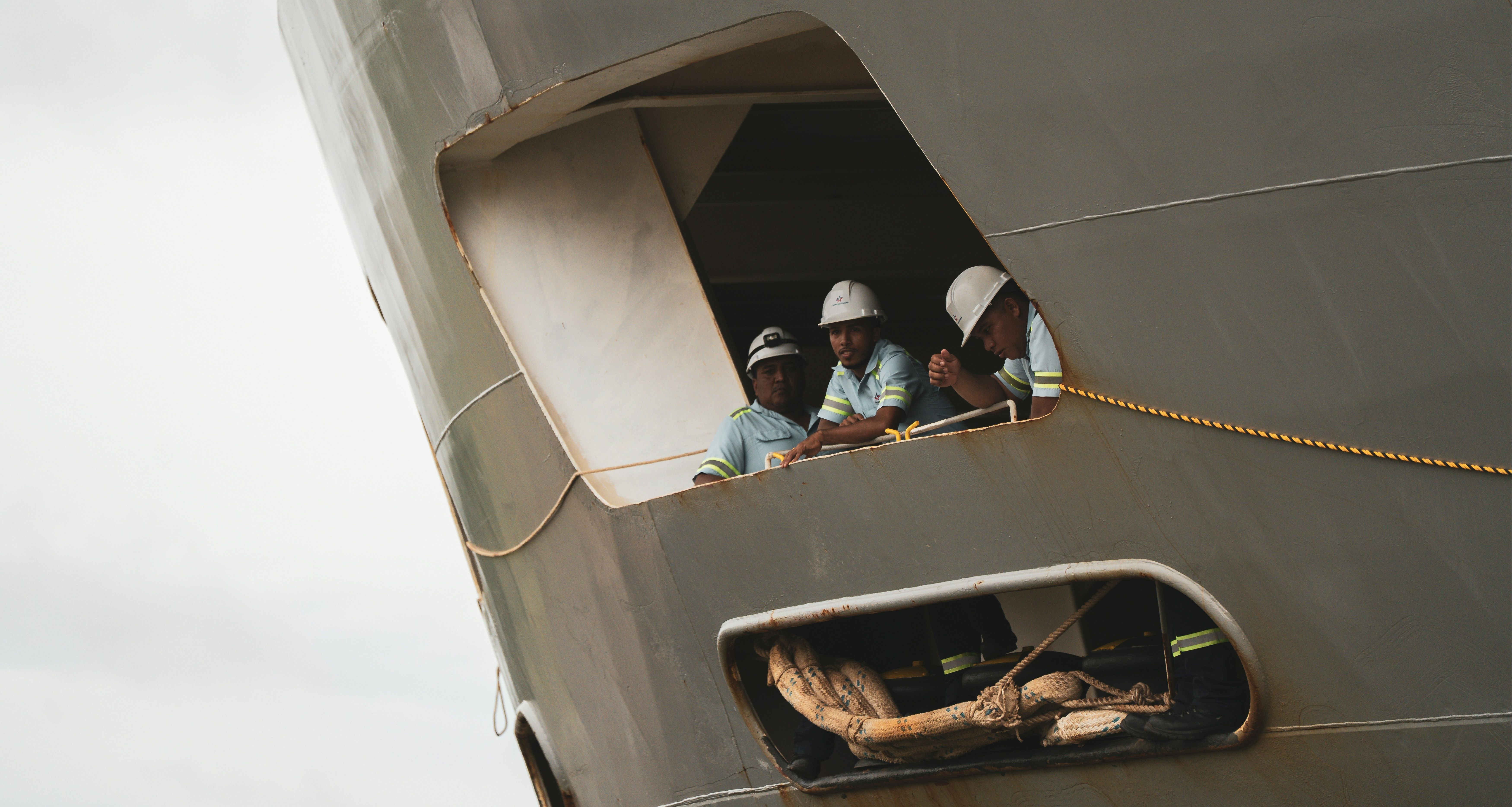

New Delhi: The world’s merchant fleet keeps supermarket shelves stocked, factories running and energy flowing across continents. Yet behind every vessel is a workforce that increasingly feels forgotten, overworked and, in many cases, frightened. The latest assessment of life at sea suggests that while global trade has largely recovered from the pandemic, the people sustaining it are confronting a new crisis shaped as much by geopolitics as economics.
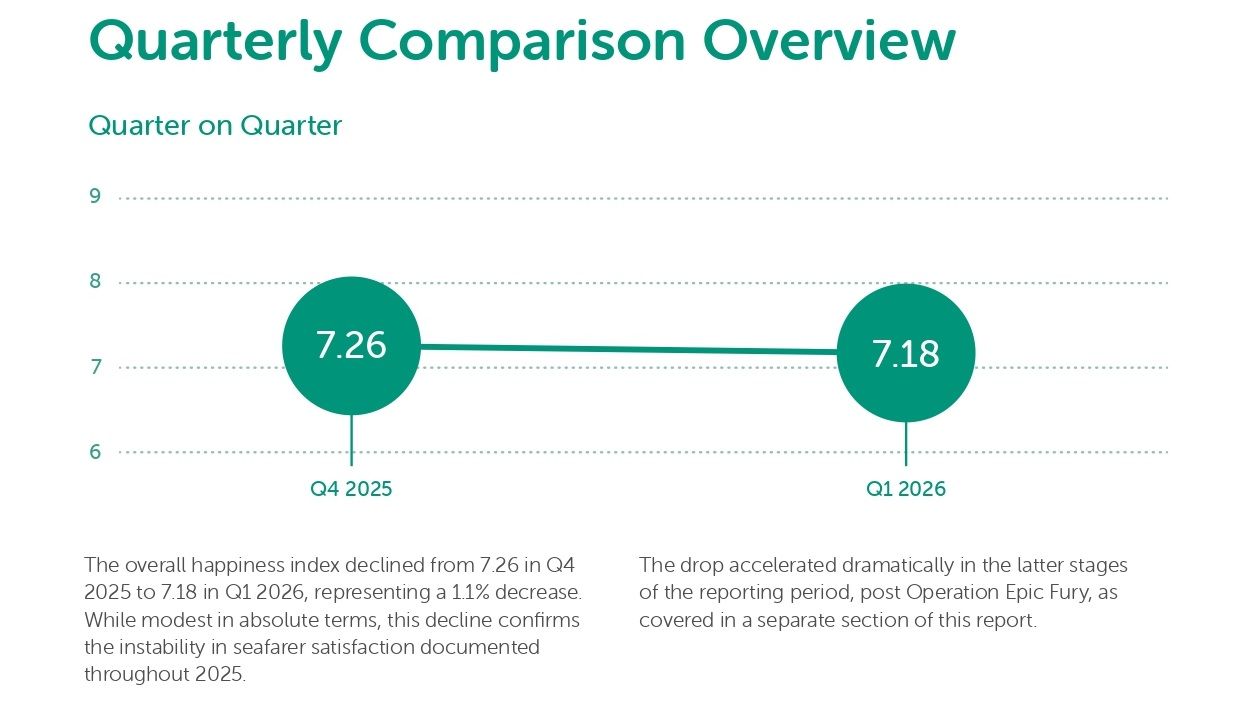
The Seafarers Happiness Index Quarter 1 2026 is one of the maritime industry’s most closely watched barometers of crew welfare. Compiled from responses across vessel types, ranks and regions, the report shows the overall happiness score slipping to 7.18 out of 10 in the first quarter of 2026 from 7.26 in the previous quarter. But the report argues that the modest decline masks a far deeper shift: a profession whose resilience is being tested by war, mounting operational pressures and growing doubts over whether the sacrifices of life at sea still justify the rewards.
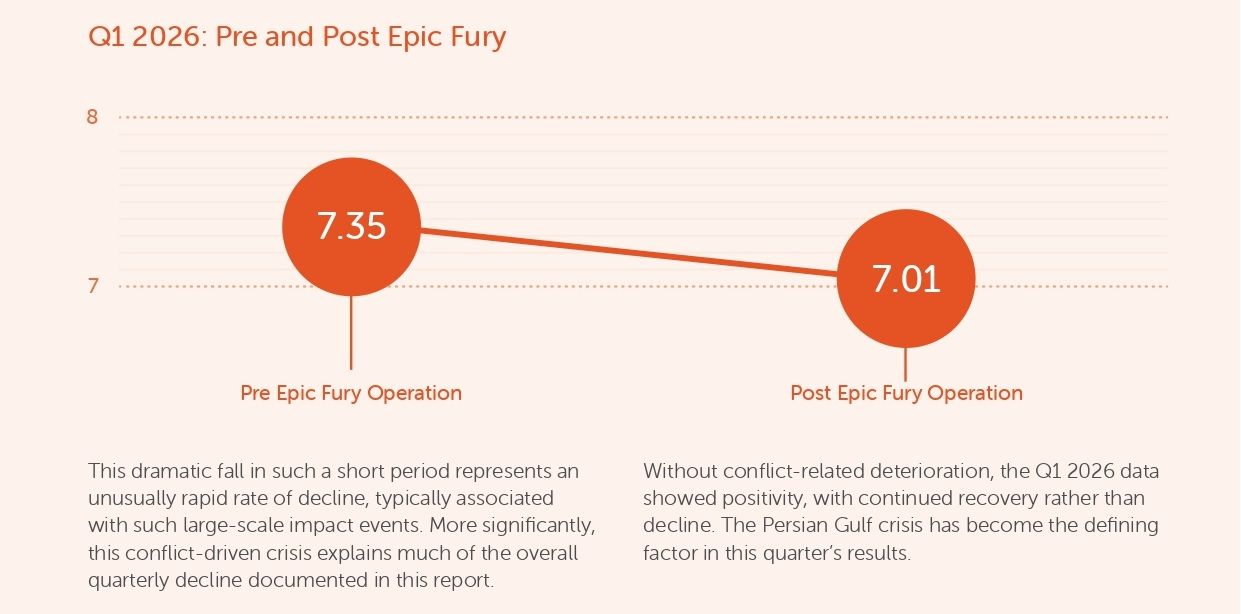
The deterioration was swift. Before military hostilities intensified in the Persian Gulf under Operation Epic Fury, seafarer happiness had climbed to 7.35. Within barely five weeks of the conflict, the score dropped to 7.01, illustrating how quickly geopolitical shocks can reverberate through an industry that underpins global commerce.
Conflict Changes Everything
The report describes the first quarter as a tale of two contrasting realities. In its opening weeks, shipping appeared to be emerging from years of pandemic disruption. Crew interaction was improving, investments in training were paying off and morale was stabilising.
Then came the conflict.
According to the report, some of the steepest declines were recorded in areas most vulnerable during crises. Shore leave became increasingly difficult as vessels remained restricted or delayed. Welfare services became harder to access, workloads intensified amid tighter security protocols, and psychological strain mounted. Even communications — often the only lifeline between seafarers and their families — became unreliable because of GNSS (Global Navigation Satellite System) interference and internet disruptions.
One seafarer describes the daily reality. “I have seen Iranian drones and missiles flying at low altitude. I also hear the sound of fighter jets, but we can’t identify which country they belong to. What scares me the most is the thought of an intercepted drone or missile falling on us.”
The testimony underscores fears that numbers alone cannot convey. More than 20,000 seafarers are estimated to have been stranded aboard vessels in the Gulf during the crisis, facing dangers few anticipated when signing up for commercial shipping.
The anxiety extended beyond missile threats. Crews reported shortages of drinking water, dwindling food supplies and uncertainty over replenishment while ships remained at anchor. One respondent described having to boil sea water to drink after supplies ran out, while others spoke of rationed meals and mounting concern over how long provisions would last. The accounts highlight how humanitarian challenges can quickly become inseparable from commercial shipping during geopolitical crises.
Sacrifice Under Scrutiny
Perhaps the report’s strongest theme is not fear but growing disillusionment.
For generations, seafaring demanded months away from family, physically demanding work and prolonged isolation in exchange for stable incomes and career opportunities. Increasingly, respondents say that equation no longer holds.
“There nothing exciting nowadays. No shore leaves, not getting paid enough. Land job wages have increased. So it’s not worth to spend your life at sea,” says a ship crew.
The report says such views are becoming increasingly common. Many respondents pointed to inflation eroding purchasing power and argued that comparable earnings are now available ashore without prolonged separation from family or exposure to conflict zones.
Many also described routinely working 12 to 14 hours a day, seven days a week, warning that fatigue is becoming the norm rather than the exception. Several alleged that official records of rest hours often fail to reflect onboard realities, raising fresh questions about compliance with international labour standards.
The report also flags an emerging retention challenge. Seafarers aged 25 to 35 years, the industry’s largest respondent group, reported comparatively lower satisfaction despite being in their prime working years. Senior officers, particularly captains, also registered among the weakest happiness scores, reflecting what the report calls the growing “burden of command” amid rising operational complexity.
Hope Amid Hardship
Despite the overall decline, the report identifies areas where targeted investment is delivering tangible benefits.
Training and development emerged as the strongest-performing category, with satisfaction rising from 6.99 to 7.52, suggesting that investments in professional development are resonating with crews. Interaction among crew members also improved, reinforcing the importance of teamwork and camaraderie aboard ships where colleagues often become an extended family.
Yet respondents stressed that training should not come at the expense of rest. “They will give you training in your working hours. Sometimes in your break time... It means you need to adjust, take it or leave it. It means you don’t have a choice,” said one.
The report argues that while meaningful training is welcomed, mandatory compliance exercises that consume rest periods are not. It recommends greater use of flexible, onboard and digital learning programmes that minimise disruption to personal time.
Connectivity presents another paradox. Better internet access has enabled more regular contact with families, but it has also increased emotional strain as seafarers witness family crises from thousands of miles away with little ability to help. During the Gulf conflict, even those communication channels became unreliable because of technical disruptions and heightened security concerns.
Shore leave remains one of the weakest aspects of life at sea despite a marginal improvement in scores. Tight port schedules, operational demands and regulatory requirements continue to keep crews confined onboard, eroding one of the profession’s few traditional compensations for months of isolation.
Industry’s Defining Test
Beyond individual grievances, the report raises broader questions about the long-term sustainability of the global maritime workforce. It argues that conflict amplifies existing weaknesses. Fatigue becomes harder to endure, stagnant wages more difficult to justify and restricted shore leave increasingly intolerable when combined with the threat of missiles, drones and prolonged uncertainty. The psychological contract between employers and employees begins to weaken when workers believe the risks they shoulder are no longer matched by adequate support.
Steven Jones, founder of the Seafarers Happiness Index and a maritime welfare advocate, who authored the report, says the first quarter of 2026 should not be viewed merely as another dip in an index but as evidence of how rapidly geopolitical crises reshape life at sea. Seafarers, he argues, are not on the fringes of global conflicts but on their frontlines, making their wellbeing inseparable from the resilience of international trade.
Perhaps the report’s most powerful reminder comes from one respondent. “Human life cannot be replaced by any insurance. If any vessel is hit by a drone or a missile it is the sailors who pay the human cost, while cargo and ships can be covered by insurance.”
The observation resonates well beyond the Persian Gulf. Every disruption to shipping eventually reaches supply chains, fuel markets and national economies, but it is first experienced by the men and women standing watch on bridges, maintaining engines below deck or navigating increasingly volatile waters.