

New Delhi: The war between Iran and Israel is beginning to reshape the economic outlook for the GCC countries, exposing a structural vulnerability that analysts say lies at the heart of the region’s oil-dependent growth model. Even as oil prices surge, disruptions to shipping routes, investment flows and regional confidence are slowing economic activity across much of the Gulf.
A recent report by the Goldman Sachs research team describes the situation as a ‘financial paradox’. According to the bank, the current crisis is creating a divergence between headline fiscal revenues and underlying economic activity because higher oil prices are boosting government income while the physical flow of exports and broader economic momentum are deteriorating.
“The current environment represents a financial paradox for the GCC: higher oil prices are supporting government revenues even as export disruptions and regional insecurity weigh on real economic growth,” the bank said in a research note issued earlier this month.
The economic shock is centered on the disruption of the Strait of Hormuz, the narrow maritime corridor through which roughly one-fifth of global oil supply normally moves. Heightened military activity and security warnings have forced many shipping companies to avoid the passage or pay sharply higher war-risk insurance premiums.
The impact on economic forecasts has been immediate. Goldman Sachs now expects average GCC growth to slow dramatically to around 0.4% in 2026, reflecting disruptions to oil exports and weakening non-oil activity. Saudi Arabia’s GDP growth is projected at 2.1%, the United Arab Emirates at 1.8% and Qatar at 1.6%. The outlook is weaker for several smaller exporters: Oman is expected to record zero growth, Bahrain is projected to contract by -0.5%, and Kuwait could see GDP fall by -2.7%.
Despite the slowdown in growth, fiscal balances remain comparatively resilient because higher crude prices are inflating revenues. Qatar’s current-account surplus is projected to reach roughly 15% of GDP, while Kuwait’s could exceed 25%.
Analysts, however, stress that these surpluses may prove temporary if export disruptions persist. “The price effect of elevated oil markets is currently masking the volume effect of reduced exports,” Goldman Sachs said, warning that the fiscal cushion could erode rapidly if shipping routes remain constrained.
The vulnerability is most acute for Gulf states that depend entirely on the Hormuz route for energy exports. Kuwait, Qatar and Bahrain have little capacity to bypass the Strait, leaving their economies highly exposed to prolonged disruption. Goldman estimates that if shipments remain blocked for several more weeks, GDP in Kuwait and Qatar could contract by as much as 14%.
By contrast, Saudi Arabia and the UAE possess limited alternatives that partially mitigate the shock. Saudi Arabia can redirect roughly 3 million barrels per day through pipelines linking its eastern oil fields to ports on the Red Sea, while the UAE operates a pipeline connecting its production facilities to the port of Fujairah outside the Strait of Hormuz. These routes provide a degree of resilience but cannot fully compensate for the loss of Gulf shipping.
Widespread Impact
The economic damage is not confined to energy exports. Analysts say the conflict is already spilling into sectors that Gulf governments have spent years cultivating as part of diversification strategies. Tourism, aviation, logistics and real estate are among the industries experiencing an abrupt deterioration in sentiment.
Research from Oxford Economics suggests the war could shave roughly 1.8 percentage points from GCC growth forecasts this year compared with pre-conflict expectations. “Heightened geopolitical risk is weighing heavily on tourism, aviation and cross-border investment flows across the Gulf,” the consultancy said in its recent regional outlook. “Even countries with stronger fiscal buffers are likely to see a slowdown in non-oil activity as confidence deteriorates,” it added.
Shipping and insurance markets are also reflecting the rising geopolitical risk. War-risk premiums for vessels entering the Gulf have surged as insurers price in the possibility of missile or drone attacks on commercial shipping and energy infrastructure.
According to analysis by S&P Global, insurers are rapidly reassessing exposure to the region. “Escalating tensions around the Strait of Hormuz are significantly increasing the risk environment for maritime insurers and energy infrastructure coverage,” the firm noted in a recent market intelligence report.
The macroeconomic implications extend beyond the Gulf itself. Analysts at the International Monetary Fund warn that energy-price volatility and shipping disruptions could add new inflationary pressures to the global economy at a time when many central banks are still struggling to normalize monetary policy.
“Geopolitical tensions in key energy corridors can transmit rapidly to global inflation through higher fuel prices, transportation costs and supply-chain disruptions,” IMF economists wrote in a recent regional briefing.
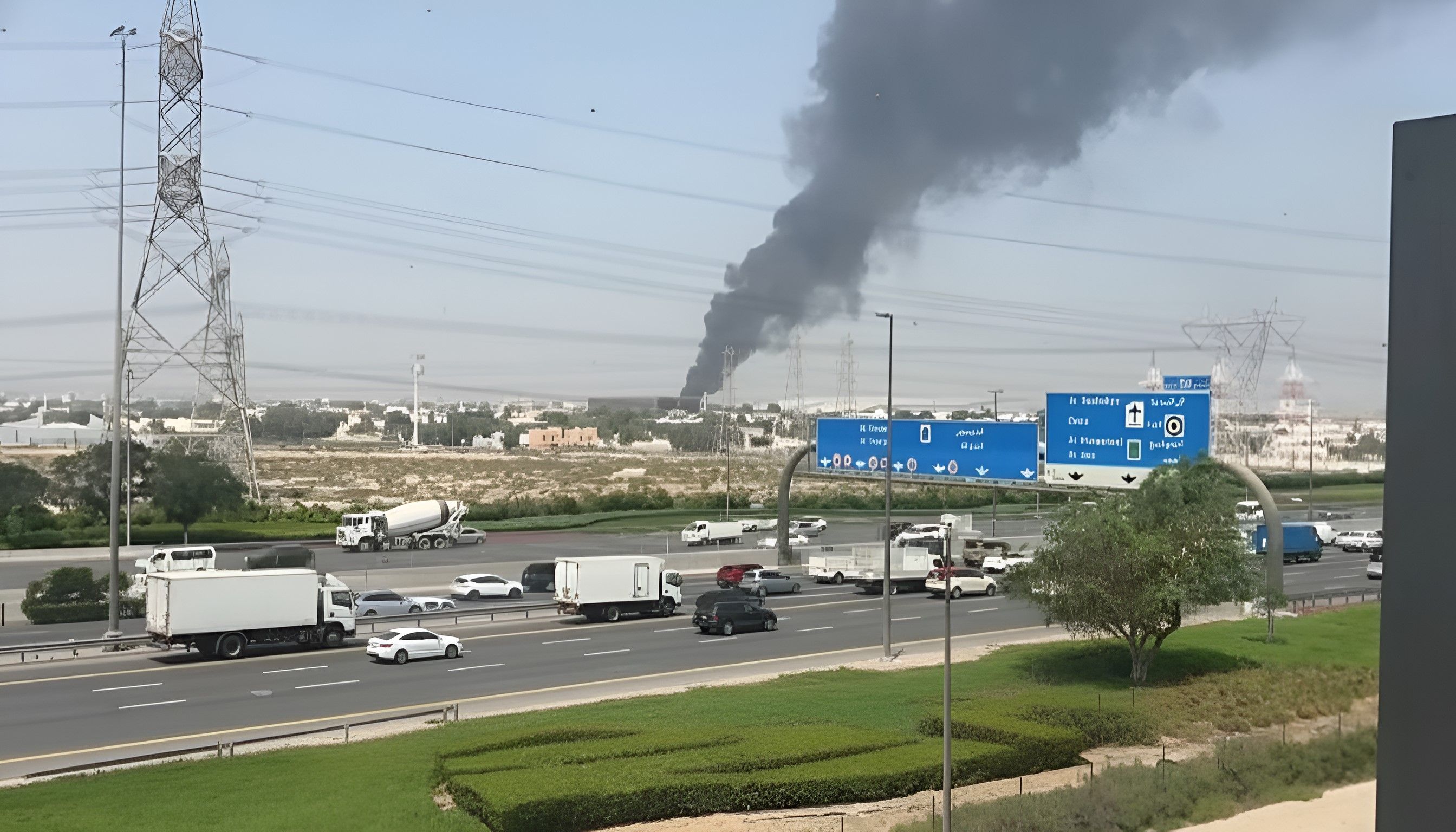
Drone attack on Dubai Airport on Monday. Tourism, aviation, logistics and real estate in the GCC counties are among the industries experiencing an abrupt deterioration in sentiment.
Market Reactions
Financial markets have already begun adjusting to these risks. Sovereign bond spreads for several Gulf states have widened modestly since the conflict escalated, reflecting investor concern about prolonged geopolitical instability. While wealthier states such as Saudi Arabia, Qatar and the UAE maintain large sovereign wealth funds that can absorb short-term shocks, more fiscally constrained economies — including Bahrain and Oman — could face higher borrowing costs if tensions persist.
At the same time, economists warn that the longer-term consequences may be structural rather than cyclical. The GCC’s economic transformation strategies rely heavily on attracting foreign investment, expatriate talent and global corporations seeking regional headquarters.
Goldman Sachs cautions that prolonged instability could erode investor confidence in these initiatives. “A sustained regional conflict risks damaging the Middle East’s reputation as a stable destination for global capital, particularly in emerging sectors such as artificial intelligence and financial services,” it wrote.
For now, high oil prices are providing a temporary fiscal buffer for many governments in the region. Goldman Sachs expects Brent crude prices to remain elevated in 2026, with forecasts revised upward to $76.6 in the second quarter and $72 in the third quarter, compared with earlier projections of around $61. Yet analysts warn that the current balance between rising prices and falling export volumes may not hold indefinitely.
If shipping disruptions persist or escalate, the ‘financial paradox’ identified by Goldman Sachs could quickly resolve in a more damaging direction, leaving Gulf economies with both weaker growth and declining revenues.
(Cover photo by Kate Trysh on Unsplash)