
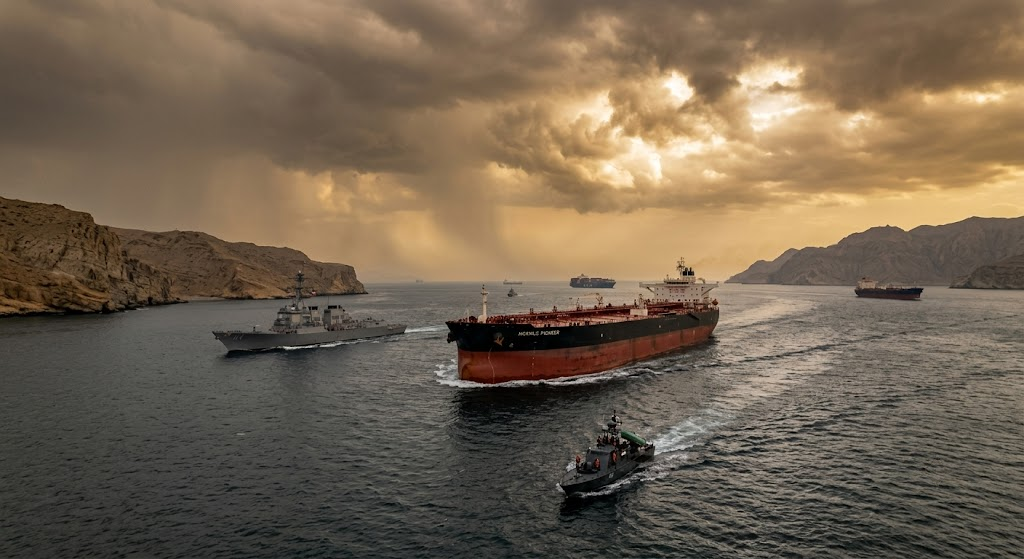

As regional maritime security faces mounting strains, the United States has moved to limit daily windows for military air-defence protection for commercial tankers transiting the Strait of Hormuz. According to reports, the scaling back of active air-defence time slots comes directly on the heels of a severe escalation in regional hostilities and heightened threats to global shipping lanes.
Intensified Shipping Attacks and Regional Escalation
The decision to restrict military protection hours unfolds against a backdrop of severe maritime volatility. Earlier in the week, reports highlighted a massive wave of attacks on shipping vessels, marking some of the most intense strikes on tankers since the broader conflict began. Both the US and Iran have hit tankers, while regional flashpoints have seen continued strikes, including attacks on US bases in Jordan and commercial vessels near Hormuz following the sinking of multiple tankers.
Operational Constraints on Maritime Transit
Maritime analysts point out that curtailing active air-defence time slots leaves commercial vessels operating in one of the world's most critical energy chokepoints with significantly reduced defensive safety margins. Transiting the Strait of Hormuz has consistently remained a high-stakes endeavor throughout the ongoing US-Iran conflict stream, where military escorts and air-defence coverage have served as crucial lifelines for international energy transport.
Strategic Implications for Global Energy Flows
As shipping operators digest the new scheduling limitations implemented by US military authorities, questions remain regarding how commercial fleets will adjust their passage timings to align with the restricted protection windows. The policy shift underscores the delicate balance the United States must strike in allocating its regional military assets amidst sustained security demands.