
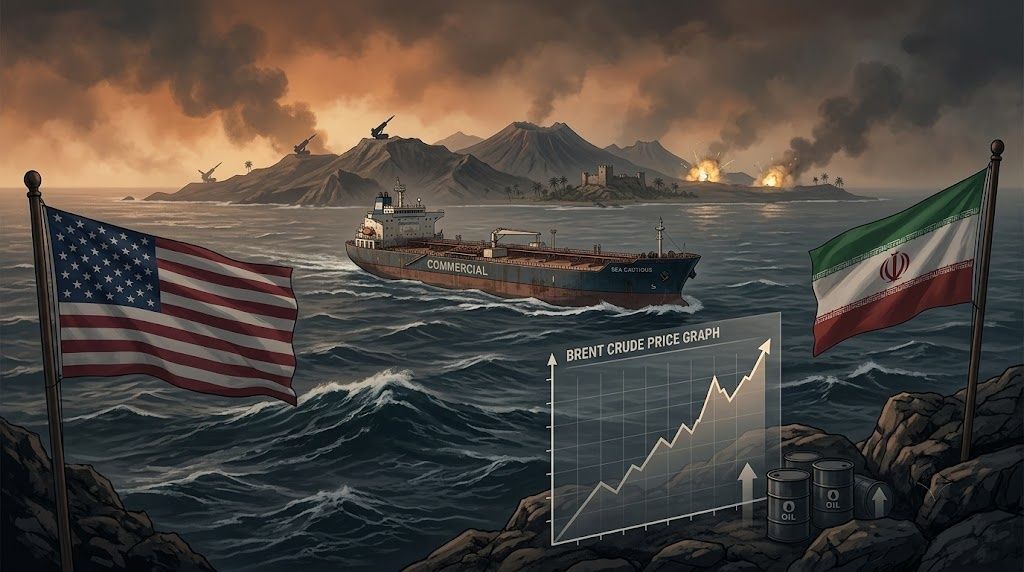

The West Asia conflict has entered a volatile new phase as United States forces carried out targeted military strikes against Iranian assets. The latest confrontation marks a significant deterioration in regional stability, breaking a relative lull as both sides exchange direct blows near vital global shipping lanes.
Strikes on Larak Island and the Strait of Hormuz
According to reports, United States forces executed military strikes targeting Iranian rocket launchers and launch systems positioned on Larak Island. The operation, which occurred near the strategically vital Strait of Hormuz, represents the first major direct US military action against Iranian targets in weeks.
The targeted infrastructure on Larak Island was identified by Washington as an active threat to regional security and commercial shipping. The Strait of Hormuz remains one of the world's most critical energy chokepoints, making any localized military engagement in its immediate vicinity a matter of profound international concern.
Tehran Retaliates and Political Signaling Intensifies
As per reports, Tehran has hit back with retaliatory attacks against US-linked targets following the Larak Island strikes, vowing firm counteraction. The rapid tit-for-tat escalation underscores the precarious nature of the current security architecture in the region.
Simultaneously, the confrontation has spilled over into the digital and psychological domains. Political signaling has grown increasingly abrasive, highlighted by developments such as former US President Donald Trump posting an AI-generated video of Kharg Island amidst the escalating hostilities.
Market Fallout: Brent Crude Rises
The immediate economic fallout of the renewed hostilities was swiftly registered in global commodity markets. Reports says that Brent crude oil prices gained more than 1% as traders priced in the heightened geopolitical risk premium. With the Strait of Hormuz serving as a primary conduit for global petroleum transit, any sustained military friction between Washington and Tehran threatens to introduce severe supply chain disruptions and energy market volatility in the days ahead.