
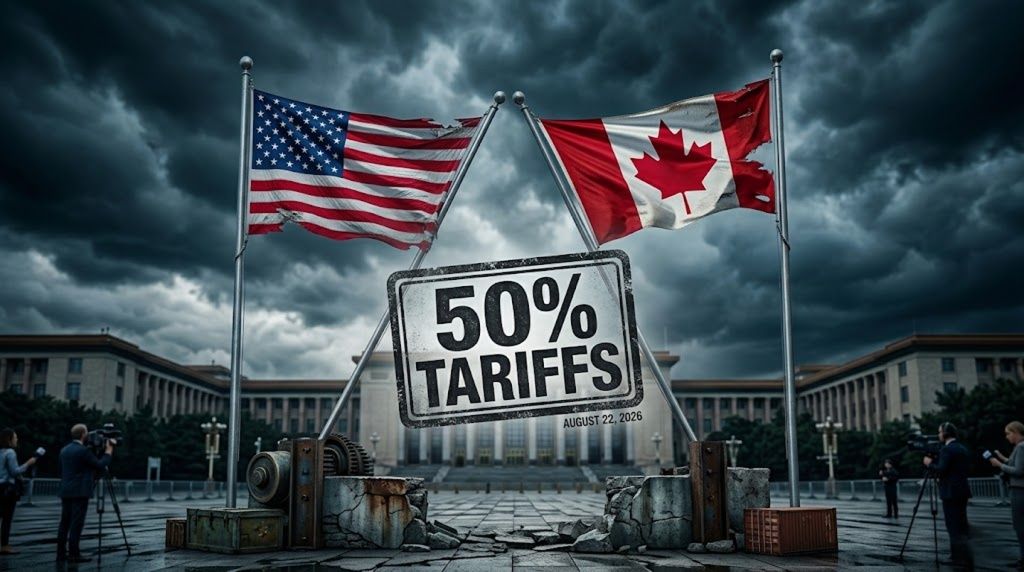

The economic relationship between two long-time North American allies has suffered a major blow. The trade war between the United States and Canada has deepened significantly after both nations failed to reach a trade pact to avert new tariffs. According to reports, the 50% tariffs officially took effect on Saturday, 22 August 2026, following the breakdown of high-stakes negotiations.
Breakdown of Negotiations and Tariffs
The collapse of the trade talks has led to immediate economic fallout. The United States has moved forward to impose these aggressive 50% tariffs on approximately $20 billion worth of Canadian products.
Efforts to secure a last-minute trade agreement failed to bridge the gap between the two governments. Consequently, the unprecedented 50% duties will continue as the impasse persists.
Canadian Retaliation and Economic Defiance
Faced with the sudden and severe economic pressure from Washington, Ottawa has signaled an aggressive response. Canadian leadership has vowed to match Trump's 50% tariffs "dollar for dollar". This swift retaliation underscores the escalating friction between the neighboring trading partners and highlights the rapid deterioration of cross-border commerce.
Broader Implications for North American Trade
The failure to secure a trade deal and the subsequent implementation of steep 50% tariffs raise serious concerns about the stability of regional trade frameworks. Details on this aspect have not been reported yet, but analysts warn that the standoff could severely threaten existing cooperative agreements and disrupt integrated supply chains across the continent.
As the situation unfolds, markets on both sides of the border are bracing for prolonged economic turbulence as the two nations remain locked in a historic trade confrontation.