
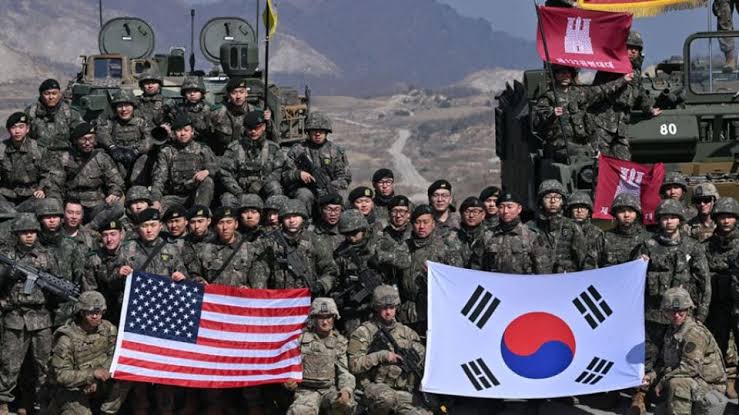

The security landscape on the Korean Peninsula faces fresh shifts as the United States and South Korea scale back their major joint military exercises. According to reports, the allied nations are curtailing and shortening their annual Ulchi Freedom Shield (UFS) military exercises following a direct order from U.S. President Donald Trump.
The Scope of the Curtailment and Washington's Request
The adjustments to the military drills come directly at Washington’s request. The exercises, which form a cornerstone of combined defense readiness between Seoul and Washington, are set to end earlier than originally scheduled and have seen a noticeable reduction in scale.
As noted by the South Korean Joint Chiefs of Staff (JCS), the joint exercises have officially been scaled back. The decision has immediately triggered discussions regarding regional deterrence and strategic readiness, with defense analysts evaluating the long-term repercussions of a diminished training footprint in the region.
Diplomatic Rationale and Regional Repercussions
The directive issued by President Trump to cut back the drills has been tied to broader geopolitical justifications. Reporting highlights that the U.S. administration pointed to diplomatic contexts, including Trump's stated relationship with North Korean leader Kim Jong Un, alongside separate considerations involving stances on Iran.
The abrupt downscaling of the drills carries significant weight for regional security alignment. While proponents of diplomatic engagement view reduced military friction as an opening for dialogue, regional defense circles are left grappling with the operational impacts of shortening critical readiness maneuvers like the UFS exercises.
South Korea's Response and Push for Independence
The unilateral nature of the directive has also reverberated through domestic politics in Seoul. The developments prompted the South Korean president to call for military independence in the wake of Washington's call to cut the joint drills. This political reaction underscores a growing anxiety within South Korea regarding reliance on American security guarantees and the pacing of allied military cooperation.
As the shortened Ulchi Freedom Shield exercises draw toward an early close, both governments face the complex task of balancing diplomatic messaging with the maintenance of a credible combined defense posture.