
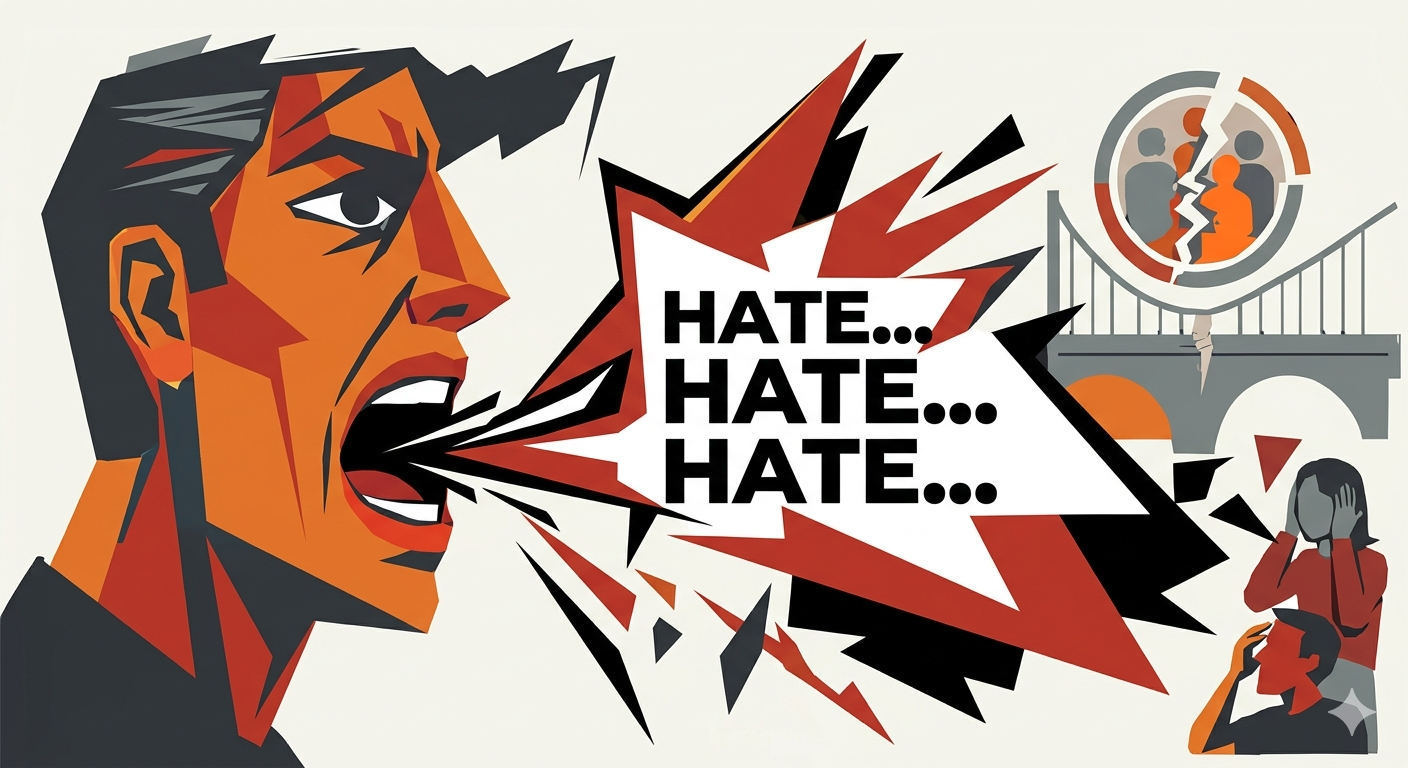
New Delhi: Hate speech is no longer confined to the dark corners of the internet. It has entered political campaigns, social media timelines and everyday public discourse, prompting the United Nations to issue one of its starkest warnings yet. At a time when wars, migration crises and political polarisation are deepening social fault lines, the global body argues that words are increasingly becoming weapons.
The UN report paints a troubling picture. Digital platforms have amplified bigotry at unprecedented speed, while extremist ideologies have found new audiences across borders. The concern is not merely about offensive language but about the ability of hate speech to normalise discrimination, fuel violence and weaken democratic institutions.
Says UN Secretary-General António Guterres, “Hate speech is a menace to democratic values, social stability and peace.” The warning is particularly relevant for diverse democracies such as India, where social cohesion depends on balancing freedom of expression with the responsibility to prevent incitement and violence.
The report is unequivocal in its diagnosis. “Hate speech, including racism, anti-semitism, anti-Muslim hatred and persecution of Christians, social media and other forms of communication are being exploited as platforms for bigotry. Public discourse is being weaponized for political gain with incendiary rhetoric that stigmatizes and dehumanizes minorities, migrants, refugees, women and any so-called ‘other’.”
The UN argues that this is not an isolated trend but a structural challenge confronting both liberal democracies and authoritarian systems. “This is not an isolated phenomenon or the loud voices of a few people on the fringe of society. Hate is moving into the mainstream. With each broken norm, the pillars of our common humanity are weakened.”
Those words reflect growing concerns over the digital economy of outrage, where algorithms reward sensationalism and political divisions translate into online engagement.
Digital Fires Spread
The UN carefully distinguishes between unpopular opinions and unlawful incitement. That distinction could shape future debates on online regulation across the world.
According to the UN strategy on countering the menace, “Rather than prohibiting hate speech as such, international law prohibits the incitement to discrimination, hostility and violence.” It adds that incitement is particularly dangerous because it deliberately seeks to trigger harmful actions that could culminate in terrorism or atrocity crimes.
In common language, ‘hate speech’ refers to any kind of communication in speech, writing or behaviour that attacks or uses pejorative or discriminatory language with reference to a person or a group on the basis of who they are.
For policymakers, this distinction is critical. Democracies face the challenge of preserving free expression while preventing speech that can spark violence. The UN makes it clear that addressing hate speech does not mean silencing dissent.
“Addressing hate speech does not mean limiting or prohibiting freedom of speech. It means keeping hate speech from escalating into something more dangerous, particularly incitement to discrimination, hostility and violence,” the UN says.
The strategy identifies social media companies as indispensable partners. Technology firms, governments and civil society organisations are expected to collaborate in detecting harmful narratives while protecting fundamental rights.
The report also calls for stronger research into the relationship between the misuse of the internet and the spread of hate speech. Education, media literacy and digital citizenship are seen as long-term solutions to prevent societies from becoming vulnerable to manipulation.
Action Beyond Words
The UN’s response extends beyond regulation. It advocates a whole-of-society approach involving governments, educators, journalists, religious leaders, technology companies and ordinary citizens.
A key recommendation states that tackling hate speech is “the responsibility of all governments, societies, the private sector, starting with individual women and men. All are responsible to act.”
The strategy urges solidarity with victims and recommends measures that protect their rights, improve access to justice and prevent retaliatory violence. It also proposes stronger partnerships with traditional and new media to promote tolerance, pluralism and freedom of expression.
Education occupies a central place in the blueprint. The UN wants formal and informal education systems to promote global citizenship, media literacy and inter-cultural understanding. It argues that combating prejudice requires addressing the roots of discrimination rather than merely reacting to its consequences.
The Secretary-General’s concluding appeal captures the larger objective. “By enhancing global resilience against this insidious phenomenon, we can strengthen the bonds of society and build a better world for all.”
The message arrives at a moment when democracies are grappling with polarised politics and digital disruption. The UN’s strategy does not claim that hate speech can be eliminated. Its argument is more practical and more urgent: if societies fail to challenge hatred before it hardens into discrimination and violence, the costs will be measured not only in fractured communities but also in damaged democracies and threatened peace.
For India and the wider world, the debate is no longer whether hate speech exists. The real question is whether institutions, technology platforms and citizens can respond quickly enough before words become irreversible acts.