
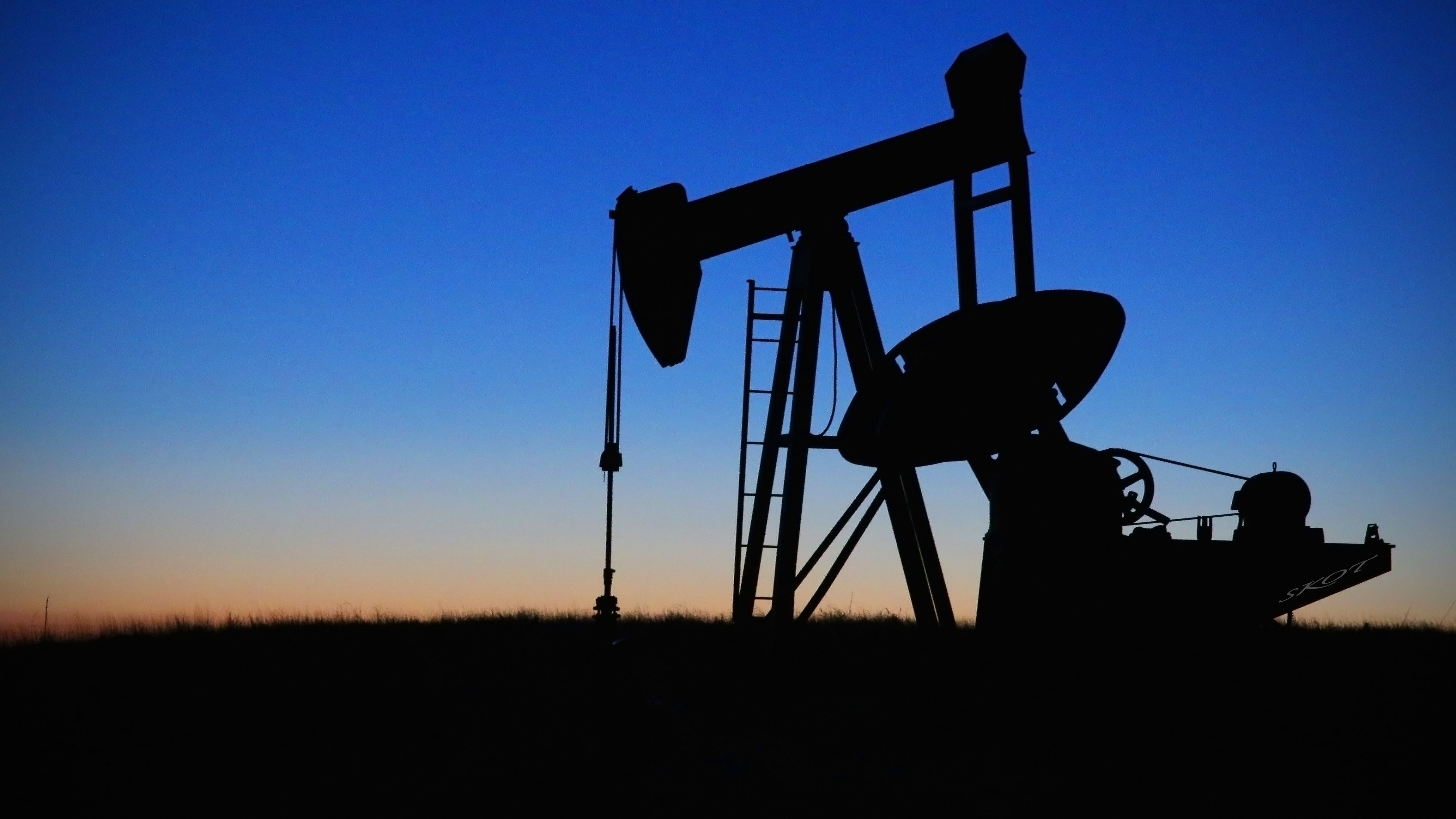

New Delhi: Venezuela’s oil has always been more than a commodity. It is leverage, temptation and threat rolled into one — and now it has become the fault-line of a geopolitical rupture that markets are only beginning to price in.
The US capture of President Nicolás Maduro and Donald Trump’s declaration that Washington will effectively “run” Venezuela marks the most naked assertion of American power in Latin America in a generation. While the operation’s legality and long-term viability are already being fiercely debated, its strategic logic is unmistakable: control the world’s largest proven oil reserve, and you reshape energy geopolitics for decades.
In the immediate term, the market reaction has been oddly restrained. Venezuela today is a petro-giant in theory but a minnow in practice, contributing barely 1% of global supply after years of institutional collapse, sanctions and capital flight. With OPEC+ managing output and US shale acting as a flexible buffer, traders see little reason for panic.
Prices have flickered, not surged. That calm, however, masks a deeper recalibration. The signal Washington has sent is not about barrels this quarter but about power over barrels for the next 20 years. By asserting control over Venezuela’s oil future, the US is claiming a latent swing supply that rivals Saudi Arabia in geological scale, even if not in operational readiness.
Timing of Intervention
What makes this moment so destabilizing is not just the audacity of the intervention, but its timing. The global oil system is already under strain from wars, sanctions, and the uneven energy transition. Supply chains are tight, spare capacity is politically constrained, and energy security has re-emerged as a core national priority rather than a market afterthought.
Into this environment, the United States has injected a radical variable: the possibility that a failed petro-state could be forcibly rebooted as a US-aligned energy platform. Even if production gains are years away, the expectation of future barrels can influence investment decisions, OPEC strategy, and long-term price assumptions.
The challenge is that oil reserves do not flow on command. Venezuela’s industry is physically degraded, technologically obsolete, and legally tangled. Decades of underinvestment have left pipelines corroded, upgraders idle, and skilled workers dispersed across the hemisphere. Reviving production will demand tens of billions of dollars, years of work, and political stability that Venezuela has not known in a generation.
Even US oil executives sympathetic to Trump’s vision privately acknowledge that any meaningful production rebound will be slow, uneven, and capital-intensive. Heavy crude from the Orinoco Belt is among the most expensive and technically demanding oils to extract, requiring specialized equipment, diluents, and upgrading capacity that cannot simply be switched back on.
Legal Minefield
There is also the legal minefield. Venezuela’s oil sector is riddled with competing claims, expropriation disputes, and frozen joint ventures involving companies from Europe, Asia, and the Americas. Any US-led restructuring will have to confront questions of ownership, compensation and debt repayment. Courts in New York and London have spent years adjudicating claims against Venezuelan assets, and those judgments do not disappear with a change of regime. This raises the risk that the very certainty investors crave could be undermined by years of litigation, even under US oversight.
Yet even a slow recovery carries enormous geopolitical weight. Venezuela’s oil has long been the hidden prize in Washington’s confrontation with Chavismo (a left-wing populist and authoritarian political ideology based on the ideas, programs and government style associated with Hugo Chávez and later Maduro). Sanctions were never just about democracy or human rights; they were about starving a hostile regime of oil revenue while denying China and Russia privileged access to a strategic resource in the US backyard.
Under Maduro, Beijing quietly embedded itself as Venezuela’s lender of last resort, trading cash and infrastructure for crude shipments and long-term influence. Moscow, too, used energy cooperation as a geopolitical wedge. A US-led restructuring threatens to unwind these arrangements, or at least force them into renegotiation under American terms.
This is where the Venezuela saga spills far beyond the Western Hemisphere. For China, the prospect of US dominance over Venezuelan oil is not just a regional setback but a strategic warning. Energy security sits at the heart of Beijing’s global ambitions, and Venezuelan crude has long served as a hedge against Middle Eastern instability and Western sanctions. Any move that sidelines Chinese claims or constrains future access will sharpen great-power rivalry in energy markets already fractured by geopolitics.
New Delhi must tread carefully. Any benefit will come with geopolitical strings attached, requiring deft navigation between Washington’s strategic priorities and China’s entrenched financial footprint in Caracas. (Photo by Atik sulianami on Unsplash)
India Impact
For India, the drama is less ideological and more transactional — but no less consequential. Before sanctions, Indian refiners were among the most sophisticated buyers of Venezuelan heavy crude, and Indian state firms built equity stakes that are now effectively stranded assets. Nearly a billion dollars in unpaid dividends remains frozen, a stark reminder that energy security is as much about contracts and geopolitics as geology.
A US-supervised reopening of Venezuela’s oil sector could unlock those claims, revive stalled projects, and restore access to discounted heavy crude that suits Indian refinery configurations.
At the same time, New Delhi must tread carefully. Any benefit will come with geopolitical strings attached, requiring deft navigation between Washington’s strategic priorities and China’s entrenched financial footprint in Caracas.
Re-weaponization of Energy
The larger story, however, is not about India or even Venezuela alone. It is about the re-weaponization of energy in an era that was supposed to have moved beyond resource imperialism. Trump’s fixation on Venezuelan oil reflects a worldview in which energy dominance equals geopolitical dominance, and where control matters more than market efficiency or multilateral norms.
Whether this gamble succeeds will depend not just on oil prices, but on whether the US can do what Venezuela’s own governments could not: rebuild institutions, enforce contracts, and stabilize a fractured society long enough for investment to take root.
For now, markets are watching with cautious detachment. They understand that Venezuela’s oil is a promise, not an imminent supply shock. But they also recognize that a dormant giant has been forcibly dragged back into the centre of global energy politics.
If Washington can translate coercive power into sustainable production, it will have altered the balance of energy influence across the Americas and beyond. If it cannot, Venezuela risks becoming another cautionary tale — proof that even the world’s largest oil reserve cannot, by itself, guarantee power, prosperity, or control.