

New Delhi: The Gaza conflict entered a critical and tense phase this weekend as Hamas formally signalled “conditional support” for US President Donald Trump’s 20-point Gaza peace plan. Israel, in parallel, began preliminary preparations for the plan’s first phase even as military operations continued across parts of the enclave. The unfolding situation now hinges on whether both sides can convert this fragile opening into a ceasefire and a full-scale hostage release before diplomatic momentum fades.
Conditional Acceptance & Hostage Deal
After days of negotiations mediated by regional powers, Hamas submitted its official response to the Trump proposal. The group pledged to release all Israeli hostages, living or deceased, and expressed willingness to hand over day-to-day governance of Gaza to a temporary Palestinian technocratic administration under international supervision.
However, Hamas made it clear that it would not agree to full disarmament at this stage — a key demand in the Trump framework — and insisted that no foreign military or administrative control be imposed on Gaza. A senior Hamas political figure stated, “We have agreed to many of the terms, but sovereignty over our land cannot be compromised. We seek guarantees that respect our independence and ensure lasting peace.”
President Trump responded swiftly, urging Israel to halt its air campaign in Gaza. In a statement on his social media account, he wrote: “Israel must immediately stop bombing Gaza so that we can safely and quickly bring the hostages home. Based on Hamas’s latest statement, I believe they are ready for lasting peace.”
The former president’s peace plan — his most ambitious Middle East initiative — proposes a phased ceasefire, a prisoner-hostage exchange, humanitarian corridors, and a future transition toward local Palestinian governance under regional oversight. The plan’s acceptance would mark the first formal de-escalation framework since the conflict erupted nearly two years ago.
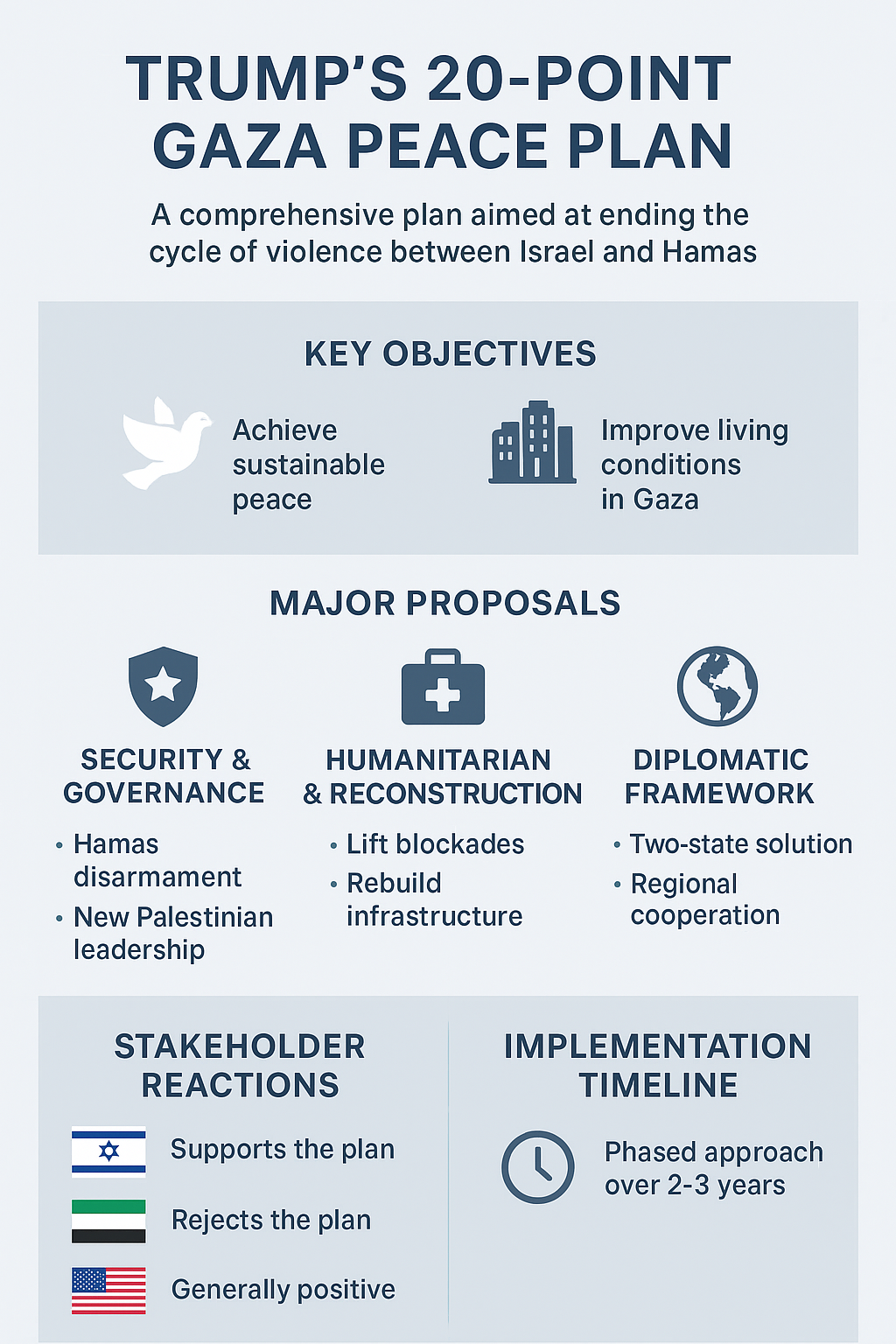
Israeli officials have cautiously welcomed Hamas’s conditional endorsement, noting that they are “ready to proceed with initial implementation” if the terms are met. A military spokesperson announced that Israel has shifted its Gaza operations to a defensive posture and would temporarily scale back offensive activity to create “safe zones” for hostage extraction. However, troops have not yet withdrawn, and limited strikes continued overnight, underscoring the delicate balance between diplomacy and defence.
International Reaction
The tentative breakthrough has triggered an immediate wave of global reactions. Leaders from Europe, the Middle East, and the United Nations have urged both sides to seize the moment and finalise a ceasefire that could end the bloodshed.
In Brussels, European Commission President Ursula von der Leyen described Hamas’s response as “a positive and hopeful signal” and emphasised that “this opportunity must not be lost.” French President Emmanuel Macron echoed that sentiment on social media, saying: “The release of all hostages and a ceasefire in Gaza are within reach — the time for peace is now.”
Arab mediators, including officials from Egypt and Qatar, have reportedly intensified shuttle diplomacy to clarify unresolved details, such as the sequence of hostage releases, the timeline for Israeli withdrawal, and the framework for Gaza’s post-war reconstruction. The US has pressed regional allies to ensure compliance mechanisms are built into any final deal to prevent backsliding.
Despite these encouraging signs, internal divisions within Hamas pose a potential obstacle. Political leaders based abroad have leaned toward acceptance, but the group’s military wing inside Gaza remains wary of disarmament clauses and foreign oversight. A Palestinian source familiar with the talks said, “The external leadership is thinking politically, while the local commanders are thinking about survival and resistance. That’s the core tension.”
Analysts warn that Trump’s imposed deadline — just days for Hamas to finalise agreement — could either force a rapid breakthrough or push the factions back into confrontation. The compressed timetable has created both diplomatic urgency and operational risk.
A former US intelligence official familiar with the region noted that “forcing accelerated decisions in such a volatile environment can backfire. Every small miscalculation could unravel months of quiet negotiation”.
If implemented, Trump’s proposal would lead to one of the largest coordinated hostage exchanges in modern history and initiate a phased Israeli withdrawal from populated zones of Gaza. The plan also outlines a reconstruction fund supported by Gulf states and international donors, aimed at rebuilding critical infrastructure destroyed during the conflict.
However, the fragile trust between both sides remains the biggest challenge. Ongoing military activity, political divisions within Hamas, and skepticism among Israeli hardliners could still undermine the peace process. Critics argue that the plan’s lack of enforcement guarantees might leave room for future violations, while supporters see it as the best opportunity in years to end the humanitarian catastrophe.
As the 72-hour window set by Washington nears its end, mediators are racing to translate written commitments into a verifiable sequence of actions. The coming days will determine whether the Trump peace plan becomes the foundation of a historic ceasefire or another fleeting chance lost to the violence that has already claimed thousands of lives.