
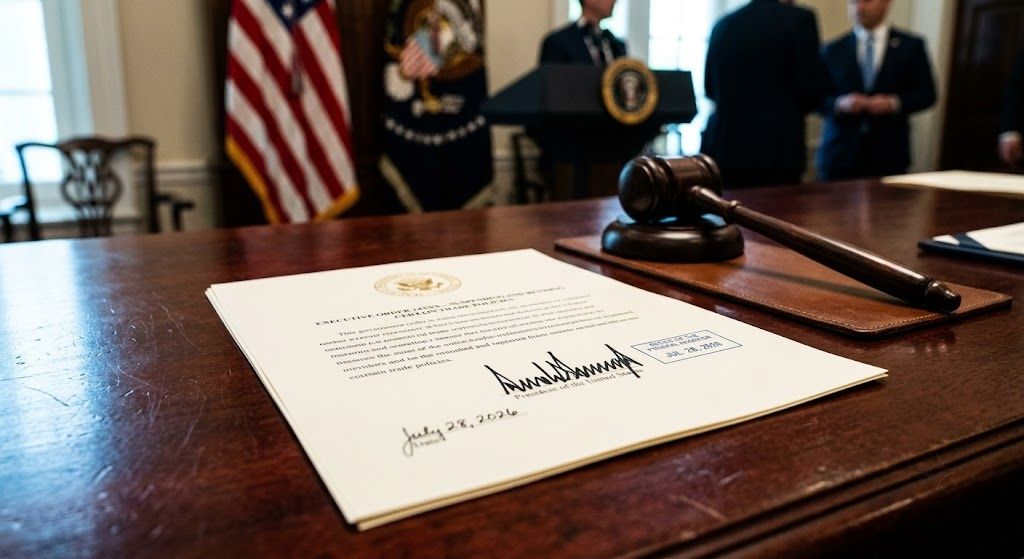

In a move that fundamentally alters the American immigration landscape, the Trump administration has today, August 7, 2026, signed a series of executive orders aimed at ending "birth tourism." These measures target the long-standing practice of granting automatic citizenship to children born on U.S. soil to foreign nationals. The administration’s latest actions represent a significant escalation of its broader immigration agenda, seeking to close what it describes as loopholes in the current legal framework.
The Executive Crackdown on Birthright Citizenship
President Trump signed the new decrees early Friday, specifically targeting the legal interpretation of birthright citizenship. According to reports, the executive orders expand restrictions on who is eligible for citizenship by birth, effectively challenging the traditional application of the 14th Amendment.
The administration has signaled that children of foreign nationals born within the United States will no longer be granted automatic citizenship under these new rules. This move is widely viewed as a direct challenge to the U.S. Supreme Court, setting the stage for a high-stakes judicial battle over the executive branch's authority to redefine citizenship criteria.
Visa Screenings and Enforcement Measures
Beyond the legal definition of citizenship, the administration is implementing immediate enforcement protocols to deter foreign nationals from traveling to the U.S. specifically to give birth. The government will now move to restrict visas and even deport foreign nationals found to be engaging in birth tourism.
The impact of these screenings is already being felt globally. South Korean citizens are currently facing significantly tougher U.S. visa screenings as a direct result of the new ban. These heightened security measures are designed to identify and block individuals suspected of seeking entry for the purpose of obtaining citizenship for their children.
A New Pillar of Immigration Policy
The signing of these orders marks a pivotal moment for the current administration's policy goals. The move has been characterized as a tightening of "birth tourism" regulations that have been a point of contention for years. By framing these actions through executive decrees, the administration is bypassing legislative gridlock to achieve immediate changes at the border and in consular offices abroad.
While the administrative details of how the government will distinguish between "birth tourists" and other travelers are still being finalized, the intent is clear: to reduce the incentive for foreign nationals to utilize U.S. medical facilities for citizenship gains. Details on the specific criteria for determining "intent" during visa interviews have not been reported yet.