
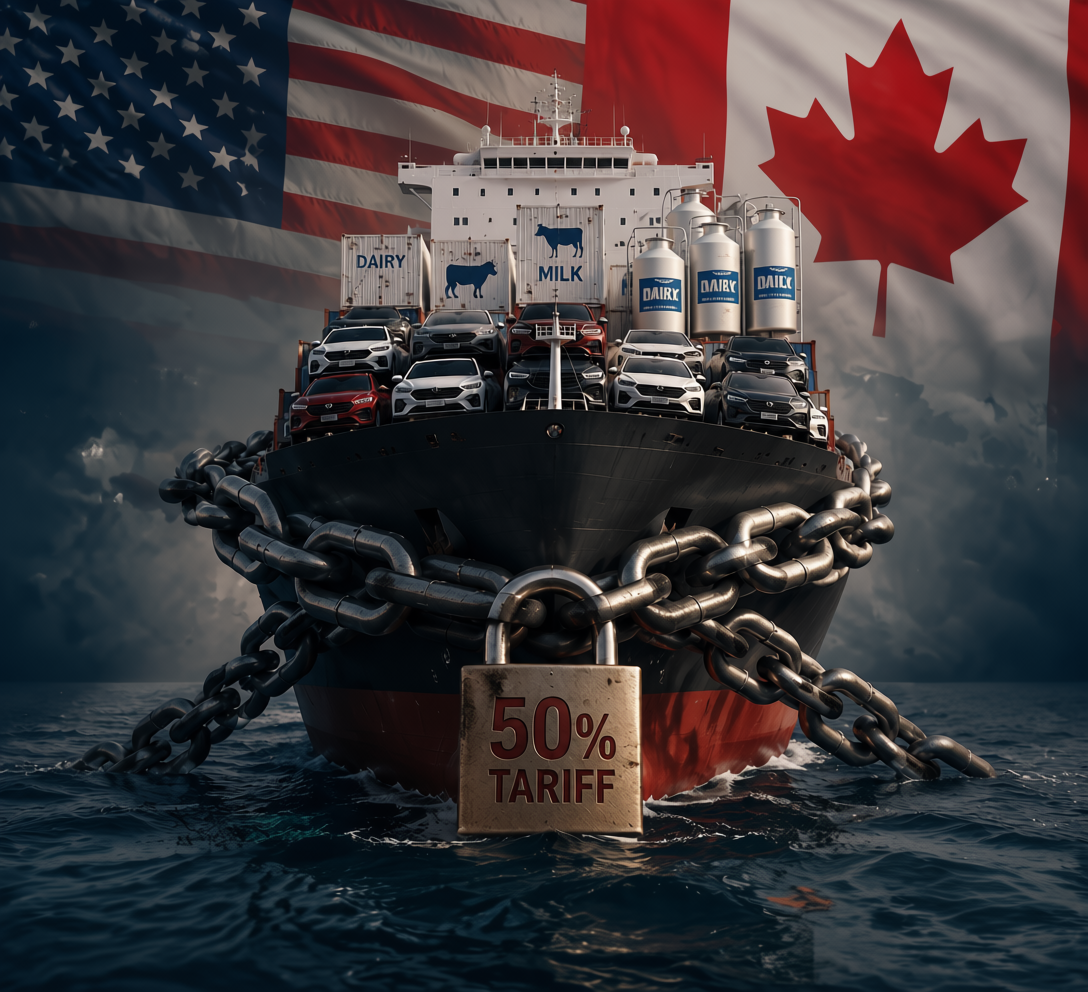

The landscape of North American trade underwent a seismic shift yesterday, July 21, 2026, as Donald Trump signed an executive order imposing a massive 50% tariff on a wide array of Canadian imports. As of today, July 22, markets are still reeling from the announcement, which represents one of the most significant escalations in cross-border economic hostilities in decades. The move has immediately strained relations between Washington and Ottawa, raising questions about the future of integrated supply chains across the continent.
Targeted Industries and the $20 Billion Impact
The new trade policy is not a blanket levy but a surgical strike on key sectors of the Canadian economy. The 50% tariffs specifically target Canadian exports of automobiles, alcohol, and dairy products. These sectors are the lifeblood of many Canadian provinces and are deeply intertwined with American manufacturing and consumer markets.
According to the reports, the initial scope of this order covers approximately $20 billion in Canadian imports. By targeting the automotive sector, the administration is hitting an industry where parts often cross the border multiple times before a vehicle is completed. Analysts suggest that such a steep tariff could lead to immediate production delays and significant price hikes for finished goods on both sides of the border.
Bypassing CUSMA and Legal Frameworks
A particularly controversial element of this escalation is the administration's stance on existing international agreements. The 50% tariff is being applied regardless of Canada’s compliance with the Canada-United States-Mexico Agreement (CUSMA). This approach signals a departure from traditional trade diplomacy, where disputes are typically handled through the framework's established arbitration panels.
By moving forward with tariffs despite CUSMA rules, the administration is asserting a "compliance-blind" trade policy. This suggests that even if Canada meets its obligations under the regional pact, it remains vulnerable to unilateral economic measures. This unpredictability is expected to weigh heavily on long-term investment decisions for companies that rely on the stability of the North American trade corridor.
Retaliation and the Cost to Consumers
The response from the Canadian government has been firm. Canada has already threatened to match the 50% tariffs with its own retaliatory measures against American goods. This potential "tit-for-tat" cycle has sparked fears of a full-scale trade war that could destabilize regional economies already struggling with inflationary pressures.
Domestic critics in the United States have also voiced concerns. The move is being viewed by some as "raising prices on Americans again." Because Canadian imports, particularly in the dairy and automotive sectors, are essential components of the U.S. supply chain, the 50% tax is likely to be passed directly to American consumers in the form of higher retail prices. As of this morning, trade representatives from both nations have not scheduled formal talks to de-escalate the situation, leaving the $20 billion in trade hanging in the balance.