

New Delhi: India’s retail inflation for January, under the new series with base year 2024=100, stood at 2.75%, according to data released by the Ministry of Statistics and Programme Implementation (MoSPI).
Rural inflation was recorded at 2.73%, while urban inflation came in slightly higher at 2.77%.
Food inflation, measured by the Consumer Food Price Index, was 2.13% in January compared with the same month a year ago. Rural food inflation stood at 1.96%, while urban food prices rose by 2.44%. Housing inflation during the month was reported at 2.05% year-on-year, with rural housing prices increasing by 2.39% and urban housing inflation at 1.92%.
The base year revision marks a significant overhaul in the way retail inflation is measured in the country. The new series has been developed using findings from the Household Consumption Expenditure Survey (HCES) 2023-24 to better capture current spending patterns and structural changes in the economy.
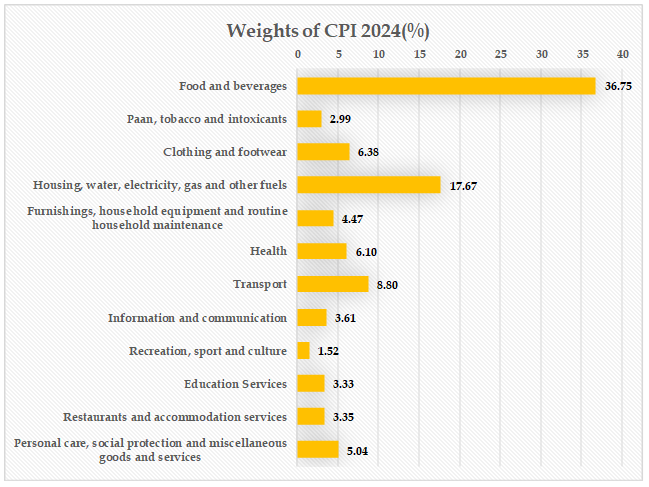
Although the weight of food and beverages in the CPI basket has declined under the revised structure, it continues to remain the largest component. The updated weights indicate a gradual shift in household spending towards housing, transport and services, mirroring broader economic transformation.
The CPI 2024 series is expected to provide policymakers, financial institutions and businesses with a more contemporary and representative measure of retail price movements, strengthening India’s inflation monitoring framework and aligning it more closely with international standards.
Over the past decade, shifts in income levels, urbanisation, digital adoption and the growing prominence of the services sector have substantially altered household consumption behaviour, rendering the earlier base less reflective of present realities. By aligning expenditure weights from 2023-24 with price data collected between January and December 2024, the revised index improves consistency and enhances the accuracy of inflation measurement.
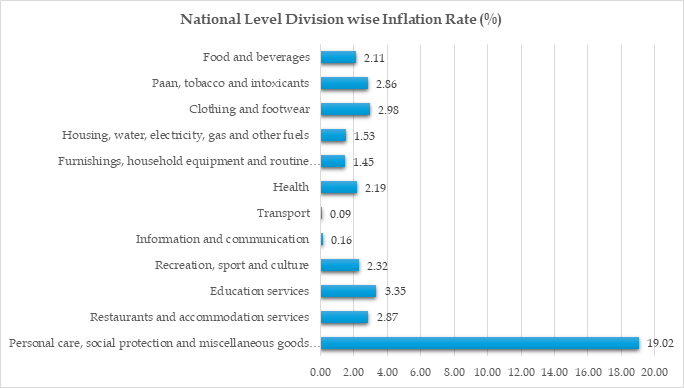
The updated CPI basket has expanded from 299 to 358 items, with both goods and services seeing broader representation. Goods now account for 308 items compared to 259 earlier, while services have increased from 40 to 50 items, underscoring their rising share in household budgets. The revised series adopts the United Nations’ Classification of Individual Consumption According to Purpose (COICOP) 2018 framework, replacing the previous six broad groups with a more detailed structure comprising 12 divisions, 43 groups, 92 classes, 162 sub-classes and 358 items. This shift strengthens international comparability and allows for more granular inflation reporting at both national and state levels.
Several new items have been incorporated to reflect modern consumption trends. Rural house rent has been included for the first time to improve coverage of rural housing expenditure. The basket now also captures online streaming services, value-added dairy products, barley and its derivatives, pen drives and external hard disks, attendant and babysitting services, exercise equipment and cleaner fuels such as CNG and PNG. At the same time, outdated products such as VCR, VCD and DVD players, radio and tape recorders, CD and DVD cassettes, second-hand clothing and coir or rope have been removed.
The revision also makes greater use of administrative and digital data sources for items including telephone charges, rail and air fares, fuel prices and postal services. The exercise was guided by an expert group comprising representatives from the Reserve Bank of India, academia, line ministries and statistical experts, with consultations held with international organizations such as the IMF, World Bank and UNECE to align the methodology with global best practices.