
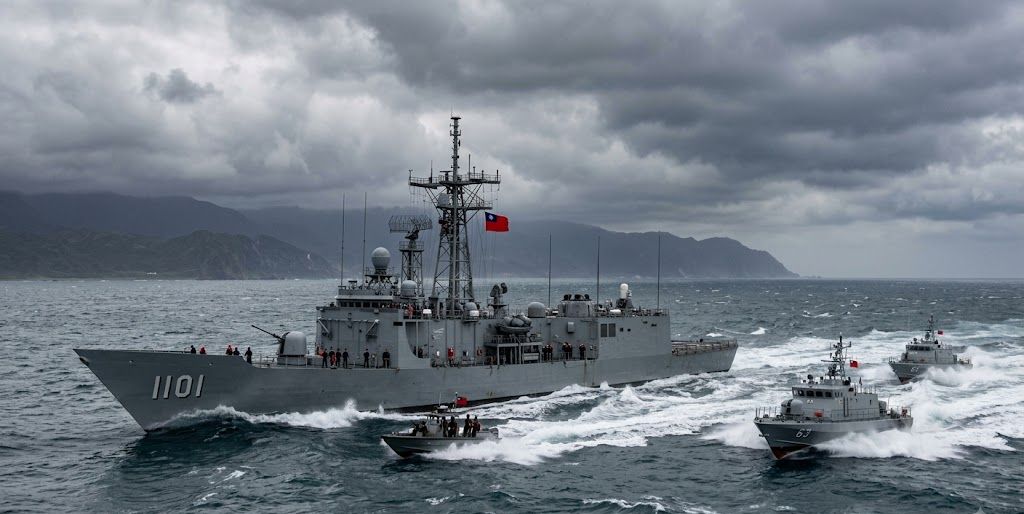

As regional tensions persist, Taiwan has intensified its defense preparations. According to reports, Taiwan is staging its first joint anti-blockade naval drill as China steps up maritime pressure in the region. The ongoing exercises are designed to test the island's operational capabilities in keeping commercial routes open and maintaining critical supply chains during a potential conflict.
Naval and Military Police Maneuvers in Focus
The strategic exercises span multiple operational domains, combining naval assets with ground security operations. The naval component focuses specifically on anti-blockade maneuvers.
Simultaneously, Taiwan's military police staged a bridge blockade drill aimed at defending the capital. These coordinated maneuvers highlight a comprehensive defense approach, integrating naval readiness with urban-defense protocols to secure vital infrastructural checkpoints.
Impact on the Capital: Cleared Streets and Digital Disruptions
The large-scale drills have visibly altered daily life in urban centers. The military drills have cleared streets and slowed internet speeds across Taipei.
These tactical disruptions underscore the sheer scale of the exercises, which simulate high-pressure defense scenarios within densely populated metropolitan areas. By temporarily altering urban traffic and digital infrastructure, security forces are rigorously evaluating command-and-control responsiveness under crisis conditions.
Broader Security Context and Conclusion
Beyond conventional military maneuvers, Taiwan faces a multi-layered security environment. Taiwan reported being targeted last month in an AI-driven hacking campaign, pointing to growing hybrid threats alongside physical maritime pressures.
Ultimately, these combined naval drills and capital defense exercises demonstrate Taiwan's proactive stance in safeguarding its territorial integrity and commercial connectivity. By stress-testing its tactical readiness across land, sea, and digital domains, Taipei is signaling its determination to withstand mounting geopolitical friction.