
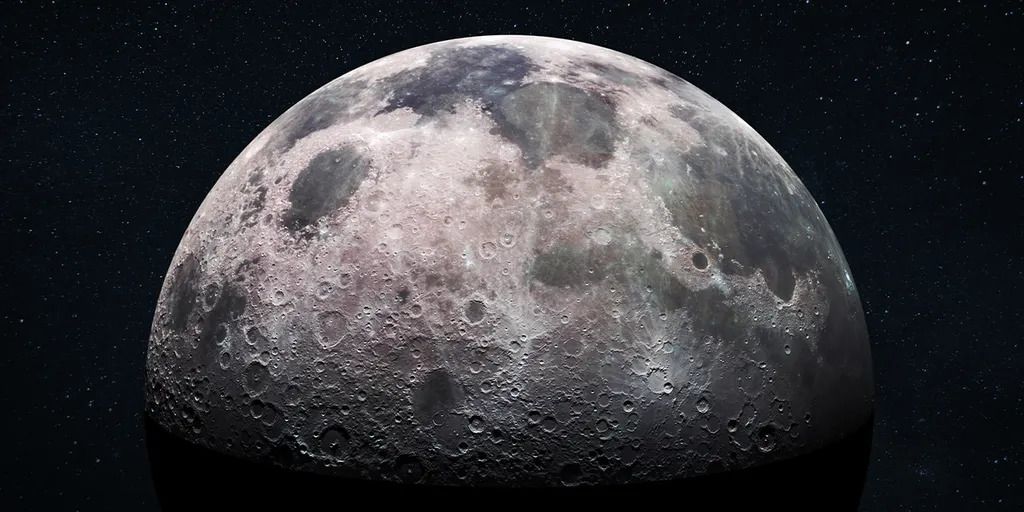

Today, August 7, 2026, the lunar landscape bears a fresh scar from human exploration. After drifting through the void for approximately 18 months, a spent SpaceX Falcon 9 rocket stage has officially impacted the Moon. While the collision occurred recently, reports released today confirm the creation of a new crater, marking the end of the discarded hardware’s long journey through space.
Velocity and Impact Mechanics
The physics of the collision highlight the sheer force involved in modern space debris impacts. The rocket stage struck the lunar surface at a staggering speed of 5,400 mph. Despite its relatively small size compared to the celestial body, the four-ton mass of the Falcon 9 stage was sufficient to leave a permanent mark on the Moon’s topography.
The stage had been in space for a year and a half before its trajectory finally intersected with the lunar surface. This 18-month period of wandering concluded with a high-velocity impact that scientists have been tracking with varying degrees of precision.
Visual Evidence and Imagery
One of the most significant developments today is the release of high-resolution visual confirmation. "Before and after" images of the impact site have been published, providing a clear look at the changes to the lunar terrain. These images serve as a primary data set for researchers looking to understand how man-made objects interact with the airless environment of the Moon.
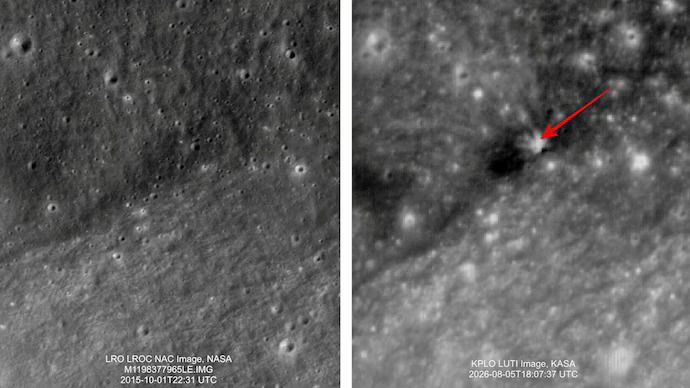
While The New York Times observed that "almost no one saw" the actual moment of impact in real-time, the subsequent imagery confirms the event's success from a monitoring perspective. The "before" photos show the undisturbed lunar dust, while the "after" shots reveal a distinct, fresh crater where the hardware disintegrated upon contact.
International Scientific Monitoring
The event has drawn the attention of the global scientific community. Space agencies from around the world were involved in capturing the moment and the subsequent aftermath. This international cooperation allowed for a comprehensive view of the crash, despite the logistical challenges of monitoring a four-ton object moving at such extreme velocities.
Details on the specific scientific measurements of the crater's depth and composition have not been reported yet. However, the ability of these agencies to document a discarded rocket stage’s final moments provides a rare opportunity to study impact dynamics without the need for a dedicated, expensive mission.