
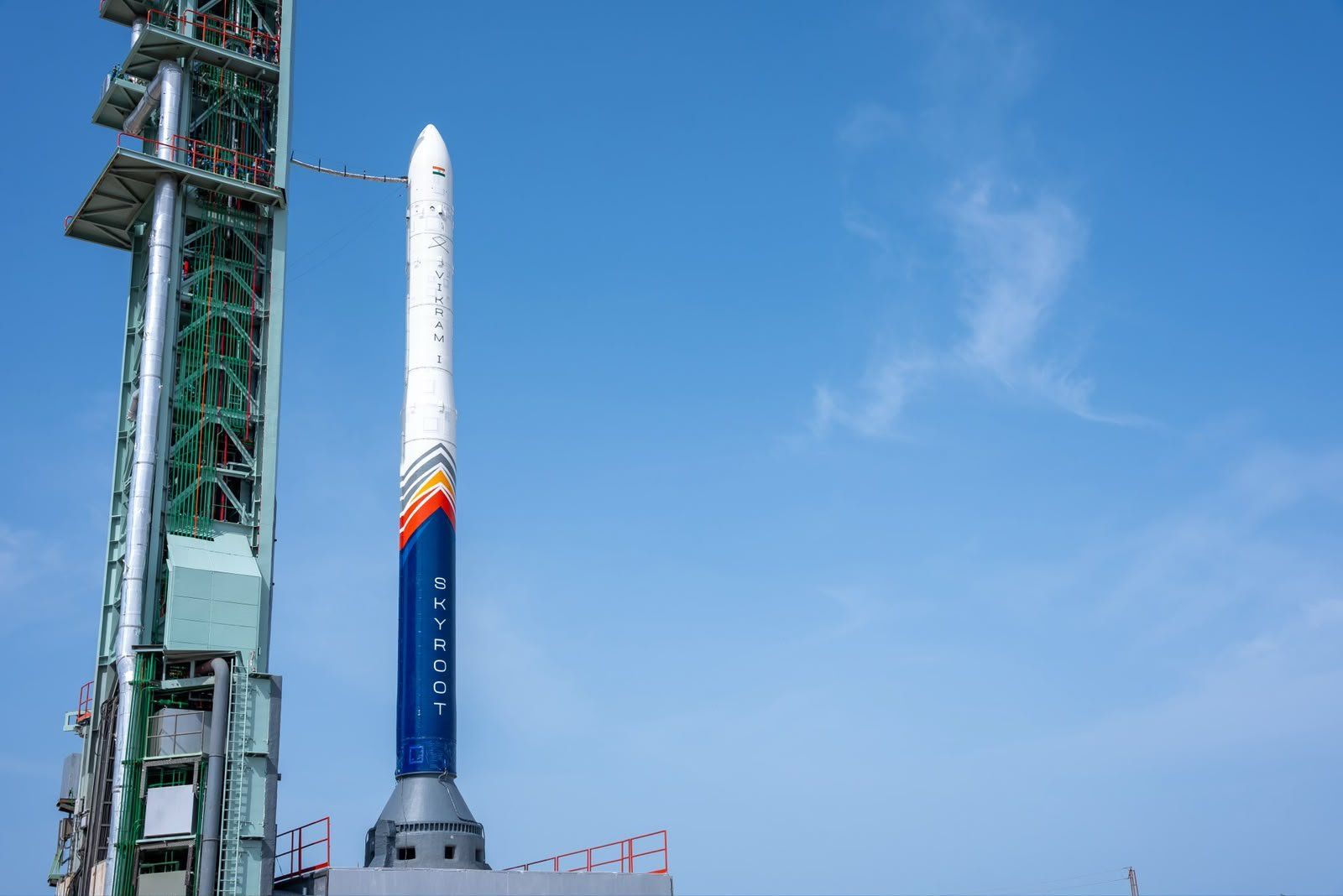

On the morning of July 18, 2026, India’s space sector crossed a definitive threshold into a new era of commercial exploration. Skyroot Aerospace, a leading private space-tech firm, successfully launched Vikram-1, marking the first time a privately developed orbital rocket from India has reached space. The mission, titled "Mission Aagaman," signifies a massive leap for the nation's burgeoning private space industry and solidifies India's position in the global commercial launch market.
The Aagaman Mission: A Successful Ascent
The Vikram-1 rocket lifted off from the Satish Dhawan Space Centre in Sriharikota. This successful liftoff represents a technical triumph for Skyroot Aerospace, as Vikram-1 is classified as an orbital-class rocket, designed to deliver payloads into Earth's orbit. The launch was part of the specifically designated "Mission Aagaman," a name that translates to "arrival," symbolizing the entry of private players into the orbital launch segment.
While previous years saw experimental and sub-orbital attempts, the success of Vikram-1 today is distinguished by its orbital capability. This is India's first private orbital-class rocket to achieve such a feat, demonstrating that the technical hurdles of multi-stage separation and orbital insertion can now be met by non-governmental entities within the country.
Breaking the Monopoly: Private Sector Maturity
For decades, the Indian space program was almost exclusively the domain of the Indian Space Research Organisation (ISRO). The success of Skyroot Aerospace on July 18, 2026, signals a maturation of the domestic ecosystem where public-private collaboration has moved from theoretical policy to operational reality. The launch is a historic achievement for the country's expanding commercial space ecosystem.
The ability of a private firm to execute a mission of this complexity suggests that the infrastructure and regulatory environment provided by the Indian government are beginning to yield high-stakes results. This shift is expected to allow national space agencies to focus on deep-space exploration and scientific research while private entities like Skyroot Aerospace handle the increasing demand for commercial satellite deployments.
India’s Growing Commercial Space Footprint
The strategic implications of the Vikram-1 launch extend beyond national pride. By proving the viability of private orbital rockets, India is positioning itself as a cost-effective and reliable hub for the global small-satellite launch market. As noted by Dawn and The Hawk, this mission marks a major milestone in the expansion of India’s commercial space sector.
Details on the specific payload and the precise orbital parameters achieved during Mission Aagaman have not been reported yet in the immediate aftermath of the liftoff. However, the primary objective, the successful launch and ascent of a private orbital rocket, has been confirmed by multiple sources. This achievement is likely to attract further investment into Indian space startups, which have been watching the progress of Skyroot Aerospace as a bellwether for the entire industry.
As the dust settles at the Sriharikota launchpad, the successful flight of Vikram-1 stands as a testament to Indian engineering and the potential of private enterprise. It is no longer a question of if the private sector can reach orbit, but how quickly they can scale to meet the needs of the 21st-century digital economy.