
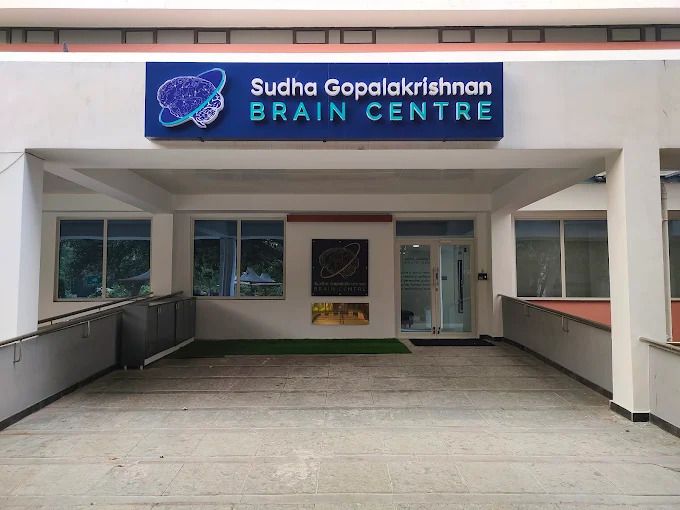

The human brain has fascinated scientists for centuries, yet many of its regions remain largely unexplored. Among them is the brainstem, the part of the brain that controls essential functions such as breathing, consciousness, movement and heartbeat. Despite its importance, its dense and complex structure has made it one of the hardest areas of the human brain to map.
What is ANCHOR?
Released on June 6, 2026, Researchers at the Sudha Gopalakrishnan Brain Centre, IIT Madras, have now addressed that challenge with ANCHOR (Atlas of Neurochemical Characterization of the Human Brainstem with 3D Reconstruction).
Think of it as Google Maps for the human brainstem. Instead of streets and landmarks, ANCHOR provides a detailed three-dimensional map of brain cells and neural pathways, allowing researchers to understand this complex region more clearly.
How the Atlas Was Created
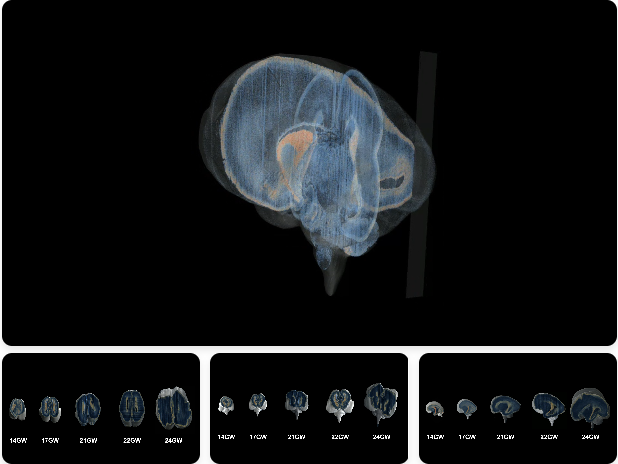
To build the atlas, the research team analysed more than 500 tissue sections collected from foetal, childhood and adult brains. Using advanced microscopy, MRI imaging and computational modelling, they reconstructed the brainstem in three dimensions and identified over 200 clusters of brain cells and neural pathways using multiple neurochemical markers.
The atlas has been made freely available online, allowing neuroscientists, neurologists and neurosurgeons around the world to use it as a research and reference tool. Its open-access nature means researchers everywhere can build upon the work rather than starting from scratch.
How ANCHOR Could Advance Brain Disease Research
While ANCHOR is not a cure for neurological diseases, it could become an important step towards one. A more accurate understanding of the brainstem can help scientists detect subtle changes linked to disorders like Parkinson's disease and Alzheimer's disease, improve diagnosis of disorders similar to these and contribute to the development of better treatments in the future.
Building on a Legacy of Brain Mapping
ANCHOR is not the Sudha Gopalakrishnan Brain Centre's first contribution to neuroscience. The centre previously developed DHARANI, a freely accessible three-dimensional atlas of the developing fetal human brain, which has become an important resource for researchers studying early brain development.
The Sudha Gopalakrishnan Brain Centre at IIT Madras has also earned international recognition for its work in brain mapping. In an editorial published in The Journal of Comparative Neurology, the centre was described as an emerging player in global human brain map-making and was likened to the Allen Institute for Brain Science in the United States.
While DHARANI provides a detailed anatomical map of the developing human brain, ANCHOR takes a more specialised approach. It focuses on the brainstem and combines three-dimensional reconstruction with neurochemical mapping, enabling scientists to study this complex region at an unprecedented level of detail.
A Milestone for Indian Science and Global Neuroscience
The significance of ANCHOR extends beyond neuroscience. Brain mapping has traditionally been dominated by research institutions in the United States, Europe and Japan. With this project, India has demonstrated its ability to contribute at the highest level of advanced scientific research.
More importantly, ANCHOR reflects a growing shift in Indian science towards interdisciplinary innovation. By bringing together biology, engineering, medical imaging and computational science, researchers have created a resource that fills one of neuroscience's biggest gaps.
It may not transform healthcare overnight, but every major medical breakthrough begins with a better understanding of the human body. In that journey, ANCHOR represents a significant milestone, one that places India firmly on the global neuroscience map while helping the world move a step closer to unlocking the mysteries of the human brain.