
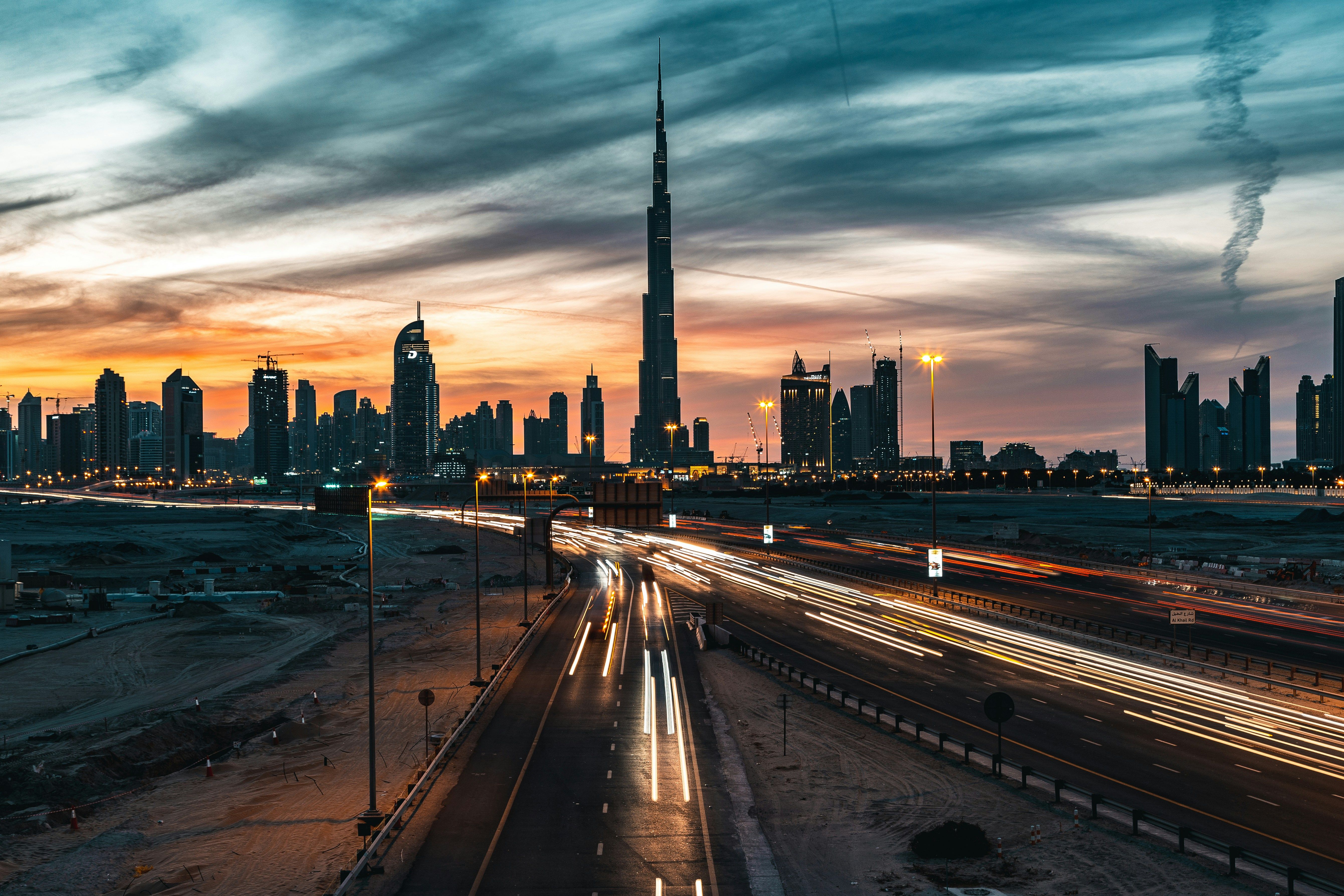

New Delhi: The ‘Goldilocks’ era of the GCC real estate market has officially met a jarring end, personified by investors like Julian Thorne, a British logistics executive who had spent most of 2025 scouting a beachfront villa on Dubai’s Palm Jumeirah. By February this year, Thorne was days away from transferring a 10% down payment, lured by the UAE’s promise of a tax-free, neutral sanctuary. However, as drone debris began appearing in regional headlines and insurance premiums for Gulf assets spiked, Thorne pulled the plug.
“Nobody signs a million-dollar deal when there are sirens on the television,” noted one Dubai-based broker in a March briefing, echoing the sentiment of thousands of Western expatriates who have pivoted from “buy” to “wait-and-see”. This hesitation has triggered a severe re-rating of risk across the region, shifting the narrative from “unprecedented growth” to a high-stakes “security risk premium” that has punctured the psychological shield of regional immunity.
The ‘Great Re-Rating’ has turned the pre-war landscape, where the GCC was the global poster child for post-pandemic resilience, into a “bunker” economy. In 2025, Dubai alone recorded a staggering AED 680 billion ($185.1 billion) in real estate transactions, while Riyadh’s office vacancies sat at a near-zero 0.5%.
The post-war reality is significantly more sober: by mid-March 2026, the Dubai Financial Market Real Estate Index (DFMREI) plunged 30%, falling from 16,140 to 11,500 points and effectively wiping out a year’s worth of equity gains in weeks after the Iran-Israel war broke out. The ‘Safe Haven’ tag that Dubai cultivated for decades was directly challenged by intercepted missiles in early March, causing housing sales in the emirate to fall by 25% in the first half of the month alone.
Data from Goldman Sachs further underscores the chill, revealing that overall UAE transaction values in the first two weeks of March were down 51% month-on-month, with the secondary villa segment suffering a catastrophic 89% collapse in volume as liquidity evaporated.
This contagion has manifested asymmetrically across the six member states, with “stability under stress” becoming the new, fragile baseline. In Saudi Arabia, the real estate sector has seen a sharp divergence: while Riyadh’s residential transactions rose 17.9% just before the conflict, the high-end “giga-project” pipeline now faces a “liquidity chill” as the fiscal deficit widens to 3.7% of GDP, forcing a prioritization of critical infrastructure over speculative luxury builds. Qatar, despite a strong February where sales hit QAR 2.71 billion ($744.5 million), is now bracing for a slowdown as analysts warn that its total reliance on the Strait of Hormuz makes Doha’s commercial sector highly vulnerable to maritime blockades.
Meanwhile, Kuwait and Bahrain are under the most intense ratings pressure, with S&P Global highlighting that sovereigns with weaker balance sheets are seeing a direct impact on credit channels, leading to a 10% to 15% drop in secondary market transactions. Even Oman has not been spared, as rising shipping and freight costs have added an estimated 8% to construction input prices, stalling the Sultanate's diversification efforts.
To ‘BUY’ or to ‘SELL’
As the conflict enters its second month, the institutional consensus on GCC property has fractured, leading market leaders to issue specific directives based on asset type and liquidity needs. Within this polarized environment, the SELL/CAUTION case has gained significant traction, particularly regarding high-leverage and speculative assets. The most aggressive warnings are currently targeting off-plan luxury projects and the secondary villa market, where “war discounts” are becoming an increasingly common phenomenon.
Highlighting this abrupt shift in momentum, a market analysis from India Today Global on March 21 noted that “in just the first 12 days of March 2026, property transaction volumes in the UAE collapsed by 37% compared to last year. Properties in prime locations near the Burj Khalifa are being listed at discounts of 12% to 15% as nervous sellers seek quick exits.”
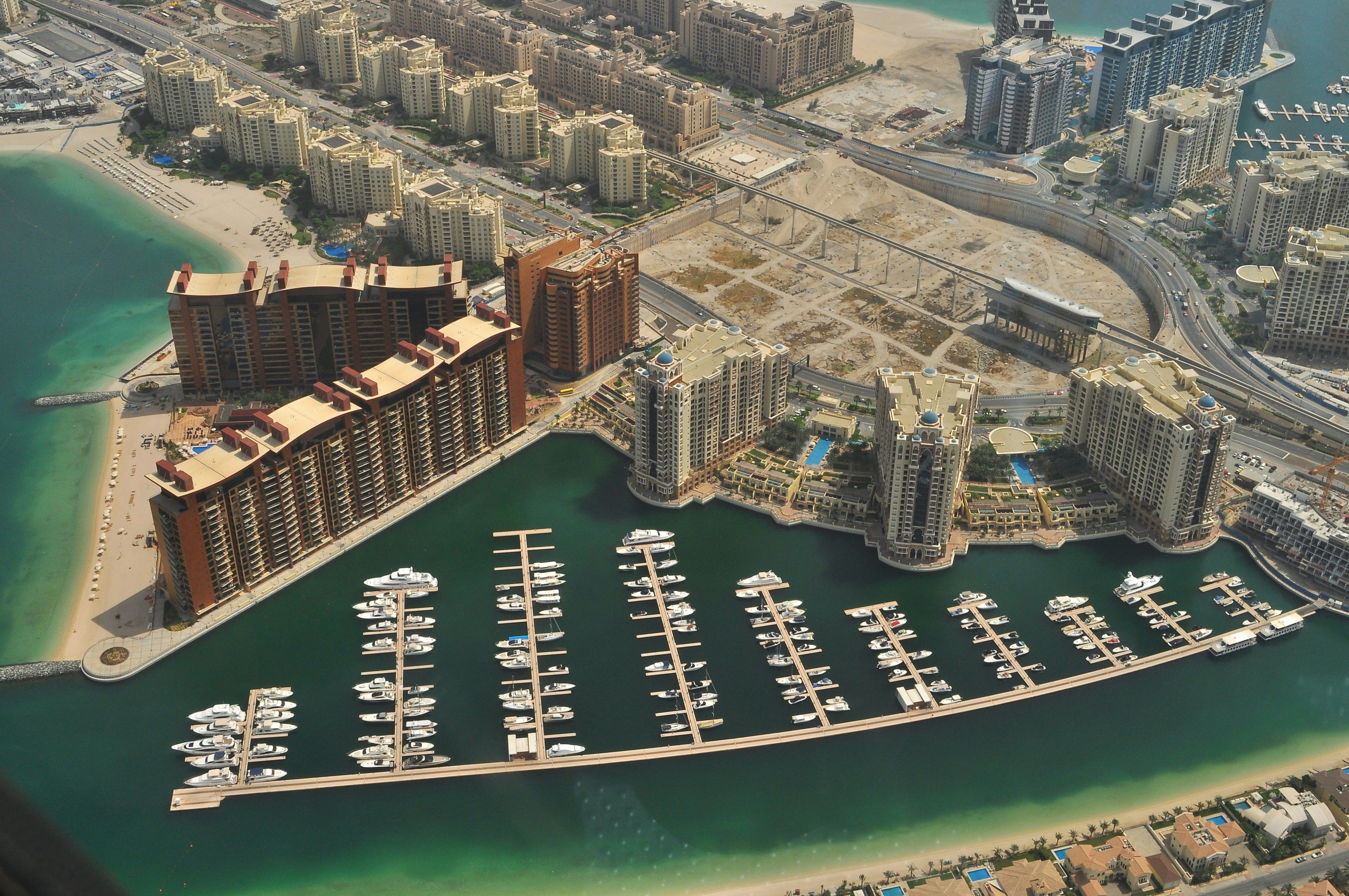
The Jumeirah in Dubai. The gulf between off-plan promises and “ready” inventory is widening. GCC real estate investors are no longer willing to underwrite the geopolitical risk of a three-year construction timeline. (Photo by Roman Logov on Unsplash)
This downward pressure is expected to intensify if the geopolitical situation remains unresolved, according to a Fitch Ratings Briefing on March 16 which stated: “Fitch Ratings projects that new supply in 2025-26 may push prices down by no more than 15% if the conflict persists, particularly impacting the secondary market where villa transactions have already dropped 89% in late March”.
The broader financial implications have also triggered a retreat in general investment portfolios, as captured by a Schroders Investment View on March 8. “The conflict has clearly increased the risk of an uncontrolled regional escalation... we have reduced risk further in EMD (Emerging Market Debt) portfolios following our downgrade of EM currency score from positive to neutral,” it said.
In contrast, a separate faction of analysts maintains the ‘HOLD’ case, championing institutional stability and yield-chasing as reasons for optimism. These agencies argue that the “core” of the GCC remains structurally sound due to massive fiscal buffers and high rental yields, which continue to act as a draw for cash-rich contrarians. Providing a stabilizing perspective, an S&P Global Ratings Editorial on March 17 clarified: “We expect that our ratings on GCC insurers and core real estate entities will remain broadly stable in the short-to-medium term. This is thanks to robust earnings generation in recent years, which has contributed to a significant build-up of capital buffers.”
This sentiment is echoed by Hanadi Khalife, Regional Director MEASA at ICAEW, who stated on March 30, “Recent regional developments have created a more challenging near-term environment for GCC economies... While this has placed pressure on growth in the short term, the region’s underlying fundamentals remain strong, supporting a recovery as conditions stabilise.”
Finally, local industry leaders remain adamant that the market’s foundation can withstand the current volatility, with Adil Raza Khan of APIL Properties asserting on March 24 that “the current Dubai real estate tension is just temporary and can be addressed... Dubai real estate is not likely to take any hit after $250 billion in transactions in 2025, as it has established a rock-solid foundation.”
Recovery Outlook
For the GCC, 2026 is rapidly becoming a year of ‘The Great Filter’, a period of intense structural refinement where the speculative fat is being trimmed from the bone. The era of easy, double-digit appreciation, driven by post-pandemic euphoria and a global rush for tax-free yields, has undeniably ended, replaced by a sophisticated flight to quality.
This transition is most visible in the widening gulf between off-plan promises and “ready” inventory; investors are no longer willing to underwrite the geopolitical risk of a three-year construction timeline. Instead, capital is congregating around tangible, completed commercial assets and residential units with locked-in tenants, where immediate cash flow serves as a hedge against regional volatility.
Market analysts are increasingly framing the current 4% to 5% pricing softness in Dubai not as the beginning of a collapse, but as a necessary and healthy correction of the “war premium”. This cooling period has effectively de-risked the entry point for institutional “dry powder” that had been sitting on the sidelines during the overheated peak of 2025. By shedding the artificial inflation of the last 18 months, the market is offering a rare, strategic window for institutional buyers to acquire prime assets at 2023 price levels ($550 to $650 per square foot in premium districts), securing long-term value before the next cycle of stability begins.
Ultimately, the desert has always been a landscape of extremes, where only the most resilient structures survive the shifting sands of time. While the sirens of conflict may have momentarily silenced the auctioneer’s gavel, the GCC’s foundations remain anchored in a long-term vision that far outlasts the current storm. In this new era, the region is proving that true value is not found in the height of its towers, but in its unwavering ability to rebuild itself when the winds change.
(Photo by Dovlet Hojayev on Unsplash)