

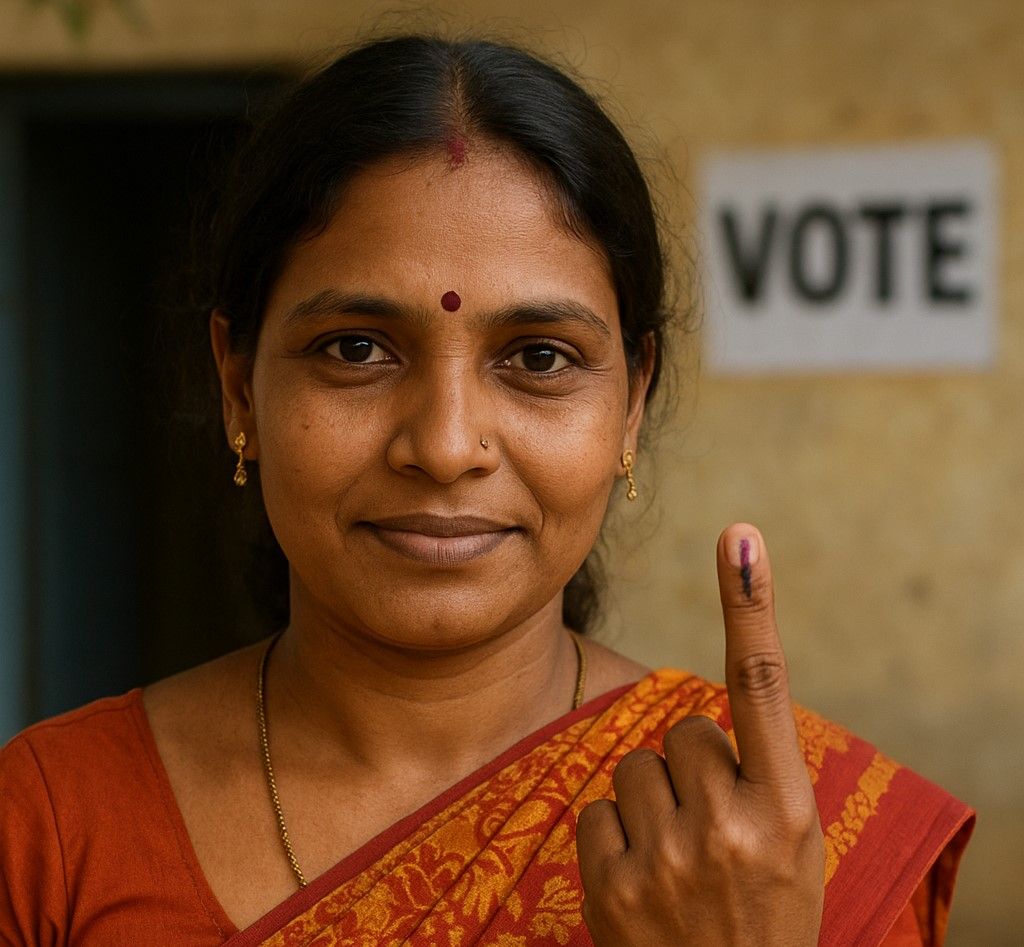
New Delhi: In a nationwide initiative to “cleanse” the country’s voter database, the Election Commission of India (ECI) on Monday announced Phase Two of the Special Intensive Revision (SIR) of electoral rolls. This phase will span 12 states and Union Territories, marking the next step in the Commission’s push for more “accurate, inclusive, and transparent” voter lists.
The regions covered in this round include Andaman and Nicobar Islands, Goa, Puducherry, Chhattisgarh, Gujarat, Kerala, Lakshadweep, Madhya Pradesh, Rajasthan, Tamil Nadu, Uttar Pradesh and West Bengal.
In these 12 states and UTs, the enumeration stage will be from November 4 to December 4. The draft rolls will be released December 9. Voters deleted from the rolls can file appeals from date of publication of draft rolls to January 8. The final revised voter list will be published February 7.
The first phase of SIR was conducted during June-July in Bihar. The final list will be published on September 30.
Under the revised process, the voter rolls will be frozen at midnight before the enumeration begins. Each eligible citizen will receive an enumeration form that can be submitted either through their booth level officer (BLO) or via an online submission system where BLOs are unavailable.
According to the ECI, the key goals of the SIR are to add eligible new voters and remove ineligible entries, such as individuals who have passed away, relocated permanently, or are registered in multiple locations.
Mixed Reactions
The ECI’s move has sparked varied political responses. Supporters argue that it is a vital step to protect the integrity of India’s elections by eliminating fraudulent or outdated entries. A BJP representative noted that in politically-sensitive states like West Bengal, the revision could help identify and remove suspicious additions to the voter list.
However, several opposition parties have voiced apprehensions, warning that the process could inadvertently disenfranchise marginalized communities. In Tamil Nadu, for instance, political leaders have alleged that the exercise may risk excluding large numbers of women, minorities, and economically weaker citizens.
Earlier phases of the SIR have already led to significant changes. In Bihar, nearly 6.5 million names were deleted from the rolls due to duplication, migration, or deaths. Critics claim that such extensive deletions — sometimes exceeding the margin of victory in past elections — could sway electoral outcomes. Proponents counter that this cleanup is long overdue, pointing out that the last comprehensive revision of India’s electoral rolls took place between 2002 and 2004.
Before rolling out the new phase, the ECI consulted recognized political parties and issued detailed procedural guidelines. The Commission clarified that while Aadhaar cards may be used for identity verification, they cannot serve as proof of domicile or citizenship.
Officials emphasize that the revision will play a crucial role in maintaining credible electoral rolls for upcoming state elections in 2026 and beyond. Nevertheless, the process faces logistical hurdles, including tight timelines and overlaps with annual summary revisions, which could strain administrative capacity.
As house-to-house enumeration begins in November and December, attention will focus on how effectively the ECI can ensure transparency, handle objections, and include all eligible voters. Many observers believe that the success of this exercise could set a benchmark for electoral roll management in India for years to come.