

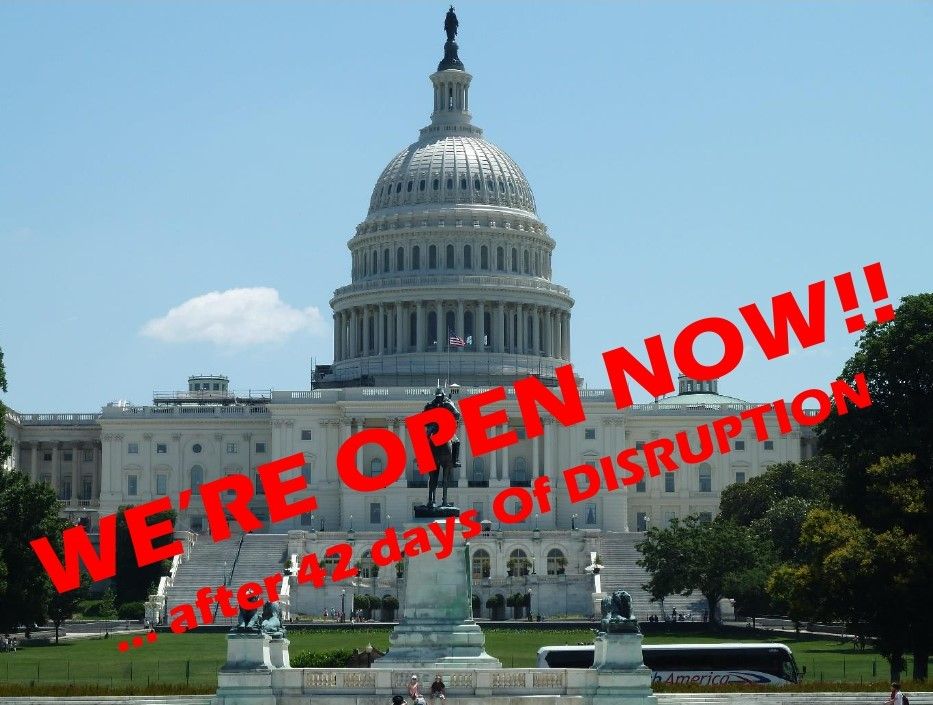
New Delhi: The recent US government shutdown, now confirmed as the longest in American history at 43 days, has reopened. But its repercussions for India are both immediate and likely to leave deeper long-term scars.
When a major global economy like the United States stumbles, its reverberations inevitably spread far and wide. For India, closely integrated with the US through trade, technology, immigration, financial flows, and geopolitical collaboration, this lapse in governance has triggered a mix of shocks, slowdowns and structural reassessments.
In the immediate aftermath, one of the most tangible effects on India has been the disruption to visa processing. The freeze on consular operations delayed H-1B petitions, labour condition applications, and other essential services, casting uncertainty over the status of Indian professionals working in America. This stalled hiring and project execution, and caused anxiety among workers and firms that depend heavily on US mobility. These visa delays not only threatened income flows for individuals but also strained the business pipeline for Indian IT and consulting firms that rely on predictable immigration processes.
Simultaneously, companies in India that do business with the US government faced deep trouble. Contract awards were postponed, payments delayed, and proposals held up as federal procurement ground to a halt. Many Indian vendors, from large IT exporters to engineering and supply-chain partners, saw their expected cash flows disrupted. Such delays hurt working capital, forced hiring freezes, and deferred investments — all during a period when financial certainty was already fragile.
On the financial front, the shutdown generated broader macro-economic uncertainty. The suspension or delay of important US government data releases made it harder for global investors to make informed decisions, introducing volatility into markets. Indian markets, too, felt this rippled risk: currency swings, heightened equity volatility, and shifting yield curves became more likely as global risk premia widened. While India’s economic fundamentals remain resilient, the added layer of geopolitical risk complicates both policy and investment decisions.
Structural Shifts Likely
Over the medium to longer term, structural shifts are likely. The shutdown may accelerate existing trends in India’s services sector away from visa-intensive models. As clients abroad reassess the reliability of on-site delivery, they could demand more remote or cloud-native services — prompting Indian firms to bolster productized offerings and less migration-dependent revenue streams. This transformation, though painful, could increase resilience, but it may also permanently erode visa-driven business.
Moreover, the recurring political risk in Washington could lead global investors to reprice their exposure to emerging markets like India. Unpredictable policy cycles in the US may feed into tighter credit spreads for Indian corporates, especially for those already exposing themselves to foreign debt. Safe-haven flows might swing erratically, and long-term foreign direct investment could become more conditional and risk-averse. While strong Indian firms and the sovereign may continue to attract capital, the room for policy error will narrow.
Another fallout is likely in global supply chains. The shutdown exposed how dependent even sophisticated multinationals are on US regulatory approvals and customs processes. As companies seek to reduce vulnerability to such disruptions, they may accelerate diversification of their supply bases. For India, this presents a mixed opportunity: while diversification could bring fresh investment and manufacturing flows, it also invites competition from other geographies poised to win that business.
Defense, research and technology collaboration between India and the US could also suffer. Projects that rely on approvals from US federal agencies — whether in defense procurement, R&D partnerships, or space and nuclear cooperation — may face delays or interruptions. Recurrent shutdowns risk undermining the reliability of these strategic programs, compelling India to hedge through alternative alliances and boost its own domestic capabilities.
In effect, the net impact sees different sets of Indian players affected differently. The most exposed are large IT companies heavily dependent on US-based, visa-dependent consulting, as well as mid-sized exporters tied to federal contracts. On the other hand, firms that are building cloud-based products or focusing on domestic or non-US clients may find themselves better insulated or even able to gain ground. On the macro side, Indian policymakers now face a more volatile external environment; while ample foreign exchange reserves and strong fiscal buffers give room for manoeuvre, the bar for macro-prudential vigilance has risen.
Need to Adapt
Given the changing reality, both Indian policy-makers and corporate leaders will need to adapt. On the policy side, accelerating economic diplomacy beyond the United States would be wise: strengthening trade and services linkages with other markets such as ASEAN, Europe, and regional neighbours could reduce dependency on Washington. At the same time, investing in internal capacities is critical: encouraging product development in cloud services, fostering innovation, and supporting exporters with working-capital assistance could help business weather similar global shocks in the future.
Companies, meanwhile, would benefit from further diversification. Indian firms might accelerate their transition to remote or productized service models that don’t rely on personnel migration. Financial teams should rigorously hedge currency exposure in their treasury operations, and business development units should broaden their client base beyond U.S.-centric contracts. This dual approach — reducing on-site visa risk and deepening market diversity — could be essential to safeguarding growth in a world where policy unpredictability is now a more permanent feature.
Overall, while the shutdown has ended, the damage is not purely temporary. The event acts as both a shock and a catalyst, crystallizing the risk that political instability in a global power like the US can no longer be dismissed as a remote concern for Indian businesses. Short-term hardship — visa snarls, contract delays, market jitters — is real, but the bigger challenge lies in how India restructures its economic strategy in response to such geopolitical volatility. The path forward demands building internal strength, increasing flexibility, and reducing overreliance on any one partner whose own political dynamics have become less predictable.