

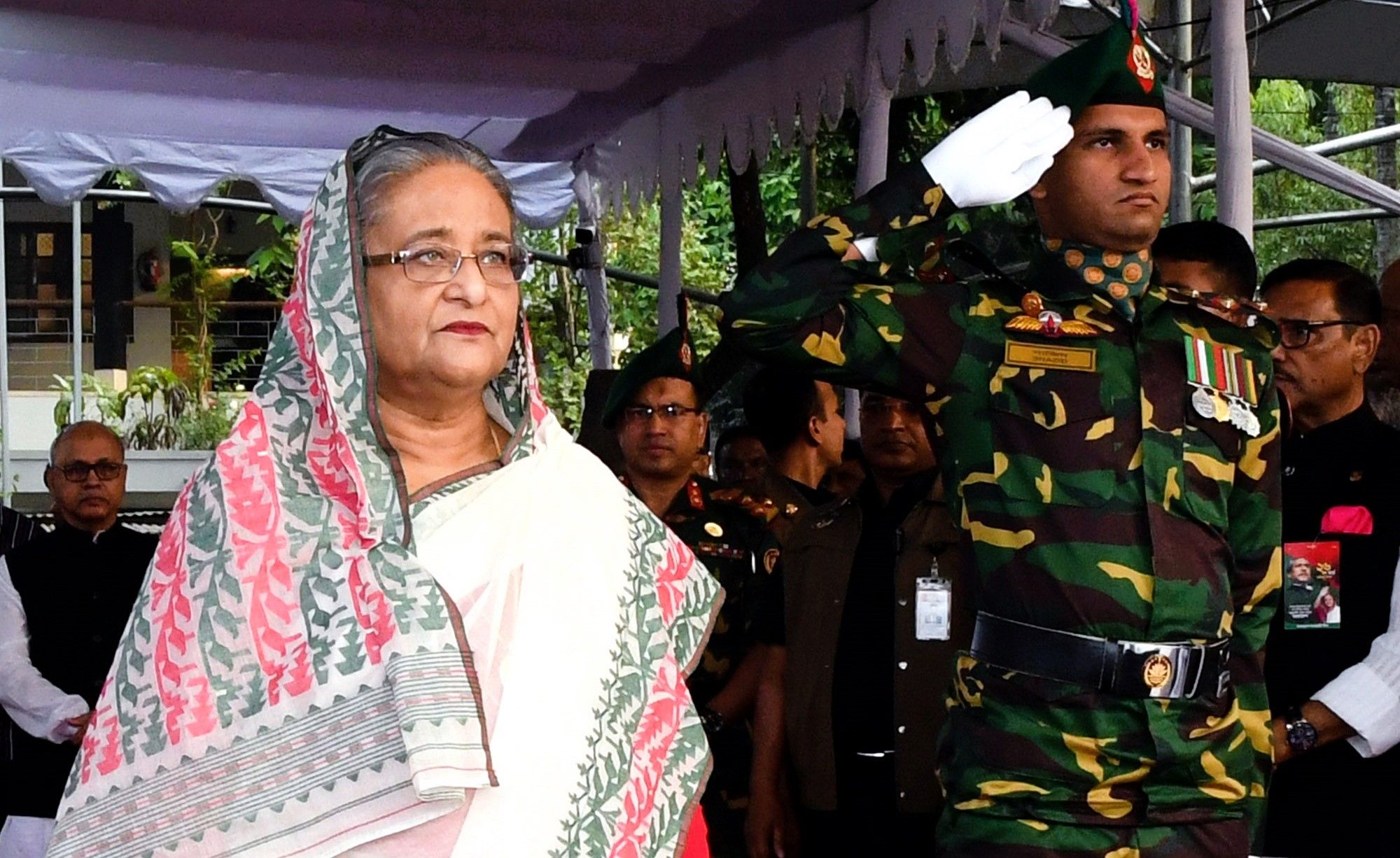
(Photo from Awami League website)
New Delhi: The Government of India has said that it “remains committed to the best interests of the people of Bangladesh” after the International Crimes Tribunal of Bangladesh (ICT-BD) awarded the death sentence to ousted Prime Minister Sheikh Hasina. The ministry of external affairs noted the verdict and stated that India will “always engage constructively with all stakeholders”.
Hasina, who now lives in exile in India following the toppling of her government and subsequent ouster in August last year, in a statement, claimed that the ruling was “biased and politically motivated”.
"The verdicts announced against me have been made by a rigged tribunal established and presided over by an unelected government with no democratic mandate,” she said. "They are biased and politically motivated. Its guilty verdict against me was a foregone conclusion," she added.
The tribunal handed Hasina the death penalty over two charges linked to the July 2024 mass uprising, ruling that she had ordered security agencies to use lethal force to crush public protests. The prosecution alleged that she delivered inciting speeches, authorised the use of live ammunition on demonstrators, and directly supervised operations that resulted in systematic killings across multiple cities. Five specific allegations were brought before the tribunal relating to incitement, targeted shootings, and arson attacks.
The Charges
The death sentence was handed down on the charges of shooting and killing Abu Sayed, a student of Begum Rokeya University in Rangpur, and of ordering the killing of six protesters in Dhaka’s Chankharpul area. Other allegations — burning six people to death in Ashulia and issuing orders to eliminate protesters nationwide — were also found proven, though they did not carry separate death penalties. Alongside Hasina, former home minister Asaduzzaman Khan has also been sentenced to death, while former inspector general of police Chowdhury Abdullah Al-Mamun received a five-year prison sentence.
Bangladesh’s interim leader Muhammad Yunus said in a statement that the verdict recognises suffering of the student protesters and confirms that “our justice system will hold perpetrators accountable”.
Bangladesh Nationalist Party (BNP) headed by former Prime Minister Khaleda Zia, has hailed the verdict. Party general secretary Mirza Fakhrul Islam Alamgir said on Facebook post that it wasn’t just a judgment on Hasina’s crimes, but a “burial of all forms of dictatorship on this country’s soil.”
According to local media reports, the long verdict was delivered by a three-member ICT-1 bench headed by Justice Golam Mortuza Mojumdar, during proceedings in a packed courtroom that began on Monday and were telecast live on state television. The ruling ran 453 pages and was divided into six sections, detailing witness accounts, recorded mobile phone conversations, and video footage from protests in Dhaka, Savar, Ashulia, Jatrabari, Rampura, Badda and Rangpur, the reports mentioned.
The tribunal reviewed audio samples, statements from survivors, and reports compiled by international rights organisations documenting abuses during the uprising.
Relatives of those killed in the July uprising, student leaders and victims of the crackdown gathered at the courthouse in anticipation of the verdict. The tribunal noted that only former police chief Abdullah Al-Mamun had testified and accepted responsibility for his role, while Hasina and Asaduzzaman remain absconding in India.