
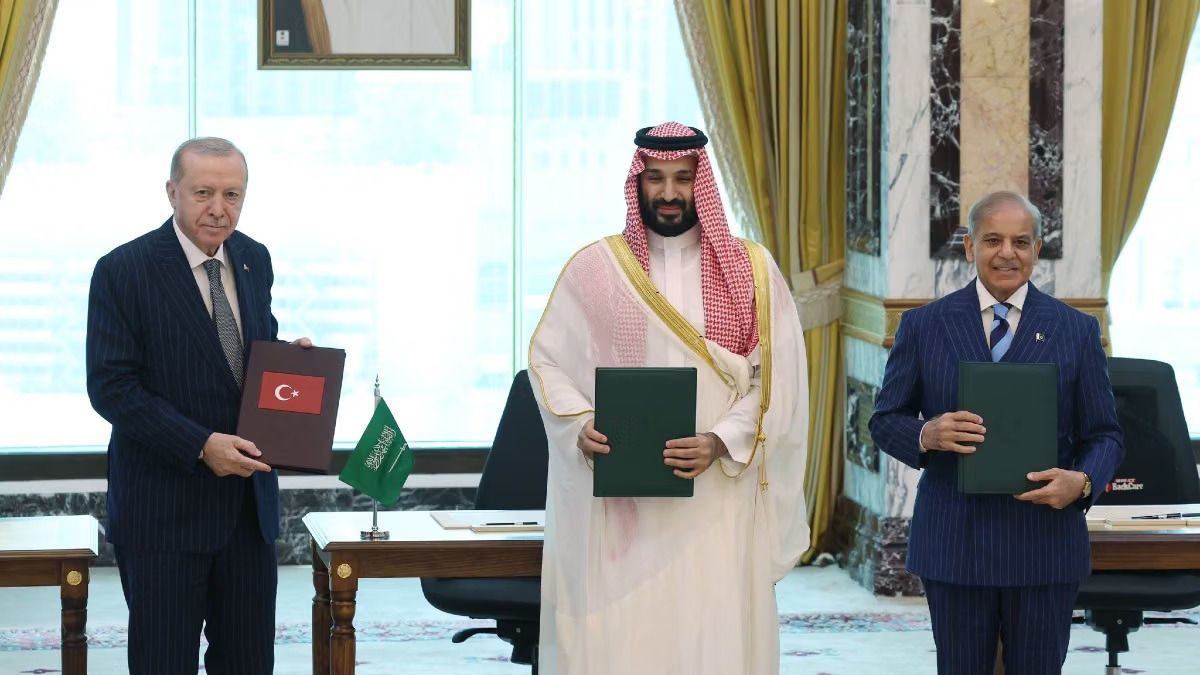

Yesterday, on 7 August 2026, the geopolitical landscape of the Middle East and South Asia underwent a significant realignment. In the holy city of Mecca, representatives from Saudi Arabia, Turkey, and Pakistan finalized and signed a major tripartite defense pact. This agreement, which establishes a formal framework for deepened military cooperation among three of the Islamic world’s most influential powers, comes at a time of escalating regional volatility and shifting global alliances.
A Landmark Agreement in Mecca
The signing ceremony, held on Friday, marks the culmination of high-level negotiations aimed at synchronizing the defense capabilities of Riyadh, Ankara, and Islamabad. According to reports, the pact is designed to foster a "joint defense" environment, though specific operational details of the military integration have not been fully disclosed to the public.
The choice of Mecca as the venue for the signing carries immense symbolic weight, positioning the agreement not merely as a secular military contract but as a cornerstone of solidarity among these nations. The "landmark tripartite defense pact" is expected to cover various facets of security, ranging from intelligence sharing to potential joint industrial ventures in defense technology.
Regional Pressures and the Iranian Shadow
The timing of this accord is inseparable from the current security climate in the Persian Gulf and the wider Middle East. The pact was signed "amid Iran tensions," suggesting that the three nations are seeking to create a collective deterrent against Tehran’s regional influence.
For Saudi Arabia, the agreement provides a reinforced security layer involving two of the region's most formidable standing militaries. Turkey and Pakistan, both possessing advanced domestic defense industries and significant combat experience, offer Riyadh a diversified set of security partners. While the snippets indicate that the pact is a response to regional friction, the exact nature of any planned joint military exercises or "red lines" regarding third-party actors has not been reported yet.
The Erosion of Western Security Guarantees
Perhaps the most analytical takeaway from this development is what it reveals about the perceived reliability of traditional Western alliances. The three nations moved toward this mutual-defense pact as "doubts grow over US security guarantees." For decades, the security architecture of the Gulf was underpinned by American military presence and diplomatic assurances; however, this new tripartite axis suggests a pivot toward strategic autonomy.
By forming this bloc, Saudi Arabia, Turkey, and Pakistan are signaling a preference for a localized security framework that does not rely on the political fluctuations of Washington. This sentiment is echoed across various international outlets, which characterized the move as a significant step in joint defence efforts. While this represents a clear move toward a multipolar security arrangement, details on how this pact will interact with Turkey’s existing NATO obligations have not been reported yet.
The Mecca agreement stands as a testament to a new era of South-South cooperation. As these three nations begin the process of integrating their defense strategies, the global community will be watching closely to see how this "joint defense pact" alters the balance of power in an already fractured region.