

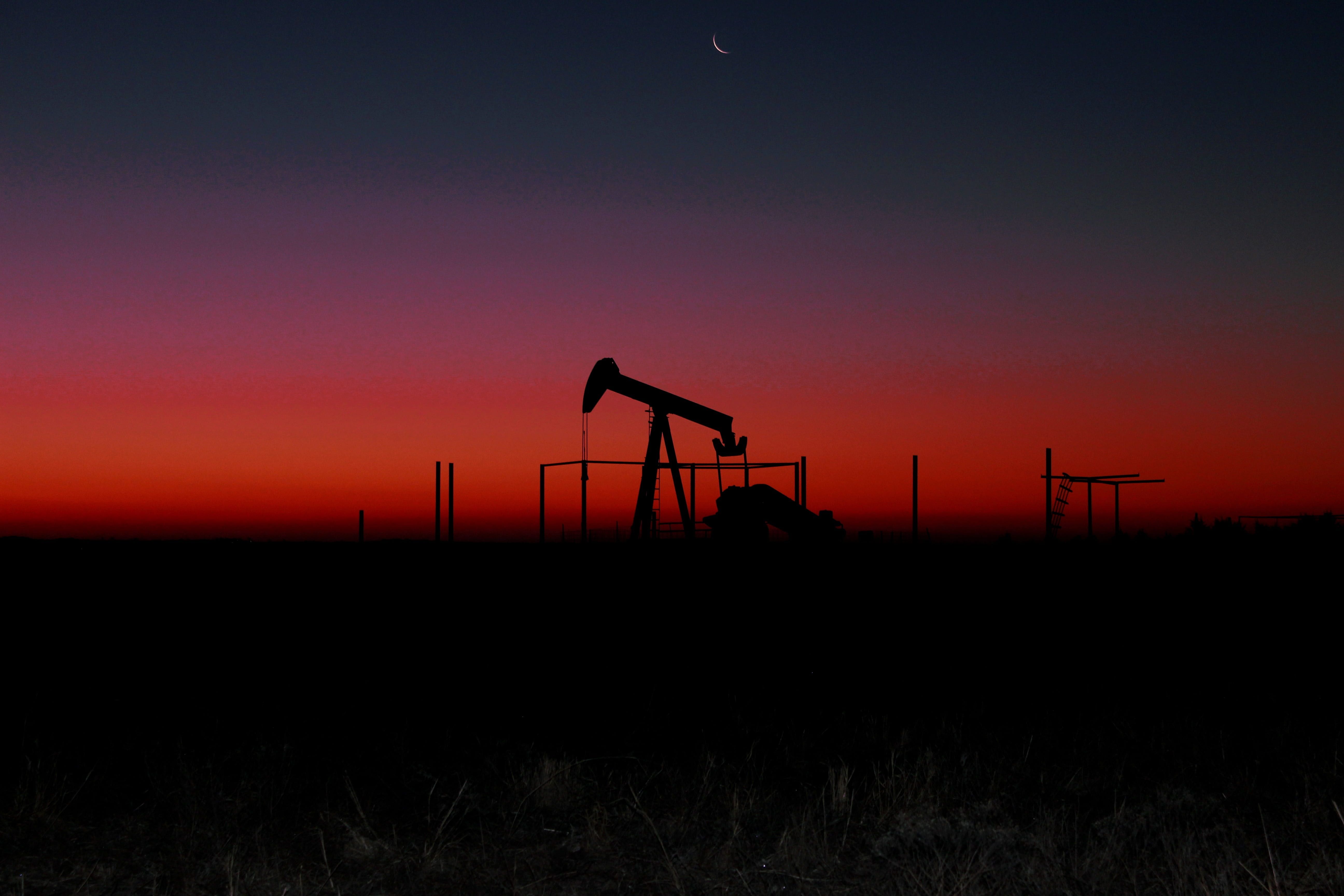
India's oil imports from Russia are set to plummet, at least in the near term, as banks and refiners move cautiously. (Photo courtesy: Hippopx.com)
New Delhi: India’s energy diplomacy is standing at an inflection point now. The sweeping US and European sanctions against Russian oil — now extended to penalise third-party trade — have drawn New Delhi into the crossfire of a sanctions regime it did not design, yet must now navigate. The issue is not simply about barrels of crude, it’s about sovereignty, strategy and the limits of coercion in an unequal global order.
When US President Donald Trump announced new sanctions on October 22 against Russian oil giants Rosneft and Lukoil, he signalled a widening of the battlefield. The US Treasury’s Office of Foreign Assets Control (OFAC) went further, targeting subsidiaries in which these companies hold even an indirect 50% stake. The result: Indian refiners suddenly found themselves entangled in compliance dilemmas. Oil imports from Russia — which accounted for over 35% of India’s crude this year — are set to plummet, at least in the near term, as banks and refiners move cautiously.
Yet this escalation came after the US had already imposed a 50% tariff on Indian exports — half of it explicitly linked to India’s continued oil purchases from Russia. Combined with the European Union’s eighteenth sanctions package, which bans imports of petroleum products refined from Russian crude through third countries, the message is clear: align with Western sanctions, or pay the price.
Economic Coercion
Secondary sanctions — measures aimed at compelling third states to comply with sanctions against a primary target — occupy a grey zone under international law. They blur the line between legitimate trade regulation and coercive interference in another country’s domestic affairs. As international law scholar Marko Milanović has noted, such measures can amount to unlawful coercion when they pressure other states to alter lawful policy choices within their domestic jurisdiction.
In India’s case, the measures strike at the core of its economic sovereignty; its ability to decide how and from whom to source energy. The US and EU are effectively weaponizing access to their markets to enforce a unilateral foreign policy objective. Washington invokes “national security” to justify tariffs, but as the World Trade Organization’s ‘Russia – Traffic in Transit’ ruling clarified, this clause is not a carte blanche. Security exceptions must be exercised in good faith, tied to a genuine emergency in international relations, and not as a pretext for economic coercion.
Double Standard
What makes the situation particularly untenable is its selective enforcement. Even as Washington and Brussels pressure India, their own trade with Moscow continues quietly. In the first half of 2025, the EU imported over €4.4 billion worth of Russian LNG — a 22% increase from the previous year. The US, too, continues to import Russian palladium, uranium and fertilisers.
External affairs minister S Jaishankar put it bluntly: “Europe can’t make choices to prioritise its energy needs while asking India to do something else.” It is this asymmetry that makes the sanctions not just coercive, but hypocritical.
Ironically, India is not even the largest buyer of Russian crude — China is. Yet it is India, not China, that faces the brunt of Western penalties. The inconsistency is not in the rhetoric but in the practice: The West’s moral posturing masks a policy of selective enforcement that disproportionately burdens developing economies.
Strategic Autonomy
India’s engagement with Russia is rooted not in alignment but in pragmatism. Discounted Russian oil helped cushion domestic inflation and contain the import bill. Economists Sonal Varma and Aurodeep Nandi of Nomura Holdings estimate that with the discount narrowing to about $2 per barrel, the shift away from Russian crude will cost India just 0.04% of GDP — a manageable loss compared with the potential tariff relief if a trade deal with Washington materialises.
Their assessment reflects the quiet calculus driving India’s response: adapt, but don’t yield. Prime Minister Narendra Modi has reportedly told President Trump that India’s disengagement from Russian oil will be “a process”. This measured phrasing captures India’s balancing act — neither confrontational nor compliant.
The inflation impact, too, appears contained. The consumer price index remains below 2%, at the lower bound of the Reserve Bank’s target range. As IndusInd Bank’s chief economist Gaurav Kapur notes, “It is not easy to completely move away from Russian crude after years of relying on it. The point is about India’s energy security.”
India’s challenge, then, is not merely about substitution — sourcing more from the Middle East or the US, but about preserving decision-making autonomy in an international order increasingly policed by economic coercion.
Navigating the Long Game
India’s options span law, diplomacy and structural reform. Legally, it could challenge US and EU measures at the WTO, arguing violations of GATT Articles II and XI, which prohibit tariffs above bound rates and quantitative restrictions. But with the WTO’s appellate system paralysed, such litigation may be more symbolic than effective.
Diplomatically, India could negotiate waivers — as it did in 2018 over Iranian oil — or deploy calibrated retaliation through reciprocal tariffs, as it did in 2019 against US trade barriers. Each approach carries risks: escalation, delay, or dependency on goodwill.
The deeper strategy lies in de-risking the future. India’s moves to expand rupee-based trade, as with the UAE in 2023, hint at gradual de-dollarisation — a hedge against Western financial leverage. A national sanctions-governance framework integrating the Ministry of External Affairs, the Reserve Bank, and the National Security Council could institutionalise resilience against external shocks.
In parallel, diversifying into renewables and non-Russian suppliers will require significant investment, but it is essential for long-term energy security. As the saying goes: Pragmatism is not weakness; it is endurance with purpose.
Autonomy as Strategy
India’s sanctions strategy is not about defiance; it is about defending “its space” for independent decision-making in an unequal global order. The West’s use of economic coercion against a sovereign state pursuing lawful trade exposes the fragility of the rules-based system it claims to uphold.
The road ahead demands tactical flexibility and strategic patience. India must protect its energy interests today while preparing for a world where economic coercion becomes the new diplomacy. In doing so, New Delhi’s greatest weapon will not be confrontation, but consistency in principle: that sovereignty, not sanction, should define the global order.