

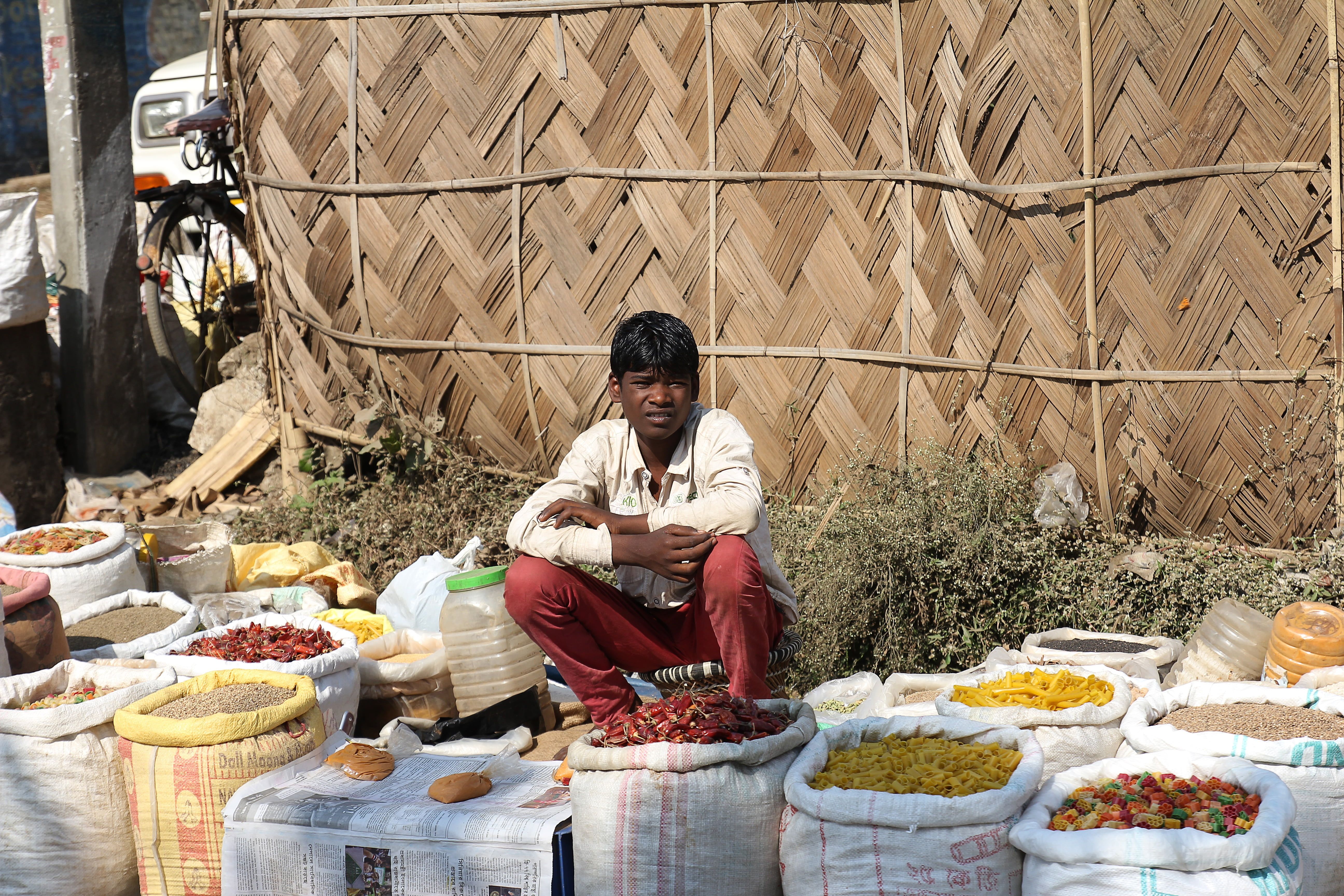
Data signal a cooling phase for rural inflation, driven primarily by food price moderation and stable non-food costs. (Photo courtesy: PickPic)
New Delhi: India’s rural inflation turned nearly flat in September as food prices eased, with the All-India Consumer Price Index for Agricultural Labourers (CPI-AL) registering a marginal decline to 136.23 and the Rural Labourers’ Index (CPI-RL) slipping to 136.42, according to the latest data released by the Labour Bureau, Ministry of Labour & Employment.
The report, based on data from 787 sample villages across 34 states and Union Territories, indicates that softening food costs helped moderate overall rural price pressures during the month.
The ‘food index’ fell by 0.47 points for agricultural labourers and 0.58 points for rural labourers compared to August 2025, reflecting lower prices of cereals, pulses, vegetables and edible oils. As a result, the year-on-year inflation rate for agricultural labourers turned slightly negative at -0.07%, while that for rural labourers eased to 0.31%. Food inflation remained in deflationary territory at -2.35% for agricultural labourers and -1.81% for rural labourers.
Non-food components, however, showed a modest upward movement. The ‘fuel and light’ index rose to 122.62 for agricultural labourers and 124.47 for rural labourers, while ‘clothing and footwear’ increased to 145.97 and 146.53 respectively. The ‘miscellaneous’ group also saw a slight uptick, indicating mild price pressures in essential household and service-related expenses.
At the state level, inflation trends were mixed. Mizoram recorded the highest increase in CPI-AL, up from 146.99 to 148.29, followed by Jammu & Kashmir and Punjab. In contrast, Goa, Bihar, Haryana, Rajasthan and Uttar Pradesh reported declines in both agricultural and rural labour indices, reflecting softer price movements. Tripura showed one of the sharpest monthly gains, with its CPI-AL rising from 124.83 to 127.96.
Overall, the data signal a cooling phase for rural inflation, driven primarily by food price moderation and stable non-food costs. Economists suggest that this trend could ease cost pressures for rural households and support rural consumption in the coming months, provided food prices remain stable during the post-monsoon period.